 lop News
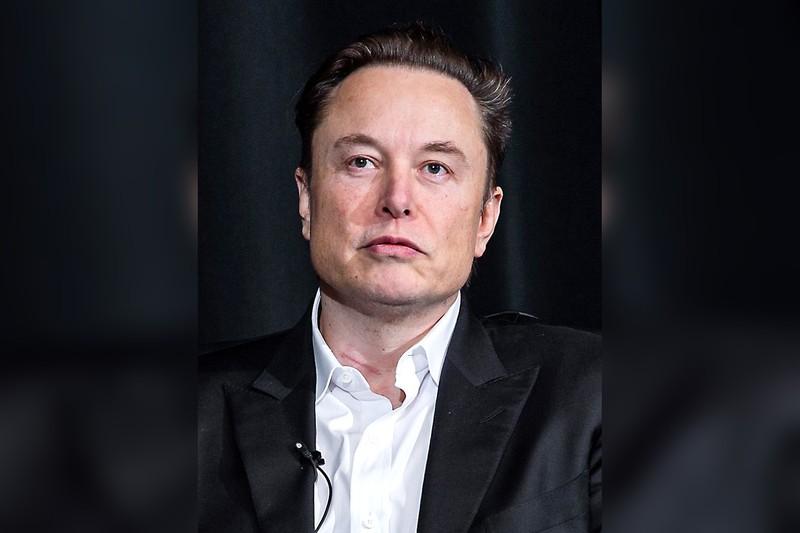
Eleven co-founders launched xAI with Elon Musk in 2023. As of this week, none of them work there.
Ross Nordeen — described by colleagues as Musk’s right-hand operator at the company — departed in recent days, according to Business Insider. Manuel Kroiss, who led xAI’s pretraining team, left earlier the same week. They were the last two standing.
The full roster of departures is staggering by any standard. Jimmy Ba co-authored the Adam optimization paper, the most-cited paper in AI history with over 95,000 citations. Igor Babuschkin came from Google DeepMind. Christian Szegedy came from Google. Tony Wu led the reasoning team. Greg Yang, Toby Pohlen, Zihang Dai, Guodong Zhang, and Kyle Kosic brought pedigrees from DeepMind, Google, Microsoft, and OpenAI. That entire founding research cohort is now gone.
Eight of the eleven left since January, a cascade that coincided with SpaceX’s acquisition of xAI in February — an all-stock deal that valued xAI at roughly $250 billion and SpaceX at $1 trillion. The merger brought xAI, X, and SpaceX under one corporate roof ahead of a potential SpaceX IPO targeting a $1.75 trillion valuation.
Musk himself acknowledged the mess. “xAI was not built right first time around, so is being rebuilt from the foundations up,” he wrote on March 13. He also conceded that xAI’s coding tools were not competitive with offerings from Anthropic and OpenAI.
The candor is unusual. The valuation makes it extraordinary. Tesla invested $2 billion in xAI’s Series E round at a $230 billion valuation in January, and shareholders are now suing Musk for breach of fiduciary duty over the investment.
xAI retains real assets — the Colossus supercomputer cluster of more than 200,000 NVIDIA H100 GPUs, and Grok’s distribution through X’s user base. The company has also brought in new recruits, including two senior leaders from AI coding company Cursor. But hardware and distribution only go so far when every researcher who built the original product has walked out the door.
The pattern is familiar across Musk’s empire: Twitter lost 80% of its workforce within months of his 2022 takeover, and Tesla’s senior ranks have thinned steadily. What works for rockets and cars appears to translate poorly to research labs where the talent has abundant alternatives and little patience for chaos.
Discussion (6)