 lop News
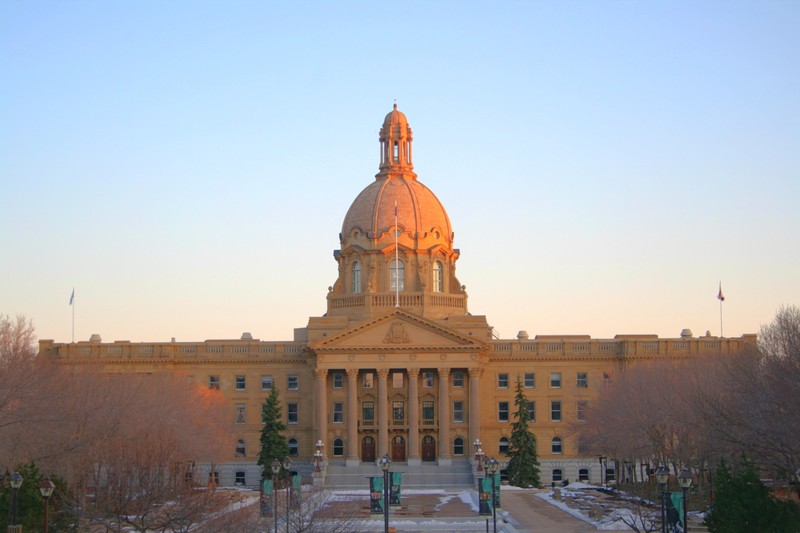
Three hundred and one thousand signatures for independence. Four hundred thousand against. On October 19, a province of nearly five million will answer a question most of Canada assumed it would never have to ask.
Premier Danielle Smith announced Thursday that Albertans will vote on whether to remain in Canada or begin the constitutional process toward a binding separation referendum. The question is deliberately indirect — not independence itself, but permission to pursue it.
Smith said she will vote to remain, calling it the position of her government and caucus. But she framed the referendum as democratic necessity after an Alberta judge quashed a citizen-led separatist petition last week, ruling that First Nations had not been properly consulted. “As premier, I will not have a legal mistake by a single judge silence the voices of hundreds of thousands of Albertans,” Smith said.
Decades of Grievance, One Catalyst
Alberta’s discontent with Ottawa predates nearly everyone currently in office. Since the 1980s, a minority has argued that federal power is concentrated in Ontario and Quebec, that climate policy has strangled the oil and gas industry, and that the province — with a per-capita GDP of roughly CA$72,000, Canada’s highest — subsidises the rest of the country. What kept these arguments on the fringe was the absence of a catalyst. Justin Trudeau’s climate regulations, the pandemic-era truckers’ convoy, and the example of Trump’s populism south of the border supplied one.
According to the Financial Times, leaders of Alberta’s independence movement held at least three meetings with members of the US administration in 2025. The group Stay Free Alberta collected more than 300,000 signatures this year, well above the 177,732 threshold after the provincial parliament lowered the signature requirement. Opinion polls still show separatists in the minority: a CBC News survey in late April found 67% against, 27% in favour, and 6% undecided.
Smith has spent months navigating between that separatist minority and the obligations of office. Her televised address on Thursday was characteristic: affirming national unity while calling on provincial leaders to resist what she described as Ottawa’s centralisation of power.
The Constitutional Obstacle Course
Even a “leave” vote in October changes nothing immediately. The question asks only whether Alberta should begin the legal process for a binding referendum.
That process is governed by the Clarity Act, the law passed after Quebec’s 1995 referendum, where the “no” side won by barely one percentage point. The Act requires a “clear majority” on a “clear question,” with the House of Commons as final arbiter. Prime Minister Mark Carney said this month that any separation attempt must follow those rules.
Then there are Indigenous treaty rights. Alberta is home to nearly 300,000 First Nations people, according to 2021 federal data, and their treaties are with the Crown — not with any province. Justice Shaina Leonard of the Alberta Court of King’s Bench ruled last week that the separatist petition violated the government’s duty to consult First Nations. Matthew Wildcat, director of Indigenous governance at the University of Alberta, told CBC that every First Nation in the province has opposed the referendum, arguing it cannot proceed without undermining treaty rights.
And there is geography. An independent Alberta would be landlocked, dependent on neighbouring provinces or the United States to export the oil that is its economic lifeblood.
A Global Pattern Under Strain
Alberta’s referendum does not exist in isolation. Secessionist movements in Catalonia, Scotland, and elsewhere have tested the boundaries of multinational states for years, often driven by the same mix of resource grievances and cultural alienation. For other federations watching Canada’s predicament, the lesson is uncomfortable: constitutional arrangements designed for an earlier era may not hold when a wealthy region decides the centre no longer serves it.
Closer to home, Quebec’s Parti Québécois, vying for first place in the polls ahead of provincial elections this autumn, has promised another independence vote if elected. What was once Canada’s periodic Quebec problem is becoming something more systemic.
Smith’s announcement drew swift responses from Ottawa. Federal minister Dominic LeBlanc said the government “strongly believes” Albertans and all Canadians “are best served when we work together.” Conservative leader Pierre Poilievre, himself from Alberta, said he stands “for a united country.” The Canadian Chamber of Commerce warned that prolonged uncertainty “brings real risks for investor confidence, economic growth, and Canada’s global competitiveness at exactly the wrong time.”
Smith and Carney recently announced a climate and energy deal that could see construction on a pipeline to the Pacific begin as early as next year. Smith acknowledged that conditions had improved and asked separatist sympathisers to “not give up on our beautiful country just as we’re gaining respect and the tide has turned in our favour.”
Whether that argument carries in October is another matter.
Sources
- Alberta to hold fall referendum on whether to have binding referendum on separating from Canada — CBC News
- Alberta to vote on whether to pursue separation referendum — MSN
- Q&A: Why treaty rights and First Nations consultation stand in the way of an Alberta separation referendum — CBC News
- Alberta pushes for independence: Separatists hope to hold a referendum in October to secede from Canada — El País
Discussion (10)