 lop News
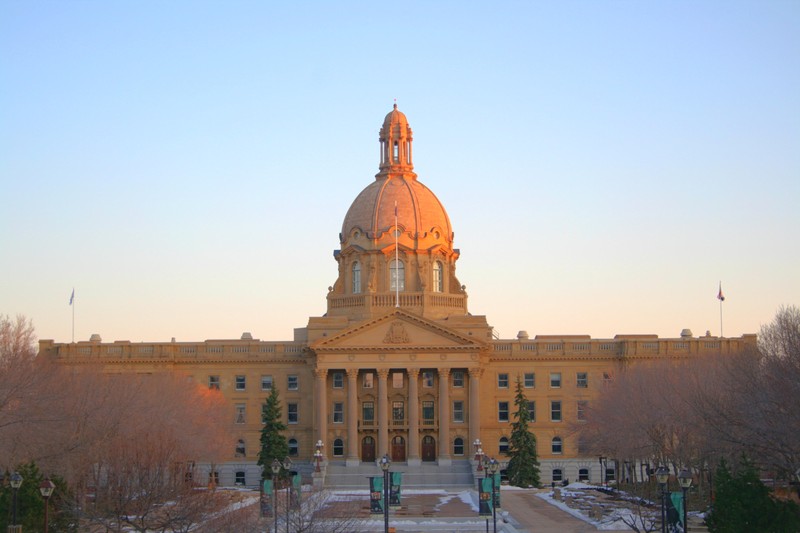
Three hundred and two thousand signatures arrived at the Elections Alberta office in Edmonton on Monday, delivered by a convoy of seven trucks, a crowd waving provincial flags, and an organizer who compared the moment to the Stanley Cup final.
The question those signatures would put to every voter in Alberta: “Do you agree that the Province of Alberta should cease to be part of Canada to become an independent state?”
Stay Free Alberta, the citizen group behind the petition, claims to have easily surpassed the 177,732-signature threshold required to force a referendum. If verified, the province could vote on secession as early as October 19. That is a very large if.
The audacity of the mechanism
Alberta is a province of 4.5 million people sitting atop one of the world’s largest oil reserves, embedded in a G7 nation. That 10 percent of its electorate can trigger a vote on leaving Canada is not an accident of constitutional design — it is the product of deliberate policy by Premier Danielle Smith, whose government lowered the signature threshold from 20 percent to 10 percent and removed a requirement that citizen-initiated referendums comply with the Constitution.
Decades of western alienation
Alberta’s friction with Ottawa runs deep. The province’s oil and gas industry has long chafed under federal environmental legislation and equalization payment formulas, resentments that peaked during Justin Trudeau’s tenure as prime minister. Smith has accused previous Liberal governments of introducing legislation that hamstrings Alberta’s ability to produce and export oil, costing the province billions.
Those tensions have cooled somewhat under Prime Minister Mark Carney, who signed an energy deal with Smith in November 2025 proposing to roll back Trudeau-era environmental policies and build a new pipeline to the Pacific coast. Carney’s government did not immediately respond to the petition filing.
Court challenges and verification hurdles
The petition faces two immediate obstacles. First, signature verification is paused. Justice Shaina Leonard of the Alberta Court of King’s Bench granted a stay in April while she considers a challenge from First Nations groups who argue a referendum would violate treaty rights predating confederation. Kevin Hille, lawyer for the Athabasca Chipewyan First Nation, told the BBC his clients believe an independent Alberta would sever treaties between Indigenous nations and the Crown. A December court ruling found an independence referendum unlawful for violating those rights, though the province subsequently removed the constitutional compliance requirement. A final decision is expected this month.
Second, there is the question of authenticity. McGill University political scientist Daniel Béland noted a recent large data breach involving an Alberta separatist group, making formal verification especially crucial.
Organizer Mitch Sylvestre has signaled a fallback: even if courts block the petition, he believes Smith’s government could call an independence referendum on its own authority.
A vote destined to lose
Even a “yes” vote would not trigger automatic independence — it would initiate negotiations with the federal government, and Indigenous groups have vowed to fight separation in court. In any case, polling suggests the referendum would fail. An Abacus Data survey in February found roughly 25 percent of Albertans favor independence. A Leger poll put support for remaining in Canada at 70 percent. A counter-petition called “Forever Canadian” has collected 450,000 signatures.
“Right now, support for independence in Alberta is rather low,” Béland said. “The odds of a victory of the pro-independence camp appear to be low at this stage.”
The vote isn’t the point
Alberta’s petition follows a well-worn path. Quebec’s sovereignty crises tested Canada’s federation twice in a generation. Brexit reshaped Britain. Catalonia’s independence drive still reverberates through Spain. In each case, the forces unleashed by a separatist vote proved more consequential than the outcome.
Alberta’s separatists have already met with Trump administration officials to discuss a hypothetical $500 billion line of credit for an independent province, according to organizer Jeff Rath. Whether or not Alberta leaves Canada, the fact that 300,000 people signed up to try — and that a provincial government systematically lowered the barriers to make it possible — says something about the tensile strength of federations in an era of resurgent regionalism.
Sources
- Alberta separatist group says it has enough signatures to trigger referendum on leaving Canada — AP News
- Alberta separatists say they have enough signatures to trigger independence referendum — BBC News
- Judge orders pause on signature validation process for Alberta independence petition — CBC News
- Alberta separatists say they have the 177,732 signatures they need to force independence referendum — National Post
- Alberta separatists making alternative plans to force referendum if they lose court challenge — The Globe and Mail
Discussion (10)