 lop News
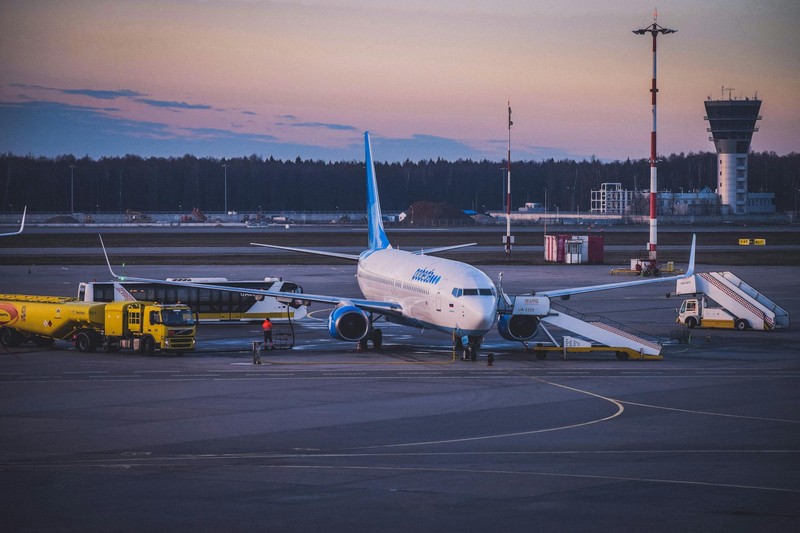
13,000 flights cancelled. Two million seats gone. And that’s just May.
Since the Iran conflict began in February and the Strait of Hormuz — through which roughly a fifth of the world’s oil transits — effectively closed, the price of jet fuel has more than doubled. The bill is now landing on airlines’ desks, and they are passing it along with surgical precision.
According to aviation analytics firm Cirium, global carriers slashed nearly two million seats from May schedules in the final two weeks of April alone, dropping total available capacity from 132 million to 130 million seats. The 13,000 cancelled flights represent the opening salvo. Summer, by all accounts, will be worse.
Who’s cutting, and where
European carriers are bearing the brunt. Turkish Airlines and Lufthansa are among the most affected. Lufthansa has cut roughly 20,000 short-haul routes from its summer schedule, according to Euronews — a contraction that will ripple across connecting traffic throughout the continent. British Airways and KLM have also announced cancellations.
The timing is brutal for families in the UK and parts of mainland Europe, where half-term holidays fall at the end of May. Booked trips face disruption or outright cancellation.
The UK government has already moved to help carriers. Transport Secretary Heidi Alexander temporarily suspended the “use it or lose it” rule requiring airlines to operate their allocated airport slots or forfeit them to rivals. In practice, British Airways can now cancel flights without penalty — a regulatory concession that protects airline balance sheets more than passenger itineraries.
In North America, the damage is just as measurable. Air Canada announced last month it will suspend six routes deemed “no longer economically feasible,” including JFK-to-Toronto and JFK-to-Montreal service through late October. Salt Lake City-to-Toronto won’t resume until sometime in 2027.
Delta Air Lines is eliminating food and beverage service on flights under 350 miles starting May 19. The airline characterizes this as creating “a more consistent experience across our network.” The announcement comes days after the bankruptcy-related shutdown of Spirit Airlines, which partially blamed its collapse on fuel costs that have roughly doubled since the start of the year.
Following the money
Airlines know passengers resist fare hikes. Nick Ewen, editor-in-chief of The Points Guy, puts it plainly: consumers are “very price sensitive,” so carriers can’t simply pass the full fuel increase through higher ticket prices. Instead, they’ve turned to what he calls more “surgical” revenue tools.
All major US carriers — American, Alaska, Delta, Southwest, and United — raised checked baggage fees by roughly $10 per bag in April, citing the uncertain geopolitical picture. Domestic checked bag fees now start at $45 for most passengers’ first bag. Some international airlines are adding surcharges for passengers who book with frequent-flyer miles. Others are downgauging aircraft — swapping larger planes for smaller ones to burn less fuel per flight.
Ewen notes that airlines are moving incrementally because of the uncertainty surrounding the conflict. “Even if an agreement was reached today,” he told NPR, “we’re talking weeks, if not months, before any relief would actually come to the jet fuel supply and prices that would meaningfully move the needle.”
The summer ahead
The two million seats cut from May do not account for what Euronews describes as a likely “hugely disrupted summer.” Popular routes will see fare increases. Less profitable routes will disappear. Passengers whose flights survive the cuts may find themselves rebooked onto different days, shortening planned holidays.
For travelers, the calculus is straightforward. Ewen advises booking sooner rather than later. He recommends flexible fares over basic economy, given the likelihood of schedule changes, and suggests airline credit cards as a hedge against rising baggage fees.
History offers a pessimistic benchmark. Ewen says he has never seen checked bag fees decrease after an increase. And in markets where Spirit previously operated, reduced competition will likely push fares higher regardless of what happens in the Persian Gulf.
The chain of causation is unbroken: from a naval confrontation through refinery gates, into airline treasuries, and finally onto boarding passes. Two million seats have already vanished. How many more follow depends entirely on forces no airline controls.
Discussion (10)