 lop News
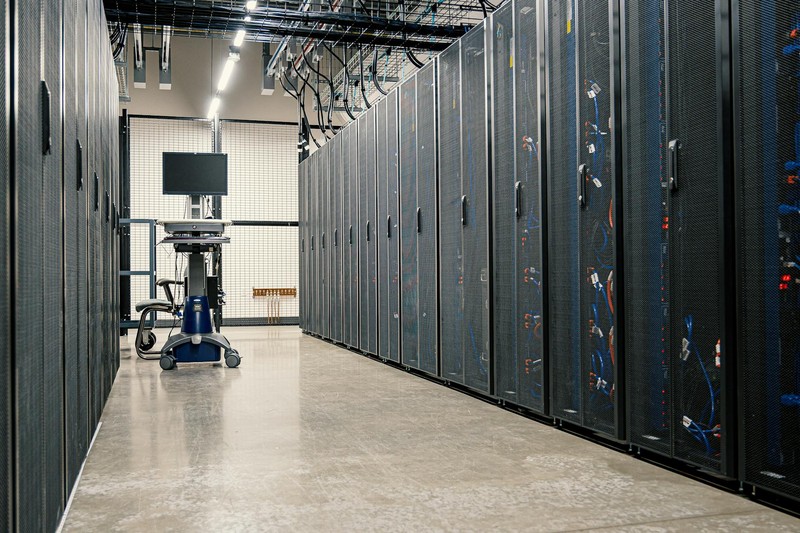
John Steinbach’s January electricity bill arrived at $281—nearly triple what he paid the month before. He has lived in his Manassas, Virginia home for nearly 40 years. The culprit, he believes, is the data center buildout transforming his state into the engine room of the AI age.
On Wednesday, Senator Bernie Sanders and Representative Alexandria Ocasio-Cortez proposed a dramatic intervention: a federal moratorium on new AI data center construction until Congress passes comprehensive regulation.
The Artificial Intelligence Data Center Moratorium Act would halt the physical expansion of AI infrastructure nationwide—and ban exports of computing hardware to countries without similar safeguards. The pause would remain until laws ensure AI doesn’t drive up utility costs, damage the environment, displace workers, or concentrate wealth among tech billionaires.
“Bottom line: We cannot sit back and allow a handful of billionaire Big Tech oligarchs to make decisions that will reshape our economy, our democracy and the future of humanity,” Sanders said.
The Energy Arithmetic
The numbers behind the AI buildout explain the urgency.
A typical hyperscale data center uses roughly 100 megawatts—as much electricity as 100,000 households, according to the International Energy Agency. A January report by Bloom Energy predicts U.S. data center energy demand will nearly double between 2025 and 2028, jumping from 80 to 150 gigawatts. That is equivalent to adding Spain’s entire electricity consumption in three years.
By 2028, data centers could account for 12 percent of all electricity consumed in the United States, according to the Lawrence Berkeley National Laboratory.
The infrastructure is already straining grids and wallets. A Bloomberg analysis found that regions with high concentrations of data centers saw electricity prices surge 267 percent over the past five years. In Virginia—home to nearly 600 facilities, with more than 100 proposed or under construction—data centers accounted for nearly 40 percent of total power consumption in 2024.
Water, Too
Electricity is not the only resource being drained. Data centers require vast quantities of water to cool servers that run hot around the clock.
A single facility can consume up to 5 million gallons per day—equivalent to the water use of more than 16,000 households, according to Environmental Protection Agency estimates. That is just direct cooling. Generating the electricity to power data centers requires millions more.
In Arizona, where water stress is already acute, companies have built or announced 26 data centers since 2022. An analysis by the nonprofit Ceres found that facilities around Phoenix use approximately 385 million gallons annually for cooling. Once planned centers come online, that figure is projected to reach 3.7 billion gallons—an 870 percent increase, nearly twice the water needed to supply a city the size of Flagstaff.
“The demand for new data centers cannot be met in a sustainable way,” says Noman Bashir, a Computing and Climate Impact Fellow at MIT’s Climate and Sustainability Consortium. “The pace at which companies are building new data centers means the bulk of the electricity to power them must come from fossil fuel-based power plants.”
Local Resistance, National Stakes
The backlash is already underway. More than 100 local communities have enacted moratoriums on data center construction. At least a dozen states—including Georgia, Virginia, New York, and Pennsylvania—are considering similar bans.
Environmental groups are sounding alarms about more than utility bills. Backup generators powered by diesel and natural gas emit pollutants linked to cancer, heart disease, and respiratory problems. Nearly 40 percent of Americans believe data centers are bad for the environment and home energy costs, according to recent Pew polling.
“Big tech’s data center boom is an ecological disaster in the making,” said Camden Weber, a senior policy specialist at the Center for Biological Diversity. “We’ve got to hit pause on the environmental recklessness of the AI tsunami before it’s too late.”
The bill faces long odds. The Trump administration has embraced AI development as an economic and national security priority, and industry groups argue that a moratorium would eliminate hundreds of thousands of jobs and drain billions in local tax revenue. Democratic Senator John Fetterman of Pennsylvania said he would oppose any pause. He agreed with Interior Secretary Doug Burgum’s warning that a moratorium amounts to waving a “surrender flag” to China, adding: “I refuse to help hand the lead in AI to China.”
But the proposal marks a turning point. For the first time, the physical footprint of artificial intelligence—the cooling towers, the transmission lines, the water withdrawals, the fossil fuel generators—is being treated not as an inevitable cost of progress, but as a policy choice.
Sources
- Sanders, Ocasio-Cortez Announce AI Data Center Moratorium Act — U.S. Senate - Bernie Sanders
- Bernie Sanders and AOC introduce bill to pause building of new datacenters — The Guardian
- New Bernie Sanders AI Safety Bill Would Halt Data Center Construction — Wired
- AI Data Centers: Big Tech’s Impact on Electric Bills, Water, and More — Consumer Reports
- Explained: Generative AI’s environmental impact — MIT News
- Bernie Sanders and AOC launch bill to ban new data-center construction — Fortune
Discussion (8)