 lop News
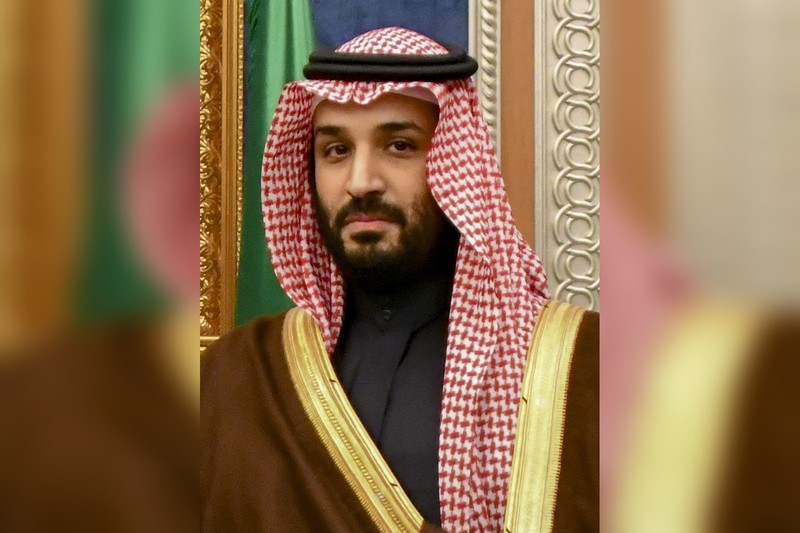
For nearly eight years, Mohammed bin Salman has moved through Western capitals with something close to impunity. US intelligence concluded he ordered a journalist’s murder. A Turkish court heard the evidence. A civil suit in the United States named him directly. Each time, a government found a reason to make the problem go away.
Now a French magistrate has opened a door that others worked hard to keep shut.
On Saturday, France’s National Anti-Terrorism Prosecutor’s Office confirmed that an investigating judge from the crimes against humanity unit will examine a complaint against the Saudi crown prince over the 2018 assassination of Jamal Khashoggi. The probe covers charges of torture and enforced disappearance, and follows a May 11 ruling by the Paris Court of Appeal that deemed complaints filed by TRIAL International and Reporters Without Borders (RSF) admissible.
The ruling broke a years-long impasse. France’s anti-terrorism prosecutor had previously opposed opening the case, arguing the NGOs lacked standing — a position RSF lawyer Emmanuel Daoud denounced as “a realpolitik in the name of France’s superior economic interests so as not to anger the Saudi authorities.”
A Killing That Shook the World — Briefly
Khashoggi, a Saudi dissident and Washington Post columnist living in the United States, entered the Saudi consulate in Istanbul in October 2018 to obtain documents for his upcoming marriage. He never emerged. US intelligence concluded he was strangled and dismembered by Saudi agents in an operation ordered by bin Salman himself.
His body has never been found.
The crown prince has denied ordering the killing but acknowledged it took place “under my watch.” During a White House meeting with Donald Trump in late 2025, he described the murder as “a huge mistake” while refusing to acknowledge his own role, according to Euronews.
The killing provoked global outrage. The outrage had a short half-life.
A Trail of Closed Doors
Turkey, which had initial jurisdiction because the murder occurred on its soil, halted its trial of 26 Saudi suspects in 2022 and transferred the case to Saudi Arabia — a move rights groups condemned as a capitulation to diplomatic pressure. In the United States, the Biden administration granted bin Salman sovereign immunity after he was appointed prime minister, leading a federal court to dismiss a civil suit brought by Khashoggi’s fiancée.
The pattern repeated across capitals: however grave the crime, the strategic relationship with Saudi Arabia — arms sales, energy cooperation, regional security — came first.
France was no exception. When bin Salman visited in July 2022, NGOs filed their initial complaints during the trip. French prosecutors then spent four years fighting to keep the case out of court.
What Can France Actually Do?
The legal picture is more modest than the headline suggests.
French law grants judges jurisdiction over certain serious crimes committed abroad, including torture and enforced disappearance. But prosecutions generally require the suspect to be physically present on French territory. Bin Salman, who travels to France regularly, could theoretically face proceedings upon return. In practice, detaining the crown prince and de facto ruler of a major Gulf ally at Charles de Gaulle airport is a scenario no French government is eager to test.
The Paris Court of Appeal noted that “the possibility that these acts could be classified as crimes against humanity cannot be ruled out” — a classification that could broaden the legal foundation of the inquiry and, potentially, lower some jurisdictional barriers.
Even without a clear path to prosecution, the case carries weight. It creates a formal judicial record. It obliges French authorities to engage with evidence rather than defer entirely to diplomatic channels. And it signals that the institutional shield around bin Salman, while still formidable, is no longer seamless.
Justice on Paper
DAWN, the organization that employed Khashoggi, called the ruling “an important step towards justice,” though the court deemed its own complaint inadmissible and it will not participate as a civil party. TRIAL International lawyer Henri Thulliez said there “should no longer be any obstacle to opening a judicial investigation into the atrocious crime committed against Jamal Khashoggi.”
The Saudi government has not commented publicly on the inquiry.
Whether this remains a legal curiosity — a case that exists on paper but never reaches a courtroom — or becomes part of a slow accumulation of consequences that reshapes how Western capitals treat the crown prince is an open question. France may face a more immediate test if bin Salman accepts an invitation to visit again.
The inquiry will be waiting.
Sources
- French judge opens inquiry into Khashoggi killing — Reuters (via The Star)
- French judge opens probe into 2018 killing of Jamal Khashoggi — Euronews
- French judge to probe complaint against Saudi’s MBS over journalist Jamal Khashoggi’s killing — France 24 (AFP)
Discussion (8)