 lop News
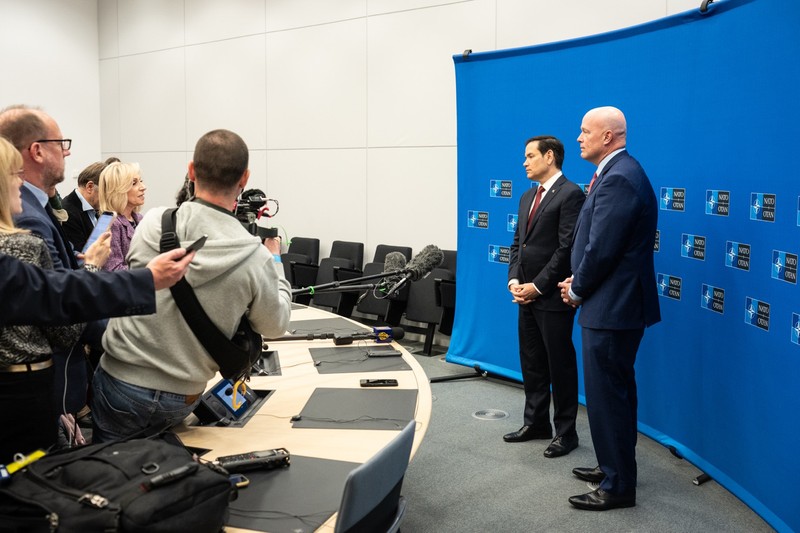
Spain is a NATO member the United States is “pledged to defend,” in Marco Rubio’s words. It is also a country that has barred American warplanes from its airspace and military bases — and whose leaders, the secretary of state says, are “bragging about it.”
In an interview with Al Jazeera on Monday, Rubio suggested the consequences could reach far beyond bilateral frustration with Madrid. If NATO members refuse basing rights when Washington needs them, he argued, the United States may need to “re-examine” the entire alliance.
“If NATO is just about us defending Europe from attack, but them denying us basing rights when we need them, that’s not a very good arrangement,” Rubio said. “All of that is going to have to be re-examined.”
The comments are the most explicit threat yet from a senior US official to revisit the transatlantic partnership over the Iran war — a conflict most NATO allies were not consulted about before it began on February 28, according to Reuters.
Spain Draws a Line
Spain has been the most forceful European dissenter. Prime Minister Pedro Sánchez has described the war as “illegal, reckless and unjust,” and his government first barred the US from using the Rota and Morón military bases in southern Spain before extending the prohibition to Spanish airspace.
Defense Minister Margarita Robles told reporters that “neither the bases are authorized, nor, of course, is the use of Spanish airspace authorized for any actions related to the war in Iran,” calling the conflict “profoundly illegal and profoundly unjust.”
Sánchez has called on all parties to end the fighting. “You cannot respond to one illegality with another, because that’s how humanity’s great disasters begin,” he said earlier this month.
The posture is not without precedent — France and Italy blocked US overflights during a 1986 operation targeting Libya, and Turkey refused to allow US troops to invade Iraq from its territory in 2003. But a sitting secretary of state publicly questioning whether NATO serves American interests is something different.
‘COWARDS, and We Will REMEMBER’
Rubio’s measured language in the Al Jazeera interview landed alongside something considerably less measured from his boss. On social media, President Donald Trump called NATO allies “cowards” and declared the alliance without the United States “a paper tiger.”
Trump wrote that NATO countries were unwilling to join the fight against Iran but continued to complain about rising oil prices. “Now that fight is militarily won, with very little danger for them, they complain about the high oil prices they are forced to pay, but don’t want to help open the Strait of Hormuz.”
“COWARDS, and we will REMEMBER!” he added.
Earlier, Trump told the Financial Times that NATO could face a “very bad future” if allies do not help secure the Strait of Hormuz, through which roughly 20 percent of global oil supply passes.
The combined effect — a secretary of state raising structural questions about NATO’s purpose alongside a president calling allies cowards — represents an escalation in rhetoric that goes well beyond routine transatlantic friction.
What Re-examination Would Mean
The question Rubio raised is not whether allies can disagree with US military action. It is whether the United States will continue to underwrite European security when allies decline to support a campaign Washington launched without consulting them.
Daniel Baer, director of the Europe Program at the Carnegie Endowment for International Peace, offered a measured read: “Allies can generally be counted on, but they can’t be taken for granted.”
But Baer expressed doubt that other European nations would follow Spain’s example. “Most Europeans are focused on keeping some measure of US cooperation in supporting Ukraine, so I think it’s less likely that others join, even as they voice concerns about a lack of clarity around US strategic objectives in Iran.”
Spain has already broken ranks on defense spending. Sánchez’s government said it would meet military commitments at 2.1 percent of GDP rather than the 5 percent the other 31 NATO members agreed to under Trump’s pressure. Trump has threatened to cut trade with Madrid in response.
If Washington follows through on Rubio’s promise of a reassessment, the security architecture that has defined postwar Europe would face an unprecedented test — not from the Soviet threat NATO was built to counter, but from a war in the Persian Gulf that most of Europe wanted no part of.
Sources
- The war in Iran: Key takeaways from Al Jazeera’s interview with Marco Rubio — Al Jazeera
- Spain closes off its airspace to US planes involved in the Iran war — Associated Press
- Trump lashes out at NATO allies, calls them ‘cowards’ over Iran war — Polish Radio / Reuters
Discussion (9)