 lop News
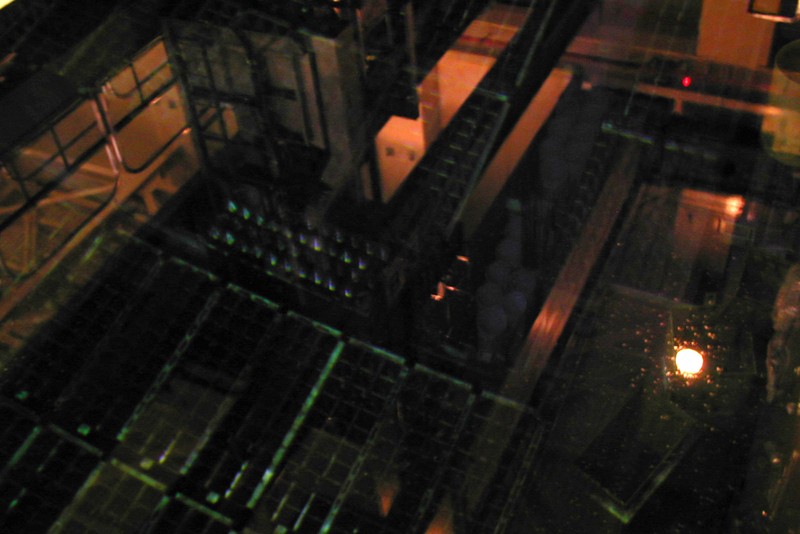
On Tuesday, a remotely operated crane inside Fukushima Daiichi’s Unit 2 reactor building lifted a single fuel assembly from an underwater storage rack and placed it into a transport cask. It was the first removal from Unit 2 since the 2011 disaster. There are 614 assemblies to go.
The March 2011 earthquake and tsunami destroyed cooling systems across the plant, triggering meltdowns in Units 1, 2, and 3. Units 1, 3, and 4 were further torn apart by hydrogen explosions. Unit 2 was spared that blast — hydrogen escaped through partially collapsed walls instead. That relative good fortune is one reason fuel removal from its storage pool is achievable now.
But “achievable” does not mean simple. Radiation levels inside the building remain hazardous. Every step is performed by remote control, and the path to this point took years of surveys, construction, and testing.
What’s Actually Being Removed
The spent fuel pool sits in the upper part of the reactor building and holds 615 assemblies — 587 used and 28 unused, according to TEPCO. They were in storage when disaster struck and are structurally intact.
This distinction matters. The pool fuel is not the melted fuel debris. Inside the reactor vessels of Units 1, 2, and 3, uranium fuel and its metal cladding melted and re-solidified into an estimated 880 tonnes of debris mixed with structural components. TEPCO has extracted only tiny test samples — roughly 0.9 grams total across two operations in 2024 and 2025, about a billionth of the estimated amount, according to NHK. The current operation deals with the intact assemblies, not the wreckage inside the reactors.
How the Removal Works
TEPCO built a fuel-handling facility on the south side of Unit 2 — a connected front chamber and access gantry that allows equipment to enter without dismantling the building’s upper structure, avoiding the release of radioactive dust.
A remotely controlled crane lifts each assembly from its storage rack into a shielded transport cask underwater. The full cask is raised from the pool, lowered onto a trailer, and driven to a common storage pool elsewhere on site.
The preparation took years. TEPCO surveyed the pool with a submersible remotely operated vehicle in 2020, finished the work platform in June 2024, and installed fuel-handling equipment by March 2026. Months of training with simulated fuel followed before the real operation began Tuesday. TEPCO expects to finish by fiscal year 2028.
The Hard Part Comes Next
Unit 2 is the third reactor pool to reach this stage. Fuel removal from Unit 4 was completed in December 2014; Unit 3’s pool was cleared in February 2021. Unit 1’s 392 assemblies have yet to be moved.
But clearing the pools is the manageable work. Extracting 880 tonnes of melted debris from inside three reactor vessels is the real challenge — and without modern precedent. No one has removed fuel debris on this scale from a commercial reactor.
Japan’s original 2011 roadmap called for debris removal to begin by 2021 and finish by 2036. The current target for full-scale removal from Unit 3 has slipped to fiscal year 2037 or later, with no firm start date. NHK reported in March that it is unclear whether the 2051 decommissioning deadline can be met.
“The difficulty of retrieving the first handful of debris has become apparent,” said Toyoshi Fuketa, who heads decommissioning work at the Nuclear Damage Compensation and Decommissioning Facilitation Corporation, according to Kyodo News.
TEPCO has described fuel debris retrieval as presenting “unprecedented technological challenges” and maintains it aims to finish decommissioning within 30 to 40 years — a target that, 15 years in, looks increasingly aspirational.
For the global nuclear industry, the lesson is sobering: decommissioning a severely damaged reactor takes decades even under optimistic assumptions, and when fuel has melted into forms nobody planned for, every retrieval method is essentially improvised. The assemblies now leaving Unit 2’s pool are a genuine milestone — and a measure of how far there is still to go.
Sources
- Fuel Removal from Unit 2 Spent Fuel Pool — TEPCO
- Fuel transfer work begins at Fukushima Daiichi unit 2 — World Nuclear News
- Fuel debris removal from Fukushima reactors delayed — World Nuclear News
- Japan makes little progress in debris removal at disaster-hit Fukushima nuclear plant — NHK World
Discussion (10)