 lop News
For telehealth abortion providers across the US, the first weekend of May was a triage operation. Some suspended services entirely. Others rushed patients onto misoprostol-only regimens — still effective, but with worse side effects. Patients who had already been approved for the standard two-drug combination called in, unsure whether the pills already in the mail were still legal to take.
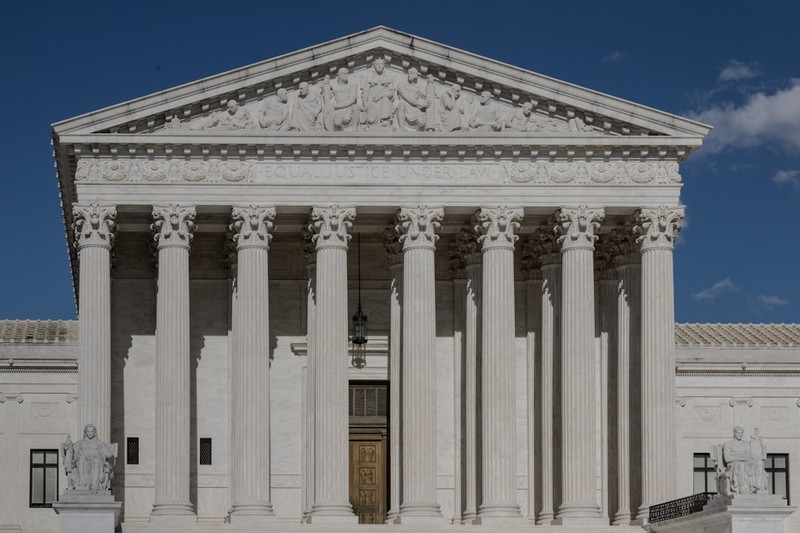
Then Monday brought a reprieve. Justice Samuel Alito issued an administrative stay, putting a lower-court ruling on hold. Telehealth prescriptions and mail-order access to mifepristone — the first pill in the standard medication abortion regimen — were restored nationwide.
For now. The stay expires May 11.
How One Lawsuit Upended Access Nationwide
On May 1, a three-judge panel of the 5th Circuit Court of Appeals ruled that mifepristone could no longer be prescribed via telehealth or sent by mail. The decision reinstated an in-person dispensing requirement that the FDA had lifted in 2023, after reviewing more than two decades of safety data. Judge Stuart Kyle Duncan wrote that telemedicine access “injures Louisiana by undermining its laws protecting unborn human life.”
The ruling applied nationally, because FDA prescribing rules don’t have state borders. Within days, two manufacturers — Danco Laboratories and GenBioPro — filed emergency appeals to the Supreme Court, warning of regulatory chaos and immediate upheaval to patients and providers. Alito granted the stay on May 4.
A Quiet FDA, a Loud Silence
One detail stands out: the Department of Justice, representing the FDA, filed nothing by the Thursday deadline defending the agency’s own 2023 rule. Georgetown law professor Steve Vladeck described it as “wild” that the DOJ took no position on whether a federal regulation should be blocked for the duration of the case.
The silence reflects an uncomfortable position for the Trump administration. The FDA announced in September 2025 it was conducting a comprehensive safety review of mifepristone — distancing itself from the Biden-era rule while technically defending it in court. The 5th Circuit cited that announcement, noting the FDA had conceded it may not have adequately considered safety concerns.
Yet the 2023 administrative record tells a different story. The FDA reviewed published literature, more than five years of adverse event data, and multiple safety assessments before concluding there were “no new safety concerns” from removing the in-person requirement.
The Stakes in Numbers
Mifepristone is used in roughly 60 percent of US abortions, according to SCOTUSblog, and telehealth prescribing represents about a quarter of the total, per NPR. The Guttmacher Institute estimates there were 1.1 million abortions nationwide in 2025 — a figure that has risen since Roe v. Wade was overturned in 2022, partly because telehealth access made the procedure available to patients who couldn’t travel to clinics.
In the 13 states where abortion is banned at all stages of pregnancy, more patients obtained medication abortions via telehealth last year than by traveling to other states, according to a recent report cited by AP News.
What’s Unresolved
The central legal question is standing — whether Louisiana has the right to sue at all. In 2024, the Supreme Court unanimously dismissed a similar challenge from anti-abortion doctors who couldn’t demonstrate concrete harm. Danco and GenBioPro argue that Louisiana’s theory — Medicaid costs from treating complications — is even more attenuated than what the court rejected two years ago.
Louisiana identifies $92,000 in Medicaid costs from two women who needed emergency care in 2025 after taking mifepristone received by mail, according to KFF’s review of court filings. Nearly two dozen Democratic-led states filed an amicus brief arguing the 5th Circuit’s decision elevates the policy preferences of states with bans above those of states that protect access.
Anti-abortion groups are pressing the administration to invoke the Comstock Act — a dormant 1873 law — to ban mailing any abortifacient entirely.
A Case the World Is Watching
Globally, the case has drawn intense scrutiny. Medication abortion protocols are standard across dozens of countries, and where mifepristone is unavailable, misoprostol alone is widely used — as some US providers are now preparing to do, accepting higher failure rates and more severe side effects.
What happens after May 11 is unclear. Alito could extend the stay, refer the matter to the full court, or let it expire — which would end telehealth mifepristone access again while litigation continues. UC Davis law professor Mary Ziegler told NPR the 5th Circuit ruling is “the most consequential ruling we’ve had since Dobbs from a lower court.”
Louisiana v. FDA is the furthest along of several active lawsuits targeting mifepristone. The whiplash it has produced — access removed, restored, threatened again within days — is becoming a feature of post-Dobbs reproductive rights law. For patients and providers, the practical question is simpler: which court moves next.
Sources
- With legal briefs in, Supreme Court weighs telehealth access for the abortion pill — NPR
- Supreme Court restores access to abortion pill mifepristone through telehealth, mail and pharmacies — AP News
- Supreme Court restores abortion pill access — for now — Politico
- Court issues temporary order allowing access to abortion pill by mail — SCOTUSblog
- Louisiana v. FDA: Access to Mifepristone Back at the Supreme Court — KFF
Discussion (9)