 lop News
Mifepristone will keep arriving in mailboxes. What that means depends entirely on where those mailboxes are.
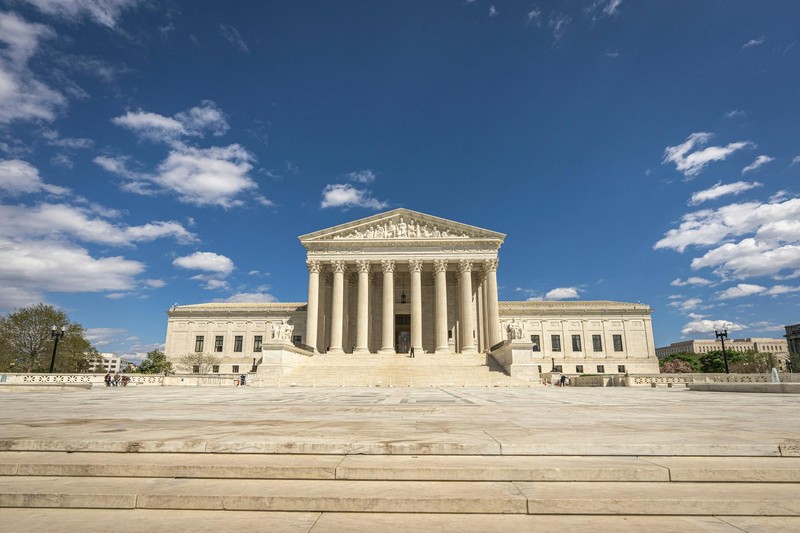
On Thursday, the US Supreme Court preserved the status quo for medication abortion access, issuing an order that blocks a lower court ruling which would have banned mifepristone from being mailed nationwide. The decision means the drug can continue to be prescribed via telehealth and sent by mail while a challenge brought by Louisiana against the Food and Drug Administration works through the lower courts.
Justices Samuel Alito and Clarence Thomas dissented. Alito called the court’s order “unreasoned” and “remarkable,” arguing that “what is at stake is the perpetration of a scheme to undermine our decision in Dobbs” — the 2022 ruling that overturned Roe v. Wade. Thomas went further, calling the drug companies’ operations a “criminal enterprise” under a 19th-century law banning the mailing of abortion drugs.
The court did not explain its reasoning or disclose the vote count. It also declined to hear arguments, as both sides had requested. The merits of the case will now return to the New Orleans-based 5th Circuit Court of Appeals.
Why Telehealth Access Matters
The ruling preserves an access channel that has become, for many patients, the only realistic one. After the fall of Roe, conservative states moved to ban or severely restrict in-clinic abortions. Demand for telehealth prescriptions surged. According to the Society for Family Planning, roughly one in four abortions nationwide were provided through telehealth in 2025, up from fewer than one in 10 in 2022. Medication abortions now account for more than 60 percent of all abortions in the US, according to research from the Guttmacher Institute.
For patients living hundreds of miles from the nearest clinic — particularly in states where clinics have closed entirely — a phone call and a mailing address are the difference between accessing care and not. Nancy Northup, president and CEO of the Center for Reproductive Rights, put it plainly: “This isn’t a matter of convenience — for patients living hundreds of miles from the nearest clinic, it’s the difference between getting an abortion or not.”
The ruling also preserves a form of access that crosses state lines, which is precisely why Louisiana sued. The state argues that the FDA’s decision to allow telehealth prescriptions and mail delivery undermines its own abortion ban by making it possible for Louisiana residents to receive the drug from out-of-state providers.
The FDA’s Curious Silence
One of the more notable details in this case is the FDA itself. The agency is the named defendant in the lawsuit, but it filed no brief with the Supreme Court, letting a deadline pass without comment. UC Davis law professor Mary Ziegler told NPR the Trump administration has been “trying to essentially kick the can down the road” on the issue, caught between anti-abortion groups demanding action and swing voters who may not share their priorities.
This week, FDA commissioner Dr. Marty Makary resigned under pressure from the White House. Whether the mifepristone lawsuit played a role is unclear, but anti-abortion groups had criticized Makary for doing too little to restrict abortion access in his position.
The pharmaceutical industry, meanwhile, lined up firmly behind the status quo. PhRMA, the drug industry’s trade group, filed an amicus brief urging the Supreme Court not to interfere with FDA rules. Former FDA leaders from both Democratic and Republican administrations, in their own filing, warned it would “upend FDA’s gold-standard, science-based drug approval system.”
The Safety Question
The data on mifepristone’s safety is striking. According to FDA figures as of 2023, there were five deaths associated with mifepristone use for every 1 million people who have used the drug since its approval in 2000. CNN’s analysis found that makes it safer than common prescription drugs including penicillin and Viagra.
Louisiana cited $92,000 in Medicaid costs for emergency care resulting from two mifepristone-induced abortions in 2025, and $17,000 spent investigating three cases of the drug being mailed from out of state, as evidence of economic injury.
What Comes Next
This order is a stay, not a final ruling. The case returns to the 5th Circuit, where a panel of three judges — all appointed by Republican presidents — has already signaled sympathy for Louisiana’s claims. The issue will almost certainly reach the Supreme Court again.
The 2024 mifepristone case was resolved on standing — the court unanimously ruled that anti-abortion doctors lacked legal standing to challenge FDA rules. Louisiana is trying a different path, claiming sovereign harm and economic injury. Whether those arguments survive scrutiny remains an open question.
The broader stakes extend beyond US borders. Medication abortion access is becoming a global policy fault line, and countries watching how the United States legislates reproductive health — and how it handles the tension between federal drug regulation and state abortion bans — are drawing lessons for their own policy debates.
The Supreme Court’s order on Thursday changed nothing about the underlying legal questions. It just ensured that, for now, the prescriptions keep flowing and the pills keep moving through the mail.
Discussion (8)