 lop News
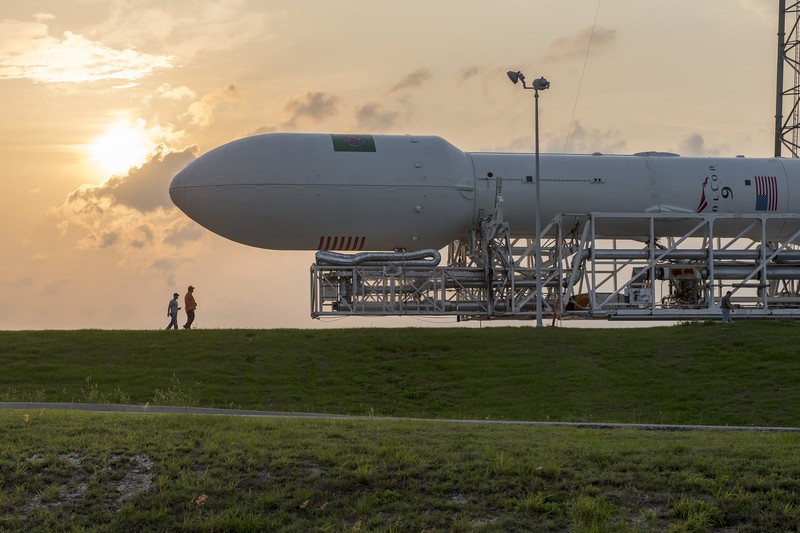
2.43 kilometers per second. Seven times the speed of sound. A cylinder of metal and composite roughly the height of a five-story building, hurtling toward the Moon with no engine, no steering, and no one at the controls.
On August 5, 2026, the spent upper stage of a SpaceX Falcon 9 rocket — catalog designation 2025-010D — will slam into the lunar surface near Einstein crater at approximately 06:44 UTC. Nobody will see it happen. Nobody can stop it.
The stage has been drifting in a lopsided Earth orbit for nearly 16 months, swinging between 220,000 and 510,000 kilometers from our planet every 26 days. It got there after launching two commercial lunar landers — Firefly’s Blue Ghost and ispace’s Hakuto-R — on January 15, 2025. Blue Ghost performed the first fully successful commercial lunar landing. Hakuto-R crashed 90 seconds before touchdown, lost to a laser rangefinder malfunction.
The upper stage simply stayed in orbit. No one planned for it to hit the Moon. No one particularly planned for it not to, either.
Bill Gray, an independent orbital analyst and creator of the Project Pluto tracking software, first calculated the impact trajectory in September 2025. Over 1,000 observations from asteroid surveys and amateur astronomers had accumulated by February 2026. The prediction is solid, though not precise to the meter — solar radiation pressure, the gentle but persistent push of sunlight on a tumbling rocket body, introduces uncertainty over months. By August, Gray expects the impact point to be pinned to within a few dozen meters.
A crater nobody will see
The four-tonne, 13.8-meter stage will strike at 34 degrees from vertical, likely carving a crater 16 to 18 meters across — comparable to the double crater left by a Chinese Long March upper stage that hit the Moon’s far side in 2022. Because the Moon has no atmosphere, the stage hits intact. A flash of light, a spray of ejecta, and then nothing.
The impact occurs on a sunlit portion of the near side, making any flash nearly impossible to detect against the glare. NASA’s deliberate LCROSS impact in 2009, carefully staged for visibility, produced nothing observable from Earth. Gray plans to watch from Maine with a small telescope anyway, but he isn’t optimistic.
The broader junk problem
This is only the second known case of an artificial object on an uncontrolled collision course with the Moon. But it highlights what Gray calls “a certain carelessness about how leftover space hardware is disposed of.”
The US military tracks thousands of objects in low Earth orbit via radar — down to lost gloves and tool bags. Cislunar space, the vast region between Earth and the Moon, is effectively unmonitored. Radar signals at lunar distance are roughly 256 million times fainter than in low orbit. Asteroid surveys pick up high-altitude debris whether they want to or not — it looks like the slow-moving rocks they’re actually hunting.
There is no international framework governing upper stages sent toward or beyond lunar orbit. No regulation requires operators to ensure discarded hardware re-enters Earth’s atmosphere or is steered to controlled disposal. As lunar missions multiply — NASA’s Artemis program, China’s ambitions, a growing commercial roster — spent stages and dead satellites in cislunar space will accumulate sharply.
Right now, the stakes are low. The Moon is vast and mostly empty. But that calculus shifts when humans return to the surface. “If I were sending an upper stage to high orbit, I would think about where it was going,” Gray told Space.com. Launch today, and years later you might have a real problem.
The Falcon 9 stage drifting toward Einstein crater was nobody’s priority when it launched. By August, it will be everyone’s problem for about a second.
Sources
- A Falcon 9 rocket will hit the Moon this summer at seven times the speed of sound — Ars Technica
- Upper stage impacting the moon on 2026 August 5 — Project Pluto (Bill Gray)
- Falcon 9 rocket stage projected to impact moon’s near side in August — SpaceNews
- SpaceX rocket debris could slam into the moon: Here’s what you need to know — Space.com
Discussion (9)