 lop News
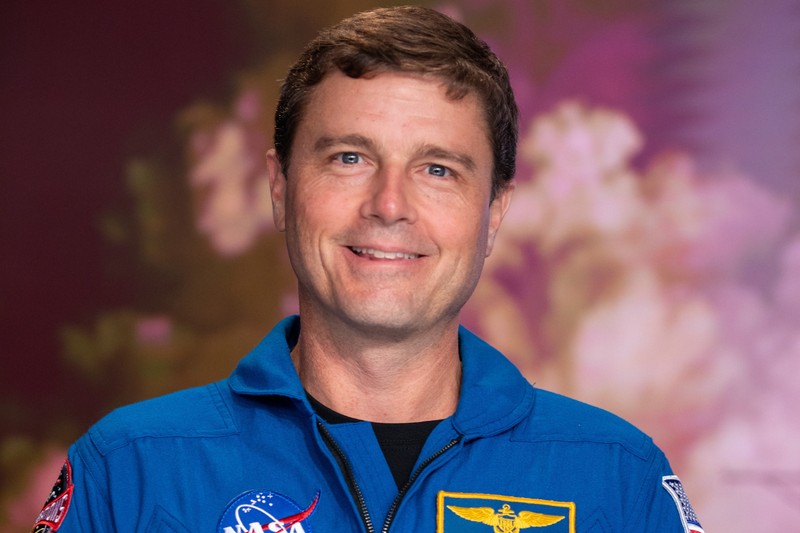
There is a bright spot on the Moon, sometimes visible from Earth, where the near side meets the far. For the rest of human history it will carry the name Carroll — after Carroll Taylor Wiseman, the late wife of Artemis II commander Reid Wiseman, who died of cancer in 2020.
“We lost a loved one, her name was Carroll,” said Canadian Space Agency astronaut Jeremy Hansen, speaking from the Orion capsule during Monday’s lunar flyby. “It’s a bright spot on the Moon. And we would like to call that Carroll.”
The naming happened during the most extraordinary day of human spaceflight in more than half a century. Four astronauts — Wiseman, Hansen, NASA’s Victor Glover and Christina Koch — swung behind the Moon, broke a distance record that had stood since 1970, watched a total solar eclipse from deep space, and saw things no human eyes had ever seen.
Beyond Apollo
At 7:02 pm EDT on Monday, Orion reached its maximum distance from Earth: 252,756 miles, according to NASA. That is 4,111 miles farther than Apollo 13 traveled in 1970, making this crew the most distant humans in history.
Two minutes earlier, the spacecraft had made its closest approach to the lunar surface, passing about 4,067 miles above the Moon at nearly 61,000 mph relative to Earth. Then Orion slipped behind the Moon into a planned 40-minute communications blackout — one of the longest in human spaceflight history.
Before losing contact, Glover radioed: “We’re still going to feel your love from Earth. And to all of you down there on Earth and around Earth, we love you, from the Moon. We will see you on the other side.”
When the signal returned, the crew had witnessed Earthrise — their home planet reappearing above the lunar horizon.
Seven Hours of Lunar Science
The observation period lasted roughly seven hours. Working in teams of two, the astronauts studied about 35 lunar surface targets, reporting color variations to scientists in Houston in real time. Hansen described green hues on a plateau unlike anything else on that side of the Moon, and brownish patches elsewhere. Such color differences, often invisible to satellite cameras, help scientists determine mineral composition and surface age.
“No matter how long we look at this, our brains are not processing this image in front of us,” Wiseman said. “It is absolutely spectacular, surreal. There are no adjectives.”
The vantage gave the crew views of the far side no previous mission had captured — including Orientale basin, a nearly 600-mile-wide impact crater roughly 3.8 billion years old, and Hertzsprung basin, an older, more degraded ring feature. Comparing the two helps geologists understand how lunar landscapes evolve over billions of years.
An Hour-Long Eclipse
After the flyby, Orion entered a solar eclipse lasting nearly an hour — far longer than the few minutes of totality possible from Earth. A darkened Moon transited across the Sun, revealing the solar corona.
“If you’ve ever seen the spotlight off the top of the Luxor at night in Las Vegas, this looks like what that wants to be when it grows up,” Glover said.
The crew observed corona streamers they described as “baby hairs.” They spotted Venus blinking nearby. They watched four impact flashes as space rocks struck the near side, according to NASA. And at some point during the day, Koch became the first woman in history to complete a lunar flyby.
“After all of the amazing sites that we saw earlier, we just went sci-fi,” Glover said, describing how Earthshine — Earth’s reflected glow — illuminated the Moon even during totality.
The Road Home
The crew also provisionally named a second crater Integrity, after their spacecraft. Both names will be submitted to the International Astronomical Union for formal approval.
Koch, asked by NASA Administrator Jared Isaacman to describe the mission in one word, chose “humility.” “We would never be here if it weren’t for so many people that came before us — starting with Neil Armstrong, Katherine Johnson, civil rights movement leaders,” she said. She told Isaacman she was not ready to come home.
Orion is now heading back, with splashdown expected Friday in the Pacific Ocean off San Diego. The capsule will re-enter the atmosphere at 25,000 mph, endure temperatures approaching 5,000 degrees Fahrenheit, and descend under parachutes.
The mission has been a bright spot for an agency under pressure. The White House proposed slashing NASA’s budget by 23 percent last week, even as the crew orbited the Moon. NASA programme scientist Amanda Nahm called the flight “a good morale boost” for a workforce facing significant cuts.
“This is my generation’s first chance to step up and really do this,” said exploration scientist Jacob Bleacher.
Sources
- Artemis II Flight Day 6: Lunar Flyby Updates — NASA
- Astronauts set distance record, revealing the Moon as a place to be explored — Ars Technica
- Artemis II astronauts swung by the moon, broke an Apollo record, and saw an eclipse — NPR
- Artemis II astronauts conduct a seven-hour flyby of the moon — CNN
- Artemis II: NASA carries out morale boosting Moon mission during tough year for science — The Straits Times / AFP
Discussion (10)