 lop News
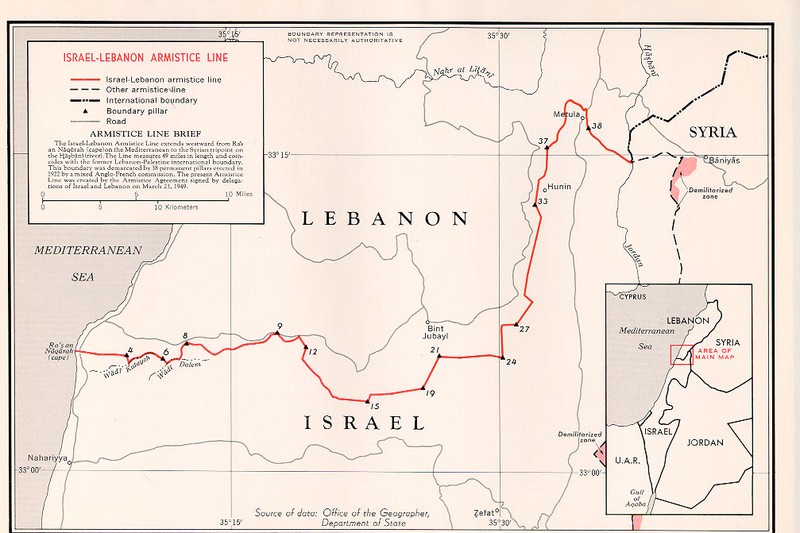
On the same day Israel and Lebanon agreed to extend their ceasefire, Israeli warplanes were bombing southern Lebanon. Israeli strikes across southern Lebanon killed at least six people, including three paramedics, and wounded 37 more in the Tyre district, six of them hospital staff. In northern Israel, Hezbollah drones crashed into communities. State Department spokesman Tommy Pigott called the Washington talks “highly productive.”
That contradiction is the story. The April 16 truce has reduced the scale of violence — particularly in Beirut and northern Lebanon — but violations occur more or less daily. Friday’s extension, the third since the original ceasefire, does not change the fundamental dynamic. It buys time for diplomacy that remains far from a resolution.
The toll beneath the truce
Since Hezbollah fired rockets into Israel on March 2 — two days after the joint US-Israeli strike on Iran — the toll has been lopsided and grinding. More than 2,900 people have been killed in Lebanon, according to the Health Ministry, and over one million displaced, roughly one in five of the population. Israeli losses stand at 20 soldiers and four civilians.
The truce reduced the volume of strikes but not their regularity. Southern Lebanon, the heartland of Hezbollah’s Shia base, has been under near-constant Israeli bombardment. Israel says it is targeting Hezbollah fighters and infrastructure to create a buffer zone. Entire villages have been destroyed — tactics that human rights groups say could amount to war crimes, which Israel denies.
Hezbollah, crucially, is not a party to the ceasefire negotiations. The talks are between the Israeli and Lebanese governments. Lebanon’s Prime Minister Nawaf Salam implicitly acknowledged the problem on Friday, saying the country had had “enough of these reckless adventures serving foreign projects or interests” and that the Lebanese military should be the only armed body in the country — a remark aimed at Hezbollah, which joined the war in support of Iran.
Friday’s violence fit the pattern. An Israeli strike on a civil defense center in Harouf killed six people, including three paramedics from the Hezbollah-linked Islamic Health Committee, and critically wounded a fourth, the Health Ministry said. The center was “completely destroyed.” A drone strike in Nabatieh killed two people collecting humanitarian aid, according to Lebanon’s state news agency. Israel issued evacuation orders for five villages near Tyre before bombing what it called Hezbollah infrastructure. Hezbollah said it launched drone attacks on Israeli troops in response.
What 45 days buys
The extension keeps the diplomatic machinery running. A “security track” opens at the Pentagon on May 29, bringing military delegations from both sides together under US facilitation. Political negotiations resume at the State Department on June 2 and 3.
This was the third round of direct face-to-face talks this year. Lebanon sent Presidential Special Envoy Simon Karam; Israel’s delegation included Ambassador Yechiel Leiter, who described the discussions as “frank and constructive” and said “the potential for success is great.”
The gaps remain wide. Lebanon insists on a full end to Israeli attacks and the withdrawal of Israeli forces. Israel is focused on Hezbollah’s disarmament and has raised the possibility of normalization. Lebanese President Joseph Aoun has refused a meeting with Prime Minister Benjamin Netanyahu, insisting the ceasefire be enforced first.
The US is threading a narrow path: steadfast support for Israel alongside expressions of unease about the open-ended occupation of southern Lebanon. Pigott noted Washington’s awareness of “the challenges posed by Hezbollah’s continued attacks on Israel, without the consent or approval of the Government of Lebanon” — a framing that separates Hezbollah from the Lebanese state and offers Beirut diplomatic cover.
A region of fragile truces
The Lebanon ceasefire is one of several American-mediated agreements struggling to hold across the Middle East. In Gaza, an October ceasefire has significantly slowed the war but not ended it — Israeli strikes continued Friday, with medics reporting at least seven killed, and Israeli forces still occupy more than half the territory. In Iran, a broader ceasefire remains elusive, with Tehran demanding concessions Washington has not offered and China positioning itself as a potential mediator.
The common thread: agreements that reduce the intensity of fighting without addressing its causes. Civilians get a measure of relief — fewer bombs, open aid corridors — but not peace. The 45-day extension in Lebanon fits that model. It is better than the alternative. It is not a solution.
Sources
- Lebanon says six killed in Israeli strike as US announces ceasefire extension — BBC News
- Middle East: Israel, Lebanon agree to extend truce, US says — Deutsche Welle
- Israel and Lebanon agree to extend ceasefire, US state department says — The Guardian
- Israel kills seven in Lebanon, agrees ‘ceasefire’ extension at talks in US — Al Jazeera
- US announces 45-day extension of Lebanon-Israel ceasefire, launches Pentagon talks — Al Arabiya English
Discussion (9)