 lop News
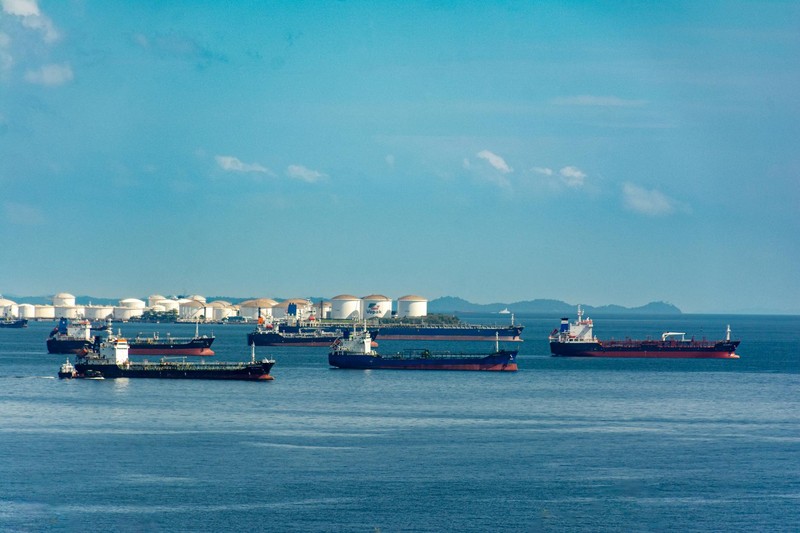
Nearly one billion barrels. That is the size of the hole in the world’s oil supply, according to Shell CEO Wael Sawan — and it grows deeper every day the Iran war drags on.
“The hard facts are we have dug ourselves a hole of close to a billion barrels of crude shortage at the moment, either because of locked in barrels or unproduced barrels,” Sawan told investors on Shell’s first-quarter earnings call. “And of course, that hole is deepening every single day, so the journey back will be a long one.”
Halliburton CEO Jeffrey Miller echoed the figure on his April 21 earnings call. The deficit reflects two months of near-total disruption at the Strait of Hormuz, the 21-mile chokepoint through which roughly one-fifth of global traded oil passed before the US and Israel attacked Iran on Feb. 28.
What the Oil Buffer Actually Does
The global oil system runs on inventories — strategic reserves held by governments, commercial stockpiles at refineries and terminals, crude in transit on tankers. These are the shock absorbers. When supply is cut, the buffer cushions the blow while markets adjust.
That buffer is depleting at a record pace. Morgan Stanley estimates global stockpiles fell by about 4.8 million barrels per day between March 1 and April 25 — far exceeding any previous quarterly drawdown in data compiled by the International Energy Agency. Visible stocks are already near their lowest since 2018, according to Goldman Sachs.
Around 12 percent of global crude supply has been taken off the market. Emergency releases and increased production have covered part of the gap. Governments have pledged 400 million barrels from strategic reserves in a coordinated IEA release, but the US has deployed only about 80 million of the 172 million it promised — wary of pushing its Strategic Petroleum Reserve toward its lowest level since 1982.
The buffer also has a floor. JPMorgan’s head of global commodities research, Natasha Kaneva, warns that inventories hit an “operational minimum” well before reaching zero — the bare amount needed for pipelines, storage tanks and export terminals to function. OECD countries could reach operational stress levels by early June and operational minimums by September if the strait stays closed.
Visible Shortages by Summer
The grace period is ending. Tankers that left the Persian Gulf before the war have all reached their destinations, ConocoPhillips CFO Andrew O’Brien told investors on April 30.
“We are going to start to see some import-dependent countries potentially start to face critical shortages as we get into the June-July time frame,” O’Brien said.
Chevron CEO Mike Wirth has warned that exports through Hormuz would take months to normalize even after the conflict ends. The strait must be cleared of mines. Roughly 1,550 vessels — carrying 22,500 mariners — remain stranded in the Gulf, according to the US military. Exxon Mobil CEO Darren Woods puts the timeline at two months.
The countries most immediately at risk are in Asia. Traders point to Indonesia, Vietnam, Pakistan and the Philippines. Japan and India’s stockpiles are at 10-year seasonal lows, according to analytics firm Kayrros. European jet fuel stocks are depleting fast heading into summer.
From Strait to Pump
US gasoline prices have risen 50 percent since the war began. The average gallon costs $4.56, according to AAA. Jet fuel costs have nearly doubled. British Airways’ parent IAG expects fuel costs to hit €9 billion this year — roughly €2 billion more than last year.
Insurance rates for ships transiting the region have surged from roughly 1 percent to as much as 10 percent of cargo value, according to shipping experts — a cost passed directly into delivered fuel prices.
Brent crude traded near $100 a barrel on Friday, up from roughly $70 before the conflict. Prices had dipped earlier in the week on ceasefire hopes, but rose 3 percent after US and Iranian forces exchanged fire in the strait.
A Redrawn Logistics Map
Saudi Arabia, Turkey and the UAE are accelerating plans for overland corridors bypassing Hormuz — routing cargo from ports in Oman and the UAE, through Saudi Arabia and Jordan, to the Mediterranean. Robert Mogielnicki of consultancy PoliSphere Advisory says a return to established infrastructure will eventually resume, but that won’t necessarily fully stop the structural shifts that started in the meantime.
What the CEOs Are Not Saying
The supply picture is genuinely dire, and the executives are correct about the numbers. But they are also beneficiaries of higher prices, and their warnings sustain the very market conditions that pad margins. What they are not discussing is the restocking boom that follows. Plains All American Pipeline CEO Willie Chiang told investors that countries will likely rebuild reserves above pre-war levels, “essentially creating an additional layer of demand into the future.”
The billion-barrel hole will need filling. The companies measuring it will be the ones paid to refill it.
Sources
- Shell CEO says oil market is short nearly 1 billion barrels due to Iran war, and the hole deepens every day — CNBC
- Iran war is draining world’s oil buffer at an unprecedented pace — Bloomberg via Business Times Singapore
- These numbers show the global impact of Iran’s grip on the Strait of Hormuz — AP News
- Oil prices rise after US and Iran exchange fire in Hormuz strait — BBC
- Middle East states eye transport resilience with new logistics corridor to bypass Hormuz — South China Morning Post
Discussion (8)