 lop News
The State Department’s review of whether it was safe to send 350,000 Haitians home took 53 minutes. A Department of Homeland Security official emailed a colleague at State. The reply came back in under an hour: “State believes that there would be no foreign policy concerns with respect to a change in the TPS status of Haiti.”
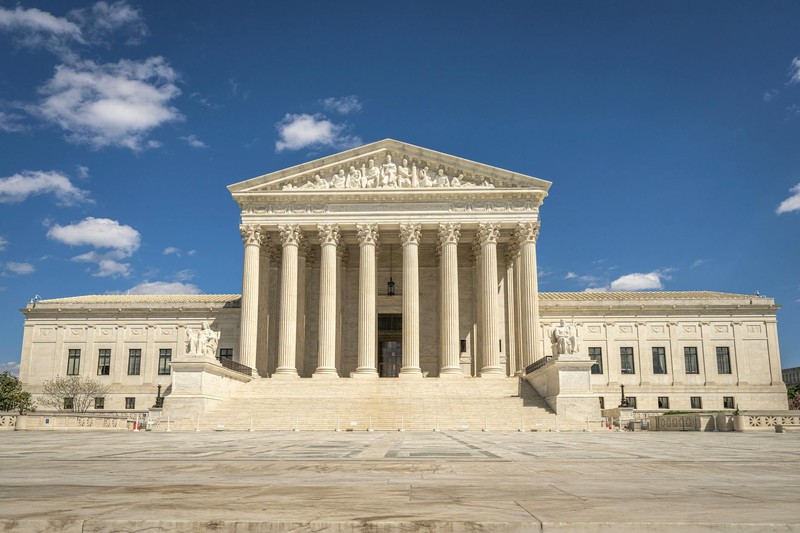
That exchange, revealed in court filings, sat at the center of Supreme Court arguments on Wednesday as the court’s conservative majority signaled willingness to let the Trump administration strip Temporary Protected Status from hundreds of thousands of Haitians and Syrians — people who have built lives in the United States over years, sometimes decades, because the US government itself determined their home countries were too dangerous for return.
The case directly concerns roughly 350,000 Haitians, protected under TPS since the 2010 earthquake, and about 6,100 Syrians, protected since 2012. But the implications extend far wider. The administration has moved to end TPS designations for all 13 countries that have come up for review since Trump returned to office, according to CNN. Nearly 1.3 million people held TPS status at the start of his second term.
A Blank Check for the Executive
The core legal question is whether federal judges can review the Department of Homeland Security’s decision to terminate TPS at all. Solicitor General John Sauer argued that the 1990 statute establishing the program bars judicial review entirely.
Pressed by Justice Sonia Sotomayor on whether that meant no procedural step could be challenged, however cursory, Sauer was unequivocal. “Correct,” he said.
“What you’re basically saying is that Congress wrote a statute for no purpose,” Sotomayor replied.
Justice Elena Kagan pressed further. What if the DHS secretary asked the State Department for an assessment of conditions in Syria and received a reply about a baseball game instead? “If she sought input from State, she has consulted,” Sauer responded flatly. Kagan’s reply: “I mean, really?”
Ahilan Arulanantham, representing Syrian plaintiffs, called the government’s reading of the statute “like a blank check” that “contravenes the text, bedrock administrative law and common sense.”
A Possible Narrow Path
There were signs of a possible narrow ruling on procedural grounds. Chief Justice John Roberts questioned the administration’s reliance on Trump v. Hawaii, the 2018 travel ban case, noting that this case concerned the DHS secretary and people already present in the US, not the president and entry restrictions. “Your argument is a significant expansion of Trump v. Hawaii, isn’t it?” Roberts asked.
Justice Amy Coney Barrett asked whether the administration would concede that a race-discrimination challenge could still go forward. Sauer appeared to concede the point.
Both Roberts and Barrett seemed open to the argument that the DHS had not followed required procedures — particularly the consultation with the State Department, which lower courts found too meager to satisfy the law’s requirements. But Barrett also questioned how much a procedural victory would actually help. “Is this going to get you very much, I mean, if it’s just kind of a box-checking exercise?”
The Question of Motive
The liberal justices pressed hard on President Trump’s history of inflammatory statements about Haiti — calling it a “shithole country” in 2018, a “hellhole” in 2025, and falsely claiming during the 2024 campaign that Haitian migrants in Ohio were eating pets.
Justice Sonia Sotomayor invoked Trump’s comments directly, telling the court: “We have a president saying at one point that Haiti is a ‘filthy, dirty, and disgusting s-hole country.’ I’m quoting him. He declared illegal immigrants, which he associated with TPS, as ‘poisoning the blood of America.’”
Geoffrey Pipoly, representing Haitian plaintiffs, called the administration’s review “a sham,” arguing the “true reason for the termination is the president’s racial animus toward non-white immigrants and bare dislike of Haitians in particular.”
The conservative justices largely avoided the racial animus question. Two — Samuel Alito and Neil Gorsuch — asked Sauer no questions at all, according to The Guardian, suggesting they were satisfied with the administration’s arguments.
Ripple Effects Beyond US Borders
A ruling siding fully with the administration would not only affect Haitians and Syrians. Last year, the court allowed the stripping of protections from 300,000 Venezuelans on its emergency docket, without explaining its reasoning. Analysts told The Guardian the administration would likely seek to end TPS for all remaining countries if the court rules in its favor.
For Haiti, where gang violence continues to destabilize the country, the return of hundreds of thousands of people would compound an already severe humanitarian crisis. For Syria, where the post-Assad government is still consolidating control after decades of brutal rule, the same calculus applies. For the broader Caribbean and Middle East, the displacement would strain neighboring states with limited capacity to absorb returning populations.
The court is expected to rule by late June or early July.
Discussion (10)