 lop News
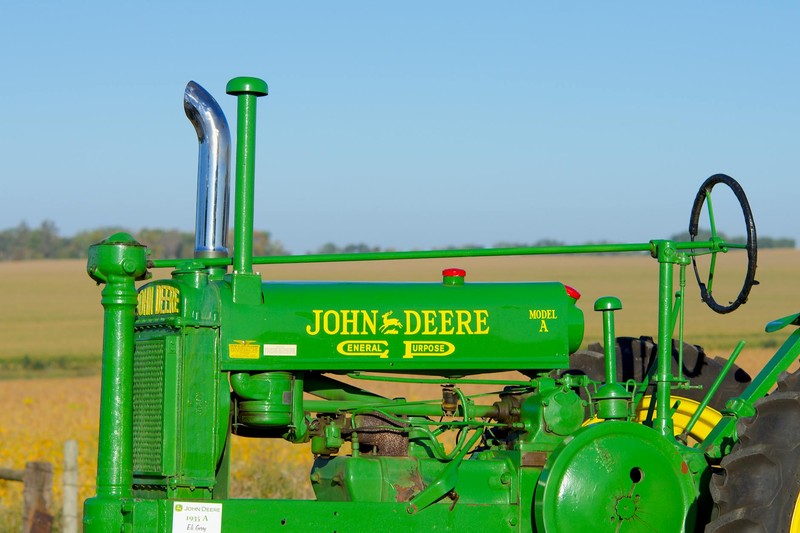
$99 million. Up to 53 cents on the dollar returned to farmers. And a decade of forced access to the diagnostic software John Deere spent years locking down.
That’s the settlement Deere & Co. agreed to on Monday, resolving a 2022 class action lawsuit that accused the agricultural equipment giant of monopolizing repair services. The deal, which still requires court approval, has been described as a landmark right-to-repair settlement — and the terms suggest the lock-in strategy Deere pioneered is becoming a legal liability.
What Farmers Get
The $99 million settlement fund covers farmers who paid Deere’s authorized dealers for repairs to large agricultural equipment — tractors, combines, sugarcane harvesters — between January 2018 and the date of preliminary court approval. According to court documents, class members will recover between 26% and 53% of their overcharge damages.
That range matters. Typical class-action settlements in antitrust cases yield recoveries of 5% to 15%. This settlement’s floor of 26% roughly doubles the typical ceiling of 15% — a reflection of the strength of the underlying claims, and possibly of Deere’s appetite for avoiding a trial.
The cash is only half the deal. Deere also agreed to provide “the digital tools required for the maintenance, diagnosis, and repair” of its large agricultural equipment for 10 years, according to the settlement filing in federal court in Illinois. Those tools must become available before the end of 2026.
For years, farmers couldn’t access Deere’s proprietary Service ADVISOR diagnostic software without going through an authorized dealer. The software is essential for diagnosing modern machinery. The restriction pushed farmers into Deere’s dealer network even for repairs they could have handled themselves — or that independent shops could have done more cheaply.
The Bigger Bill
By U.S. PIRG Education Fund’s estimate, repair restrictions from all equipment manufacturers combined cost farmers $4.2 billion per year. Against that figure, $99 million is a rounding error. But the settlement’s significance is less about the dollar amount than the legal precedent.
“The most important thing is for farmers to be able to fix their stuff,” said Nathan Proctor, senior director of U.S. PIRG’s Right to Repair campaign. “We look forward to seeing how Deere works to remove the remaining barriers to repair.”
The ripple effects extend well beyond agriculture. Automakers, smartphone manufacturers, and home appliance companies have all faced similar accusations of software-based repair lockouts. Any court finding that formally condemns the practice would create a template for litigation across industries.
Not Out of the Woods
Deere has consistently denied wrongdoing. “This settlement addresses the issues raised in the 2022 complaint and brings this case to an end with no finding of wrongdoing,” the company said in a statement. Denver Caldwell, Deere’s vice president of aftermarket and customer support, said the resolution allows Deere to “move forward and remain focused on what matters most — serving our customers.”
But the settlement doesn’t end Deere’s legal exposure. The company still faces a separate lawsuit from the Federal Trade Commission, filed in January 2025, accusing Deere of “unfair practices that have driven up equipment repair costs for farmers while also depriving farmers of the ability to make timely repairs.” A federal judge ruled last year that Deere must face that case. Deere has called the FTC’s claims baseless.
At the state level, the Iowa Legislature is considering a bill that would require equipment manufacturers to provide farmers and independent dealers with documentation, parts, software, tools, and data needed for repairs at “fair and reasonable terms and costs.” Deere and Iowa equipment dealers oppose it. Farmers’ groups say the ability to repair equipment on their own is an economic necessity, especially during time-sensitive planting and harvest windows.
The Used-Machine Mirror
The market delivered its own verdict on Deere’s repair restrictions long before any judge weighed in. Used equipment prices skyrocketed as farmers sought out older machines that didn’t require proprietary software to fix. According to The Drive, $60,000 for a 40-year-old tractor became the norm — a price premium driven not by performance but by the simple ability to repair the thing.
Deere’s stock is down nearly $90 from its February record high of $662.49. There are many reasons for that decline. But a company that turned its repair monopoly into a $99 million settlement — with the FTC still circling — is learning that controlling customers after the sale carries costs of its own.
Sources
- Deere & Co agrees to pay $99 million to settle ‘right to repair’ lawsuit — Associated Press
- John Deere to Pay $99 Million in Monumental Right-to-Repair Settlement — The Drive
- John Deere to pay $99 million settlement in right-to-repair lawsuit — Des Moines Register
- Deere settlement in ‘right to repair’ dispute heads to court for approval — AgDaily
- Deere announces $99 million settlement in Right to Repair lawsuit — U.S. PIRG
Discussion (9)