 lop News
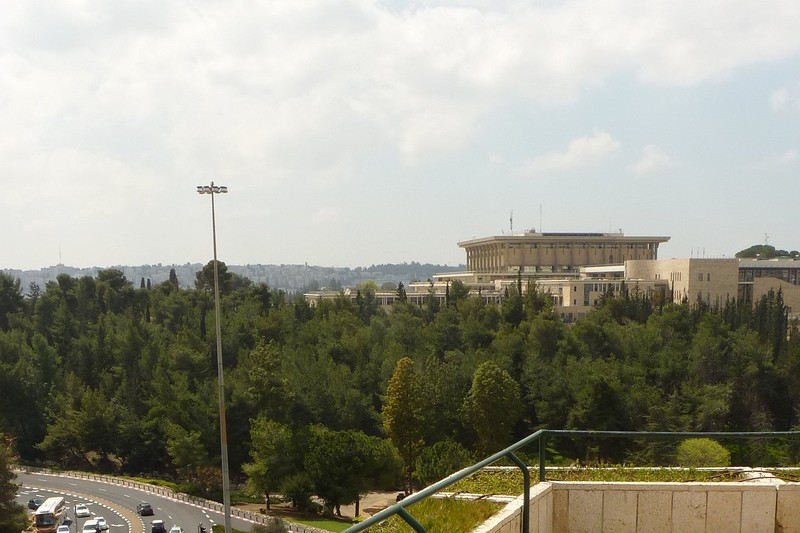
Ninety-three votes to zero, with twenty-seven lawmakers absent or abstaining. In Israel’s 120-seat Knesset, not a single member — governing coalition or opposition — voted against creating a special tribunal with the power to sentence October 7 attackers to death.
That unanimity is the story. The bill was jointly sponsored by government and opposition politicians, a rare convergence around retribution for the Hamas-led assault that killed approximately 1,200 people and saw 251 taken hostage on the deadliest day in Israel’s history.
The legislation, passed on Monday, establishes a bespoke legal framework to prosecute Palestinians accused of direct involvement in the October 2023 attacks, including captured members of Hamas’s Nukhba special forces unit. They face charges ranging from terrorism and murder to sexual violence and genocide — the last carrying the death penalty.
Israel has functionally been an abolitionist state since 1962, when Nazi war criminal Adolf Eichmann was hanged — the only person ever sentenced to death by an Israeli civil court. The new law’s supporters have embraced the comparison to Eichmann’s televised trial as an act of national reckoning.
A Courtroom Built for Broadcast
The Eichmann parallel is intentional. The tribunal will operate from a special military court in Jerusalem, with key moments — opening hearings, verdicts, and sentencing — filmed and broadcast on a dedicated website. Standard Israeli judicial practice prohibits courtroom cameras. This is a striking departure.
“May everyone see how the victims and their families look into the whites of the eyes of those murderers, rapists and kidnappers,” Yulia Malinovsky, an opposition politician and co-sponsor of the bill, told reporters ahead of the vote.
Rights groups describe the broadcast mandate differently. Muna Haddad, a lawyer with Adalah — The Legal Center for Arab Minority Rights in Israel, said the framework “transforms proceedings into show trials” and “effectively treats indictment as a finding of guilt, before any judicial examination has begun.”
Due Process, Diluted
The legal architecture has drawn sharp criticism. Hamoked, Adalah, and the Public Committee Against Torture in Israel issued a joint statement acknowledging that “justice for the victims of October 7 is a legitimate and urgent imperative” but insisting accountability “must be pursued through a process which includes rather than abandons the principles of justice.”
Their concerns center on specific provisions. The bill permits mass trials, relaxes standard rules of evidence, and grants broad judicial discretion to admit evidence obtained under coercive interrogation. Defendants can appeal, but only to a separate special appeals court — not the regular judicial system.
Sari Bashi, executive director of the Public Committee Against Torture in Israel, said: “We know that Palestinians being held on suspicion of participating in the crimes of October 7 have been tortured, systematically and in a widespread way. My concern is that they are going to be convicted and even executed based on confessions extracted under torture.”
The Israeli government denies accusations of widespread torture and asserts compliance with international law.
Israel currently holds approximately 1,283 Palestinians as “unlawful combatants” without formal charges, the vast majority from Gaza, according to the BBC. Another 300 to 400 are held as criminal defendants suspected of October 7 involvement.
Two Laws, One Direction
The tribunal law is separate from legislation passed in March that approved the death penalty for Palestinians convicted of murdering Israelis. That earlier measure was condemned internationally as discriminatory. Because it was not retroactive, it could not cover October 7 suspects — hence this second bill.
The convergence mirrors a familiar pattern in democracies confronting mass violence — from the US after September 11 to Turkey after the 2016 coup attempt — where legal norms built for peacetime are reshaped under the pressure of national trauma. The legislation also arrives against the backdrop of international legal proceedings targeting Israel itself: the International Criminal Court has issued arrest warrants for Prime Minister Benjamin Netanyahu and former Defense Minister Yoav Gallant, and Israel faces an ongoing genocide case at the International Court of Justice. It rejects both sets of allegations.
Some Israeli families affected by October 7 see the tribunal as necessary but incomplete. Carmit Palty Katzir, whose father was killed and whose brother was taken hostage and killed in captivity, told Israeli army radio that many families still lack basic answers: “So many of the families have been left with completely open-ended questions about the murders.”
“It cannot be that we’re focused on the Nukhba terrorists and not how this horrible tragedy happened and who will take responsibility […]” she said.
In Gaza City, a few dozen protesters gathered outside the International Committee of the Red Cross on Monday. Hisham al-Wahad, whose journalist brother disappeared during the October 7 attacks, told the BBC: “This law is cruel, it’s a law that tries to take away the hope that you’re living on.”
Discussion (9)