 lop News
Eight dead on Saturday morning. Ninety by the afternoon. Nine workers still trapped underground, their fate unknown.
A gas explosion at the Liushenyu coal mine in northern China’s Shanxi province has become the country’s deadliest mining disaster in more than a decade, and the numbers keep deteriorating. The blast tore through the mine at 7:29 pm local time on Friday, when 247 workers were on duty below ground, according to China’s official news agency Xinhua.
More than 100 people have been taken to hospital, many suffering from toxic gas exposure, state broadcaster CCTV reported. China’s Ministry of Emergency Management dispatched 345 personnel across six rescue teams to the site in Qinyuan county. Footage aired by state media showed helmeted rescuers carrying stretchers through a grid of ambulances.
The Liushenyu mine is operated by the Tongzhou Group. Company executives have been detained, Xinhua reported, though the specific charges have not been disclosed. The cause of the explosion remains under investigation.
‘Exceeded limits’
State media initially reported four deaths and dozens trapped after carbon monoxide levels inside the mine were found to have, in the words of Xinhua, “exceeded limits.” Carbon monoxide is colourless, odourless, and lethal in concentrated doses — a familiar killer in underground coal extraction, where gas pockets can ignite with devastating force.
By early Saturday, the reported death toll had climbed to eight, with 38 workers still trapped. By Saturday afternoon, it had surged to at least 90, with nine remaining unaccounted for, Xinhua reported. The rapid escalation suggests the full scale of the disaster may not yet be clear.
The political response
Chinese President Xi Jinping called for authorities to “spare no effort” in treating the injured and searching for survivors, according to Xinhua. He ordered an investigation into the cause and demanded accountability. He also instructed all regions and departments to “draw lessons from this accident, remain constantly vigilant regarding workplace safety, and resolutely prevent and curb the occurrence of major and catastrophic accidents.”
Premier Li Qiang echoed the directive, calling for the timely and accurate release of information and rigorous accountability — language that in China’s political system often signals that officials will face consequences.
When industrial disasters reach this scale, Beijing’s response follows a familiar pattern: public directives from the top, swift detentions of corporate leadership, and promises of reform. The pattern reflects both genuine alarm and the political risk that mass-casualty events pose to the Communist Party’s legitimacy.
A safer record, laid bare
China has made real progress on mine safety. Deadly accidents were routine in the early 2000s, when thousands of miners died each year in blasts, floods, and collapses. Stricter regulations and improved practices have significantly reduced fatalities over the past two decades.
But this disaster exposes the limits of that progress. Shanxi province alone — China’s coal-mining capital, larger than Greece with a population of 34 million — produced 1.3 billion tons of coal last year, according to the Associated Press, accounting for roughly a third of the national total. That scale of extraction carries inherent risk, and enforcement of safety standards across hundreds of sites is uneven.
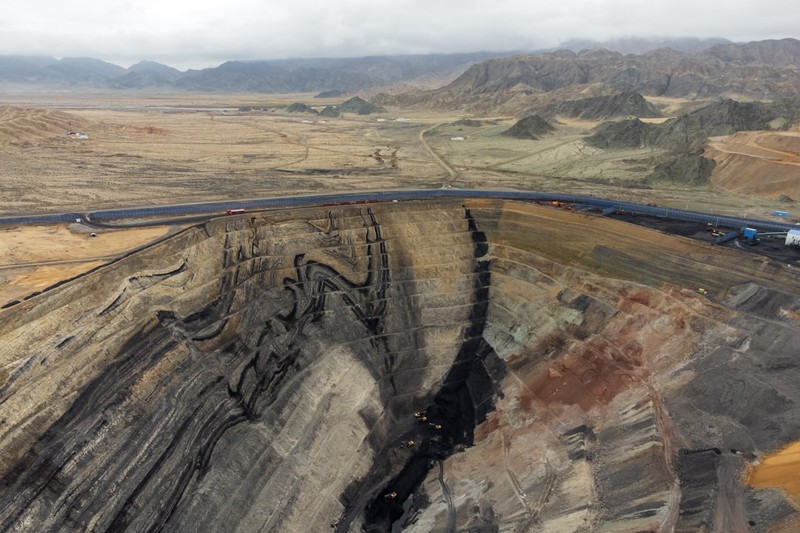
The Liushenyu blast is the deadliest mining accident in China since 2009, when an explosion at a mine in northeastern Heilongjiang province killed more than 100 people. In 2023, a collapse at an open-pit coal mine in Inner Mongolia killed 53.
China remains the world’s largest consumer of coal and the biggest emitter of greenhouse gases, even as it installs renewable energy capacity at record speed. The transition away from coal is underway — but for the miners still working the seams beneath Shanxi, it is not moving fast enough to change the math of danger.
Nine workers remain underground.
Discussion (9)