 lop News
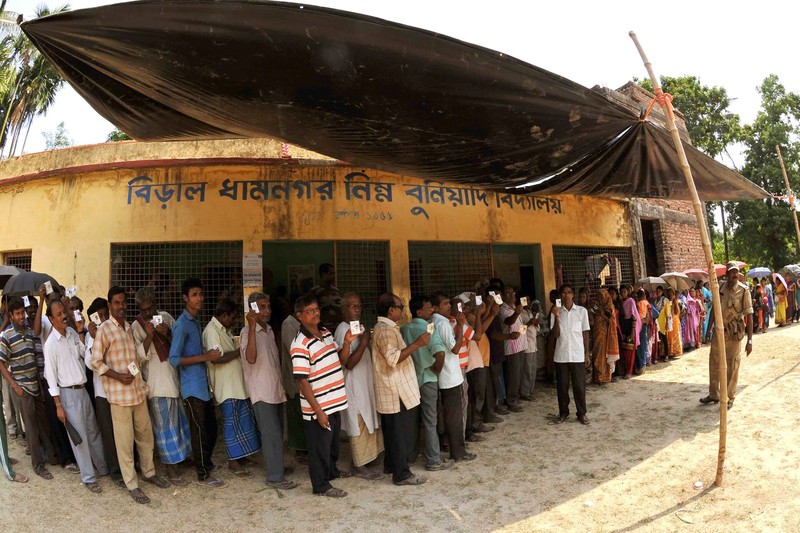
Muhammad Daud Ali served in the Indian army for decades. He has a passport, service records, and a wife who remains on the voter list. But when West Bengal published its revised electoral rolls ahead of state elections this month, Ali and his three children had been erased — stripped of their voting rights alongside roughly nine million others.
Nearly 12% of West Bengal’s 76 million voters were removed in a single exercise known as the Special Intensive Revision, or SIR. About six million were classified as absentee, deceased, or duplicate entries. The remaining 2.7 million — people who challenged their expulsion with documentation — remain deleted, their cases pending before tribunals that will not finish hearing them before voting begins on 23 April.
A Purge by Algorithm
The Election Commission describes the SIR as routine housekeeping: removing outdated entries and adding genuine voters. Chief Election Commissioner Gyanesh Kumar has said the goal is a “pure electoral roll” — no eligible voters excluded, no ineligible persons included.
But the process deployed an AI-driven algorithm to flag “logical discrepancies” in voter records. The system failed to account for basic facts of Bengali life: there is no standard way to transcribe Bengali names into English; surnames shift across generations; women routinely use nicknames on official documents. Parents under 16 at the time of a child’s birth and families with more than five siblings were flagged as suspicious — patterns common in earlier generations.
SY Quraishi, a former chief election commissioner, was blunt: “The SIR is completely unnecessary, it is designed to harass. […] It took us 30 years to achieve 99% accuracy in the rolls. They expect to exceed this in three months. Why this frantic rush if the main objective is accuracy?”
A Disproportionate Blow
The deletions have not landed evenly. Research by the Kolkata-based SABAR Institute found that Muslims account for roughly 34% of those removed — significantly above their 27% share of West Bengal’s population. Around 65% of the 2.7 million in disputed limbo are Muslim, according to constituency-level data compiled by political parties.
In Nandigram, Muslims make up about 25% of the population but more than 95% of deleted names, according to SABAR. Hindu communities were also hit — in Paschim Bardhaman, roughly 80% of those removed are Hindus, many from Hindi-speaking communities with roots in northern India. In parts of Kolkata, nearly 30% of voters were struck off.
The heaviest deletions fell on border districts with Bangladesh — North 24-Parganas, Murshidabad, Malda, Nadia — where the politics of migration and identity run hottest.
The Prize and the Timing
West Bengal is a prize the BJP has never won. Governed by Chief Minister Mamata Banerjee’s Trinamool Congress since 2011, it holds the fourth-highest number of parliamentary seats in India. The BJP secured roughly a quarter of its 294 assembly seats in 2021.
Prime Minister Narendra Modi and Home Minister Amit Shah have framed the roll revision as national security necessity, targeting what the BJP government calls “infiltrators” — a term used by both Modi and Home Minister Amit Shah, and widely understood to mean undocumented Bangladeshi immigrants. The TMC calls it a dog whistle for Muslims. TMC MP Sagarika Ghose has described the purge as “a constitutional crime,” while Banerjee has accused the Election Commission of partisanship.
Thirteen states and territories have undergone the SIR process. West Bengal is the only one where it was followed by additional special adjudication — and the only one facing an imminent election.
India’s Supreme Court allowed the polls to proceed. In a 13 April order, the bench of Chief Justice Surya Kant and Justice Joymalya Bagchi directed that wherever tribunals decide appeals by 21 or 27 April — two days before each polling phase — those rulings should take effect through supplementary rolls. But mere pendency of an appeal does not entitle a deleted voter to cast a ballot. Over 3.4 million appeals have been filed. The volume makes it certain that hundreds of thousands will arrive at polling stations they cannot enter.
Federal minister Sukanta Majumdar, a BJP leader from the state, told the BBC the revision was necessary because “only Indian citizens can choose prime ministers and chief ministers,” and blamed the state government for delaying the process through litigation.
What Nine Million Deletions Mean
Political scientist Sibaji Pratim Basu told the BBC: “There is no example of an election happening in India with voters’ rights remaining suspended.” Economist and author Parakala Prabhakar put it more starkly to The Guardian: “This is about killing the citizenship of minorities. It is a bloodless political genocide.”
Psephologist Yogendra Yadav, who challenged the SIR before the Supreme Court, said the problem lies with a state demanding documents it never provided — name spellings recorded differently across decades of bureaucratic registers, now weaponized by algorithm.
Back in Murshidabad, 49-year-old Sohidul Islam, deleted despite attending two SIR hearings and submitting all documents, put it simply to Al Jazeera: “If you dig this land, you can find our umbilical cords here. We will vote here, and we will die here.”
Votes will be counted on 4 May.
Sources
- Political turmoil in Indian border state as nine million lose voting rights — BBC News
- Millions in India stripped of vote before critical state election, as government seeks to ‘purify’ electoral roll — The Guardian
- Muslims the target? Fury as millions lose voting rights in India’s Bengal — Al Jazeera
- West Bengal SIR | SC Big Order on Voter Appeals Cleared by Appellate Tribunals — SCC Online
Discussion (9)