 lop News
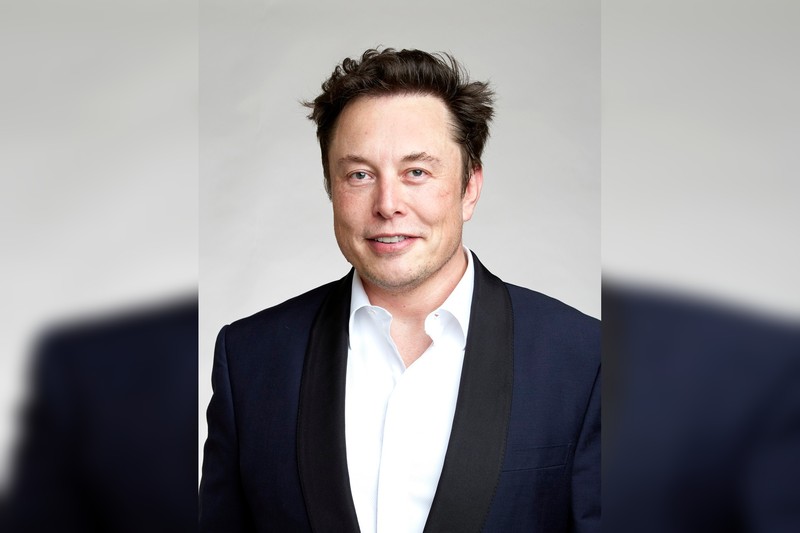
Three days of testimony. One torn painting. $150 billion in damages. And at the center of it all, the world’s richest man trying to reclaim a company he walked away from eight years ago.
That is the scene in an Oakland courtroom, where Elon Musk’s lawsuit against OpenAI enters its final week, though it remains unclear whether CEO Sam Altman will take the stand.
Musk co-founded OpenAI in 2015 as a nonprofit AI research lab. He left in 2018 after what witnesses describe as a spectacular falling-out. Three years later, OpenAI launched ChatGPT and ignited a commercial AI market that has since made OpenAI one of the world’s most valuable private companies. Musk wants a piece of it — or, more precisely, he wants a court to agree that Altman and president Greg Brockman stole it from him.
What the Trial Has Revealed
Over two weeks of testimony, the trial has laid bare the raw dynamics behind OpenAI’s creation and Musk’s departure.
Musk testified that he came up with the idea, the name, recruited key personnel, and provided all initial funding. “The only one who could actually call Satya Nadella and have him pick up was me,” he told the court, according to Reuters.
Brockman offered a different account. Under oath, he described a founder who was largely unavailable, relied on proxies for communication, and never formalized open-source requirements or nonprofit commitments. When negotiations over equity turned against him, Brockman said Musk became enraged — tearing a painting of a Tesla Model 3 off the wall and storming out, according to CNBC. “I thought he was going to hit me,” Brockman testified, according to the Guardian.
Brockman also revealed that Musk enlisted several OpenAI employees to do months of unpaid work for Tesla’s Autopilot team in 2017 — a detail that complicates Musk’s portrait of himself as a purely philanthropic benefactor.
Following the Money
At the heart of the case is a question about what OpenAI was supposed to be — and who gets to profit from what it became.
Musk’s legal team has framed the lawsuit as a defense of charitable giving. “It was specifically meant to be for a charity that does not benefit any individual person,” Musk testified. “I could’ve started it as a for-profit and I specifically chose not to.”
But the word “charity” does not appear in the 2015 blog post announcing OpenAI’s formation, as Reuters noted. And the judge pointed out the obvious tension: Musk now runs xAI, a competing for-profit AI company. “It’s ironic that your client, despite these risks, is creating a company that’s in the exact space,” Gonzalez Rogers said, according to Reuters.
The financial stakes are enormous. Brockman’s equity in OpenAI’s for-profit subsidiary is worth roughly $30 billion, CNBC reported. Musk is seeking $150 billion in damages.
The Judge in Control
Presiding over the case is Judge Yvonne Gonzalez Rogers, a veteran of high-profile tech litigation including the Epic Games v. Apple antitrust battle. The nine-person jury serves in an advisory capacity; Gonzalez Rogers will make the final ruling.
She has run a tight courtroom — no lunch breaks, two 20-minute pauses per day, proceedings starting at 08:00 sharp — and has shown little patience for theatrics. When Musk posted “Scam Altman” on X, she demanded a ceasefire. “How can we get this done without you making things worse outside the courtroom?” she asked, according to the BBC.
When Musk tried to object to opposing counsel’s questions as though he were a lawyer, she shut him down. “Let’s remind everyone in the courtroom that you are not a lawyer.”
What Comes Next
The trial’s final week is expected to feature testimony from Microsoft CEO Satya Nadella and former OpenAI researcher Ilya Sutskever. Internal emails shown in court revealed that Microsoft executives were deeply skeptical about OpenAI as recently as 2018, with CTO Kevin Scott calling himself “highly skeptical of an imminent breakthrough in AGI,” according to Wired. Microsoft went on to commit $13 billion to the company.
Altman’s testimony will face scrutiny on multiple fronts. Former board member Tasha McCauley described a “culture of lying and culture of deceit” under his leadership in a deposition, according to Business Insider. Former safety researcher Rosie Campbell testified that OpenAI’s long-term safety teams were eliminated as the company pivoted toward products.
Gonzalez Rogers has kept the proceedings focused on corporate governance and fiduciary duty, not existential risk. “This is not a trial on the safety risks of artificial intelligence,” she told the court, according to the Guardian.
She’s right. It’s a trial about who owns the future — and who gets paid for building it.
Sources
- The no-nonsense judge calling the shots in Musk v Altman trial — BBC News
- What I saw at the Musk-OpenAI trial: petty billionaires, protests and a stern judge — The Guardian
- Key takeaways from Musk’s testimony at OpenAI trial — Reuters
- OpenAI trial: Brockman rebuts Musk’s take on startup’s history, recounts secret work for Tesla — CNBC
- What Microsoft Executives Really Thought About OpenAI in 2018 — Wired
- Sam Altman Had a Bad Day in Court — Business Insider
Discussion (9)