 lop News
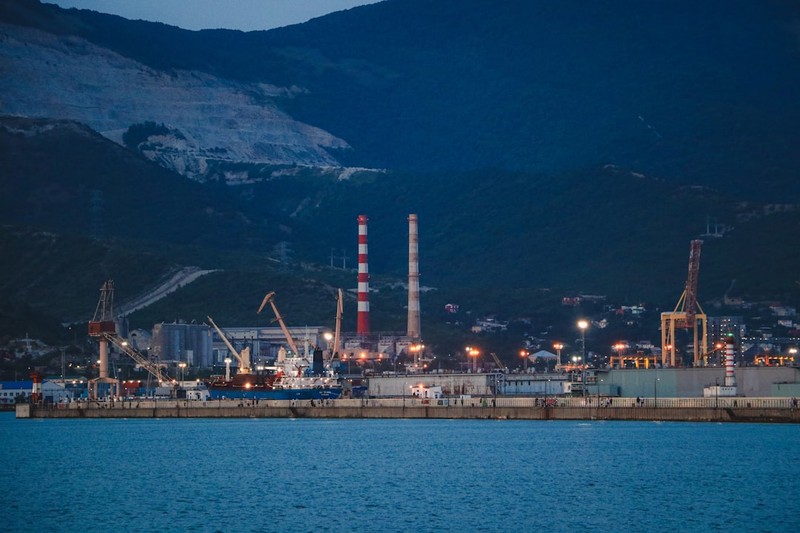
Primorsk sits on the Gulf of Finland, closer to Helsinki than to any battlefield in Ukraine. On Sunday, it burned anyway.
Ukrainian drones struck the Baltic Sea oil terminal — one of Russia’s largest export hubs, with the capacity to handle one million barrels per day — deep in Russia’s northwest, far from any front line. A fire broke out and was extinguished, according to Leningrad region Governor Alexander Drozdenko. He said more than 60 drones were shot down over the area. No oil spill was reported.
The independent Russian outlet Astra cited satellite image analysis suggesting the oil terminal and a Pantsir air defense system were likely hit. If confirmed, that would mean Ukraine not only reached the target but penetrated Russia’s layered air defenses to do it.
Shadow Fleet, Same Night
The Primorsk strike was not an isolated operation. Ukrainian forces also hit two vessels from Russia’s so-called shadow fleet — aging, often uninsured tankers used to move sanctioned Russian crude to global buyers — near the Black Sea port of Novorossiysk.
President Volodymyr Zelenskyy confirmed both sets of attacks on Telegram. “These tankers had been actively used to transport oil — not anymore,” he said. The extent of the damage to the vessels was not immediately clear.
Taken together, the strikes hit Russian oil logistics at opposite ends of the country in a single night. The Baltic export gateway in the northwest. The Black Sea shipping channel in the south. Ukraine’s long-range capabilities, Zelenskyy said, “will continue to be developed comprehensively — at sea, in the air, and on land.”
The Nightly Drone Toll
The long-range strikes came amid yet another night of mass drone exchanges that have become routine in the war’s fourth year.
Russia’s Defense Ministry said Ukraine fired 334 drones at targets across Russian territory overnight. Ukraine’s air force said Russia launched 268 drones and one ballistic missile at Ukrainian cities and infrastructure.
The human cost was immediate on both sides. Russian strikes killed at least three people in Ukraine — two in the southern Odesa region, including a truck driver at a port, and one in the front-line Kherson region, according to local officials. Odesa Governor Oleh Kiper said port infrastructure and residential buildings were both damaged.
In Russia, a 77-year-old man was killed in a drone strike near Moscow, regional Governor Andrei Vorobyov said. Three people, including a child, were injured when a drone struck an apartment building in the Smolensk region, according to Governor Vasily Anokhin. Moscow Mayor Sergei Sobyanin said four drones were shot down approaching the capital.
A War Measured in Range
Primorsk has been hit multiple times in recent months as Ukraine has escalated attacks on Russian energy infrastructure, part of a broader campaign to degrade the revenue streams funding Moscow’s war machine. But the significance of Sunday’s strike is where it happened — not near the Ukrainian border, not within comfortable range of battlefield weapons, but in Russia’s far northwest, within striking distance of St. Petersburg. Each successful strike at this range tightens the same logic: Russia cannot simply move its critical infrastructure beyond reach, because Ukraine keeps extending that reach.
US-brokered talks to end the war have stalled, both Al Jazeera and Deutsche Welle report. With diplomacy frozen, both sides are settling into a war of attrition measured in drone counts — hundreds launched each night, most intercepted, enough finding their marks to keep the costs mounting. Ukraine’s bet is that reaching deeper into Russian territory will hit thresholds Moscow has not prepared for. Sunday suggested the range is there. The question is whether the accumulating cost is enough to change anything.
Sources
- Ukraine drone attack hits Russian Baltic port, governor says — Al Jazeera
- Ukrainian drones hit Russia’s Primorsk oil terminal — Deutsche Welle
Discussion (10)