 lop News
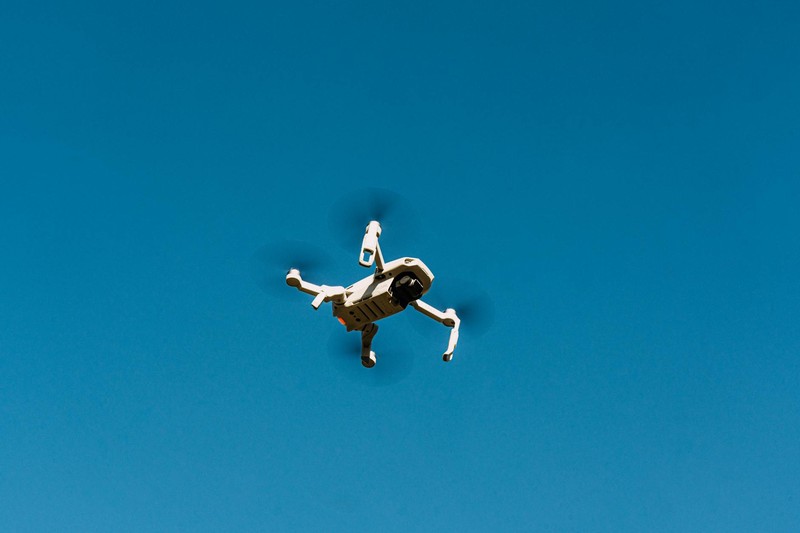
Air raid sirens began sounding just before noon across Ukraine. By late afternoon, President Volodymyr Zelenskyy said Russia had launched more than 800 drones since the start of the day, and fresh waves were still crossing into Ukrainian airspace.
Russia’s mass daytime assault on May 13 was unlike anything Ukraine has weathered in more than four years of full-scale war. The bombardment stretched across roughly 20 of Ukraine’s 24 regions, from the Black Sea port of Odesa to the western city of Uzhhorod, which sits on the border with Slovakia and Hungary and had never before been struck since the invasion began. At least 14 people were killed and more than 80 injured, including children, according to the Kyiv Independent, with the toll expected to rise as regional authorities continue assessments.
A Calculated Daylight Shift
Russia’s drone campaigns have overwhelmingly been nocturnal — exploiting darkness to complicate interception by Ukrainian air defenses. A sustained daytime barrage of this scale signals something new: either confidence that Ukraine’s air defenses can be saturated regardless of visibility, or indifference to the political cost of civilian casualties filmed in broad daylight.
Ukraine’s Air Force reported destroying or damaging 710 drones during the daytime attack, which ran from approximately 8am to 6:30pm local time. Combined with an overnight barrage of 139 drones, Russia launched at least 892 drones at Ukraine over the full 24-hour period, the Air Force said.
Ukraine’s military intelligence agency, HUR, warned that the drone waves were a precursor to potential cruise and ballistic missile strikes — a layered assault intended to exhaust air defenses before heavier ordnance arrived.
Striking the Far West
The geographic reach was as notable as the timing. Drone groups entered Ukrainian airspace from Belarus and the Black Sea, according to Ukrainian monitoring channels, with significant numbers heading toward western regions close to NATO borders.
In Rivne Oblast, west of Kyiv, a drone strike on a residential building killed three people and injured six. In Volyn Oblast, strikes hit the cities of Lutsk and Kovel, injuring at least five. In Ivano-Frankivsk, a residential building was struck, wounding at least 10 people, including two teenagers, according to regional Governor Svitlana Onyshchuk.
Railway infrastructure bore heavy damage. Zelenskyy advisor Dmytro Lytvyn said 23 strikes were recorded on railway facilities over the course of the day, damaging locomotives, commuter and freight cars, traction substations, depots, and two bridges. Two railway workers were killed in the western city of Zdolbuniv. Monitoring teams evacuated trains in advance, preventing passenger casualties.
The targeting of Uzhhorod — a city within sight of EU territory — drew immediate diplomatic consequences. Hungary’s recently elected prime minister, Péter Magyar, summoned the Russian ambassador, condemning the attack on a region home to a Hungarian minority. It was a stark departure from the approach of his predecessor, Viktor Orbán, who maintained cordial relations with Moscow throughout the war.
The Beijing Signal
Zelenskyy, speaking from Bucharest where he was attending a summit of NATO’s eastern flank members, framed the attack’s timing as deliberate. Moscow was seeking to “spoil the overall political atmosphere” during US President Donald Trump’s visit to China, he said.
Trump had offered an optimistic assessment as he departed the White House for Beijing. “The end of the war in Ukraine I really think is getting very close,” he told reporters. “Believe it or not, it’s getting closer.” Putin, in a speech days earlier, had similarly suggested the invasion was “coming to an end.” Neither leader elaborated on what evidence supported their claims.
Kremlin spokesman Dmitry Peskov reiterated Wednesday that Moscow’s fundamental terms remain unchanged: Ukraine must withdraw from the four regions Russia illegally annexed in 2022 but has never fully captured. Only then would a ceasefire be established.
If the message to Washington was conciliatory, the one delivered by 800 drones was something else entirely.
Collateral Politics
The war’s consequences continue to spill beyond Ukraine’s borders. In Latvia, Prime Minister Evika Silina lost her parliamentary majority on Wednesday after the Progressive party withdrew from her coalition over her handling of Ukrainian drone incursions into Latvian territory. Silina had fired her defence minister, a Progressive, after two Ukrainian strike drones crashed in Latvia on May 7 — incidents Ukraine attributed to Russian electronic warfare diverting the drones from their targets.
The coalition now holds just 41 seats in the 100-member parliament. Opposition lawmakers have pledged a no-confidence vote. Slovakia, meanwhile, closed its border crossings with Ukraine for security reasons.
Zelenskyy offered to send Latvia Ukrainian airspace-defense experts — a measure of how far Ukraine has moved from supplicant to instructor in drone warfare. The Institute for the Study of War reported this week that Russia’s spring offensive has foundered, with Moscow recording a net loss of territory in April for the first time since 2024.
Front-line dynamics are cold comfort on a day when 800 drones darkened the afternoon sky across 20 regions, and the shock waves reached a government in Riga.
Sources
- Russia launches over 800 drones in daytime mass attack on Ukraine, at least 14 killed, over 80 injured — Kyiv Independent
- Russia Fires About 800 Drones at Ukraine Despite Recent Talk by Putin of War Ending — Associated Press
- Russia targets Ukraine with more than 800 drones in deadly daytime assault — The Guardian
- Latvian govt risks collapse after Ukraine drone incursions — Reuters
- After Ukraine’s neighboring Zakarpattia Oblast targeted in latest mass attack, Hungary summons Russian ambassador — Kyiv Independent