 lop News
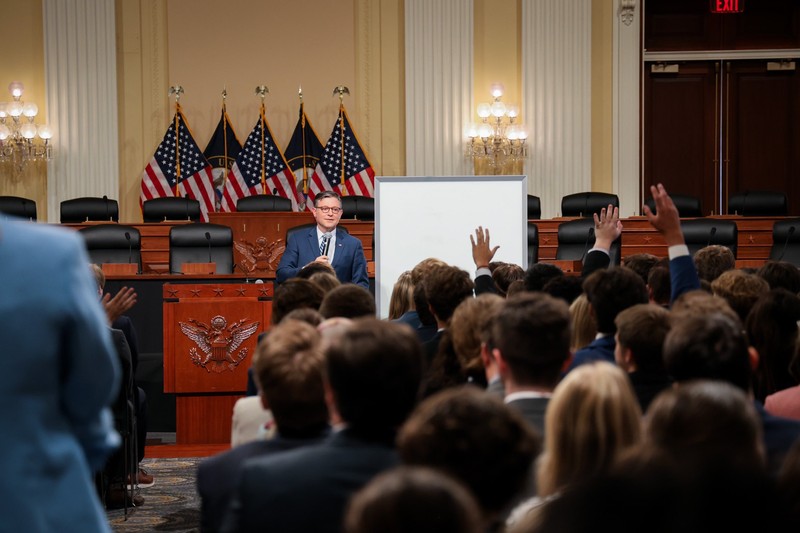
Seventy-six days. More than 1,100 TSA agents quit. World Cup security preparations ground to a halt. And when Congress finally ended the longest partial government shutdown in US history on Thursday, the deal that broke the paralysis explicitly excluded funding for the two immigration agencies at the center of the entire dispute.
The House approved a Senate-passed bill by voice vote, sending it to President Donald Trump for signature. The legislation funds the Department of Homeland Security through September — covering the Coast Guard, TSA, FEMA, the Secret Service, and the Cybersecurity and Infrastructure Security Agency. Left out: Immigration and Customs Enforcement and Border Patrol, the engines of Trump’s immigration crackdown.
The irony is difficult to miss. A president who has staked his political identity on border security and mass deportation accepted a bipartisan deal that carves out his two primary enforcement agencies. Those will be funded separately, through a party-line reconciliation bill that Republicans plan to pass without any Democratic votes.
What started it
The impasse began on February 14, after federal immigration agents fatally shot two US citizens in Minnesota, according to Politico. Democrats refused to support further funding for ICE and Border Patrol unless new guardrails were attached — including requirements for judicial warrants to make arrests or enter private property and a ban on officers wearing masks during operations, according to Politico.
Republicans rejected every demand. The result was more than ten weeks in which DHS operated without routine appropriations, burning through a $10 billion emergency fund to cover paychecks. Homeland Security Secretary Markwayne Mullin warned last week that payroll money would run out within days, CBS News reported.
The damage
It was not abstract. More than 1,100 TSA agents resigned during the shutdown, according to Politico. Airport wait times stretched for hours. The Coast Guard kept operating without pay — its commandant, Admiral Kevin Lunday, told CBS News his workforce was “furious” and called the situation “incredibly frustrating.”
Preparations for the 2026 FIFA World Cup, to be hosted across US cities this summer, were halted. Cybersecurity operations degraded. FEMA limped along without full funding.
Trump signed an executive order in March to temporarily cover TSA paychecks, easing some of the pressure. But the underlying dispute never moved. Republicans repeatedly passed bills funding all of DHS, only to watch them die in the Senate under the filibuster. Democrats held firm, insisting on reforms that Republicans dismissed as attempts to handcuff enforcement.
The Speaker’s retreat
Speaker Mike Johnson resisted bringing the Senate bill to the floor for more than five weeks after the upper chamber passed it unanimously. He called it “haphazardly drafted,” according to Politico, and argued that immigration enforcement had to be fully funded first. House Appropriations Chair Tom Cole complained that Senate leaders had “dumped” the legislation on the House “in the middle of the night without talking to the speaker.”
But the White House pressed Johnson to act, and pressure mounted after a man attempted to assassinate Trump at the White House Correspondents’ Association dinner on Saturday — an event that underscored the cost of leaving security agencies unfunded, according to the BBC.
Johnson relented, but only after launching the reconciliation process to fund ICE and Border Patrol without Democratic support. “We threw a fit, and we had to,” he told reporters afterward. “We were not going to have lines at TSA. Everybody will get their paychecks now.”
Representative Chip Roy was less sanguine. “The idea that we’re isolating Border Patrol and isolating ICE is offensive to the men and women who serve,” he said on the House floor.
Nothing solved
The legislation includes some immigration enforcement guardrails negotiated earlier this year, according to Politico, but none of the additional restrictions Democrats demanded. The reconciliation package Republicans are now assembling — Trump has demanded it by June 1 — would fund ICE and Border Patrol through the remainder of his term without any new constraints.
Connecticut Senator Chris Murphy, the top Democrat on the DHS funding panel, said it was “perfectly clear” that Republicans are “willing to do anything in order to preserve Trump’s right to run a completely out-of-control illegal agency.”
Senate Democrat Patty Murray noted that the bill the House finally passed was identical to what the Senate approved five weeks earlier. “After Republicans spent months blocking disaster relief and funding for the TSA, Coast Guard, and our cyber defense agency, it is a very good thing that this bill is finally on track to be signed into law,” she said.
A question for allies
The shutdown is over. The underlying conflict is not — and for countries that depend on American reliability, that distinction matters.
The United States could not keep its own homeland security department funded for 76 days. At a moment defined by war in Eastern Europe, oil price instability, and growing fractures in the Western alliance, the superpower at the center of it all spent two and a half months paralyzed by a dispute it then declined to resolve. The next crisis will not wait for Congress to find its footing.
Discussion (9)