 lop News
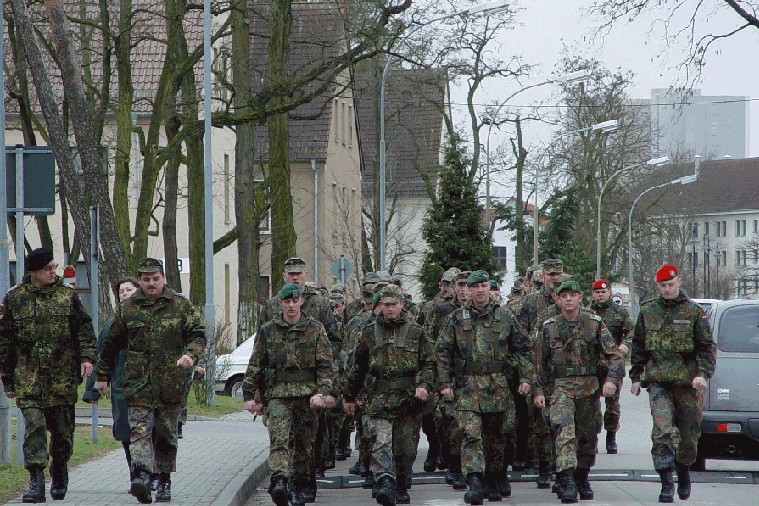
Seventy-five thousand soldiers. That is the gap Germany now intends to fill — expanding its armed forces from 185,000 to 260,000 active-duty troops, the largest single increase since the Bundeswehr’s founding in 1955.
The announcement from Defence Minister Boris Pistorius came within 24 hours of the Pentagon’s decision to pull 5,000 American soldiers out of Germany. The timing was not coincidental.
“It was anticipated that the U.S. might withdraw troops from Europe, including Germany,” Pistorius said on Saturday. “One thing is clear: If we are to remain transatlantic, we must strengthen the European pillar within NATO.”
A Withdrawal Foretold
The Pentagon announced on Friday that the United States would withdraw roughly 5,000 troops — about 14 percent of the 36,000 American service members currently stationed in Germany — over the next six to 12 months. One full brigade will leave. A long-range fires battalion scheduled for deployment later this year has been cancelled.
The decision fulfills a threat President Donald Trump made earlier in the week, after Chancellor Friedrich Merz said the United States was being “humiliated” by the Iranian leadership and criticised Washington’s lack of strategy in the war that began with US-Israeli strikes on February 28.
Trump, for his part, posted on social media that Merz should “spend more time on ending the war with Russia/Ukraine” and “fixing his broken Country” than concerning himself with Iran. He ignored reporters’ questions about the withdrawal as he boarded Air Force One on Friday.
The Long Shadow of Ramstein
The American military presence in Germany dates to the postwar occupation. It peaked in the 1960s, when hundreds of thousands of US personnel countered the Soviet Union across the Central European plain. Today, Germany hosts US European and Africa Command headquarters, Ramstein Air Base, the Landstuhl medical centre, and American nuclear missiles.
Those facilities have been central to US operations across the Middle East — including the current Iran war. The cancelled long-range fires battalion had been intended as a deterrent against Russia while European nations develop their own missile capabilities. Its loss will be felt in Berlin.
Europe Learns to Stand Alone
Pistorius framed the US drawdown as both predictable and catalytic. Germany is “on the right track,” he said, pointing to the planned troop increase, accelerated procurement, and infrastructure investment. But critics have called for even more, citing the widely perceived growing threat from Russia.
NATO spokesperson Allison Hart said the alliance was “working with the US to understand the details” of the decision. In a statement on X, she added that the adjustment “underscores the need for Europe to continue to invest more in defence and take on a greater share of the responsibility for our shared security” — noting that allies had agreed to invest 5 percent of GDP at the NATO Summit in The Hague last year.
The gap between pledges and capability remains vast. NATO members have promised to shoulder more of the burden, but tight budgets and long-standing shortfalls in military capacity mean it will take years for Europe to meet its own security needs without American support.
Ed Arnold, a European security expert at the Royal United Services Institute in London, said Europe is more concerned about the redeployment of Patriot missile systems and ammunition from Germany to the Middle East than about the troop numbers themselves. The deeper question is whether the logistics, intelligence, and command infrastructure underpinning American power projection will follow.
A Rift With History
The transatlantic rupture has been building for more than a year. NATO allies have braced for US withdrawals since Trump took office, with Washington warning that Europe would need to look after its own security, including Ukraine’s. In October, the US confirmed it would reduce its troop presence on NATO’s borders with Ukraine, cutting 1,500 to 3,000 troops on short notice — a move that unsettled Romania, where NATO runs a significant air base.
In Washington, the response split along partisan lines. Senator Jack Reed of Rhode Island, the ranking Democrat on the Senate Armed Services Committee, said the withdrawal “suggests American commitments to our allies are dependent on the president’s mood.” Bradley Bowman, a scholar at the Foundation for Defense of Democracies, argued the US presence strengthens deterrence against the Kremlin and facilitates power projection into the Mediterranean, Middle East, and Africa.
Trump proposed a similar withdrawal during his first term — roughly 9,500 troops — but the process never began, and President Joe Biden halted it in 2021.
This time, the orders have been signed. And Germany’s response — 75,000 new soldiers, a restructured military, a fundamental break with postwar restraint — signals that Berlin has taken the measure of the moment. Europe is learning, unevenly and under pressure, to step out from under the American umbrella.
Discussion (10)