 lop News
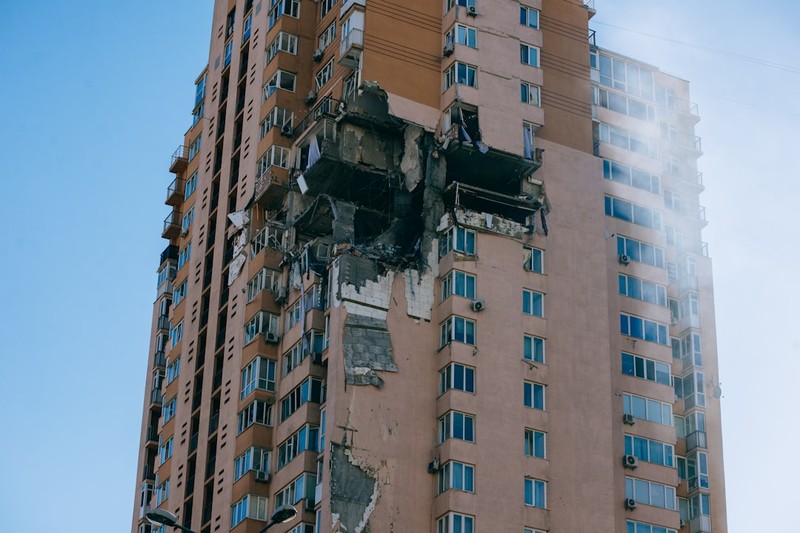
656 drones. 73 missiles. In a single night, Russia hurled more ordnance at Ukrainian cities than at almost any point in a war now grinding through its fifth year.
At least 18 people were killed and more than 100 wounded across multiple cities, according to Reuters and the Associated Press. The Kyiv Independent put the death toll at 20. In Dnipro, emergency crews pulled the body of a toddler and a mother and her 8-year-old son from the rubble of a collapsed apartment building. In Kyiv, 140,000 residents lost power.
The assault stretched from roughly 1:30 a.m. into daylight, with waves of explosions rolling across Kyiv, Dnipro, Kharkiv, Zaporizhzhia, Poltava, and other cities. Ukraine’s air force said it shot down or neutralized 602 drones and 40 missiles — a strong interception rate that still left dozens of warheads to reach their targets.
A Barrage Built to Overwhelm
The raw numbers mark this as one of the largest single aerial attacks of the full-scale war. Ukraine’s air force said Russia fired 33 ballistic missiles — among the hardest to intercept — and eight Zircon hypersonic missiles, which Moscow claims travel at nine times the speed of sound with a 1,000 km range. The air force did not list the Zircons among intercepted weapons, meaning all eight likely struck their targets. Reuters reported it appeared to be the largest number of Zircons used in a single attack during the war.
Nine days earlier, Russia launched roughly 600 drones and 90 missiles at Kyiv and its surrounding region. This time, Moscow widened the scope and shifted the mix — matching the drone count while concentrating more advanced missiles across a broader set of targets. The pattern is difficult to read as anything but calibration: testing, mapping, and exhausting Ukraine’s layered air defenses.
Civilians Buried Under Rubble
In Dnipro, a four-story apartment building was partly destroyed. Officials said 12 people were killed in the city, including a child born in 2023 and an 8-year-old boy. Dnipro Mayor Borys Filatov claimed Russia used cluster munitions — widely banned under international humanitarian law — to maximize casualties among rescue workers and utility crews. A first responder identified as Anton Yarmolenko was killed in what officials described as a follow-up strike targeting emergency crews at the scene.
In Kyiv, six people were killed and 79 injured, including children. At least nine high-rise buildings, a kindergarten, a medical clinic, offices, and administrative buildings were damaged across eight districts. A family outpatient clinic serving roughly 20,000 people was reduced to rubble.
“We couldn’t understand what was happening — some kind of apocalypse?” said Olha Mudra, her face and clothes covered in dust, speaking at the site of a strike alongside her 6-year-old daughter Natalia, according to Reuters.
Power company DTEK said 140,000 residents lost electricity. Thousands sheltered in Kyiv’s subway overnight.
The Patriot Gap
Ukraine’s ability to intercept drones remains effective — 602 of 656 were neutralized. But ballistic and hypersonic missiles require advanced systems like the US-made Patriot, and those interceptor stockpiles are running low. The AP reported that international Patriot supplies have been depleted by the Iran conflict, leaving Ukrainian civilians especially vulnerable to Russian ballistic barrages.
President Volodymyr Zelensky said last week he sent a letter to US President Donald Trump and Congress requesting additional air defense systems, including Patriot interceptors. As of Monday, officials said he had not received a response.
“This was a large-scale attack and an absolutely clear statement from Russia: if Ukraine is not protected from ballistic and other missile strikes, these attacks will continue,” Zelensky said on Telegram.
The gap is visible in the numbers. Ukraine downed most drones and many missiles. The 30 ballistic missiles, three cruise missiles, and 33 drones that slipped through struck 38 locations across the country, the air force said.
Signaling and Stalled Diplomacy
The Kremlin described the war as having entered “a new paradigm” after what it called “inhumane acts of terror” by Ukraine’s military — a reference to a May 22 drone attack on a dormitory in Russian-occupied Luhansk that killed 21. Kyiv said it struck a Russian drone pilot training facility.
Russian Foreign Minister Sergey Lavrov told US Secretary of State Marco Rubio on May 25 that Moscow planned to strike Ukrainian “decision-making centers” and urged Washington to evacuate its embassy. No foreign embassies in Kyiv heeded the call.
US-brokered peace talks have stalled as Washington shifted attention to the Gulf and the Middle East. Zelensky accepted Trump’s demand for an unconditional ceasefire. Putin refused.
Foreign Minister Andrii Sybiha offered a blunt framing: “Moscow is losing on the battlefield. No number of missiles can change this.”
The missiles, though, are changing something. Night by night, they are degrading Ukraine’s ability to keep the lights on, treat the wounded, and pull survivors from the rubble before the next wave arrives.
Sources
- At least 18 killed in heavy Russian attack on Ukrainian cities — Reuters via The Star
- Russian Attack Kills At Least 18 In Ukraine, Some Of Them Children Buried Under Rubble — Associated Press via HuffPost
- Kyiv reels after Russia unleashes massive missile, drone attack on Ukraine, killing at least 20 — Kyiv Independent
Discussion (9)