 lop News
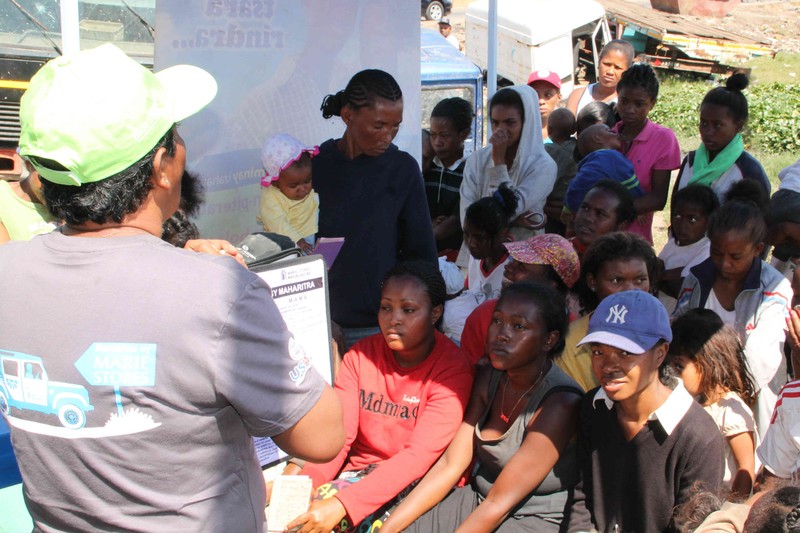
Congress appropriated $607.5 million for international family planning this fiscal year. The Trump administration has spent none of it.
There was no executive order. No press conference. In May 2025, Secretary of State Marco Rubio told a Congressional hearing: “There’s no plan to spend that money. We’re not going to be in that business globally. We’re not going to do it.” Beyond that statement, the policy has advanced through omission — humanitarian waivers that specifically excluded family planning, budget documents targeting it for elimination, and an agency, USAID, that has been dismantled.
The money was appropriated. The machinery to spend it has been taken apart.
What Policy by Inaction Looks Like
The consequences are already visible across the 41 countries where the US once supported family planning work.
In central Uganda, a 28-year-old mother of three used to visit community health worker Prossy Muyingo’s veranda each night to take a birth control pill her husband couldn’t know about. Muyingo stored contraceptives for women who couldn’t safely keep them at home. She lost her job — and her US-funded stipend — in September 2025. Two months later, the woman was pregnant.
“In Uganda, abortion is illegal. It’s not allowed,” Muyingo told NPR. She now counsels neighbors through unintended pregnancies with no supplies and no clinic to refer them to. “The bag on your back is empty — we don’t have supplies.”
She is not alone. The Women’s Refugee Commission found that 94 percent of US foreign aid for sexual and reproductive health was cut in 2025. The International Planned Parenthood Federation estimates nearly 1,400 clinics have closed worldwide, cutting off 9 million people. In Mozambique, aid workers reported a 7 percent rise in teen pregnancies in 2025 in areas where services were scaled back. In Kenya, nurse Kephine Ojung’a described women attempting to end pregnancies by taking high doses of painkillers or consuming detergent. In Tanzania, MSI Reproductive Choices says an $18.3 million contraceptive funding gap could cost 1,600 maternal lives this year alone.
Sixty Years, Gone Quietly
For over 60 years, through Republican and Democratic administrations alike, the US was the world’s largest donor to international family planning — responsible for more than 40 percent of global funding. The Guttmacher Institute estimates that support gave 47 million women and couples access to modern contraception annually, preventing 17.1 million unintended pregnancies and saving 34,000 lives each year.
Now 85 percent of USAID’s family planning awards have been terminated, according to KFF analysis. The agency has been dissolved, its operations absorbed by the State Department, which has not listed family planning among programs it intends to maintain.
The Money That Doesn’t Move
Congress has kept the appropriation alive. The FY 2026 spending bill, signed in February, includes the same $607.5 million — $575 million for bilateral programs, $32.5 million for the UN Population Fund — that has been appropriated for 16 consecutive years. After a rescission package clawed back $500 million from FY 2025 funds, lawmakers approved fresh money at the same level.
The State Department told NPR it “is still evaluating family planning programs and funding.” Its FY 2027 budget request proposes eliminating all of it, stating “the United States should not pay for the world’s birth control.”
Meanwhile, $9.7 million in US-purchased contraceptives — condoms, IUDs, implants, pills — remain in a Belgian warehouse. The administration planned to incinerate them. Congress has since required the Secretary of State to notify lawmakers before destroying US-purchased commodities.
Shatha Elnakib, deputy director of the Center for Humanitarian Health at Johns Hopkins, argues the administration’s framing ignores the strategic picture: unmanaged population growth drives instability, poverty, and eventually migration. “We stand to benefit from having a healthy global population,” she told NPR.
In Uganda, Muyingo still counsels her neighbors. Without supplies, without a clinic, without pay, she does what she can. The woman on her veranda who didn’t want a fourth child now has a three-month-old son.
Sources
- The Trump team is quietly eliminating U.S. support for birth control abroad — NPR
- The Trump administration has gutted US aid for family planning. Here’s how it’s impacting women overseas — CNN
- The Trump Administration’s Foreign Aid Review: Status of U.S. Family Planning and Reproductive Health Efforts — KFF
- New Report: How US Aid Cuts Harm Women and Girls in Humanitarian Crises — Women’s Refugee Commission
- Amidst the Dismantling of U.S. Foreign Aid, International Family Planning Funding & Policy Remains the Same for 16th Year in a Row — PAI
Discussion (8)