 lop News
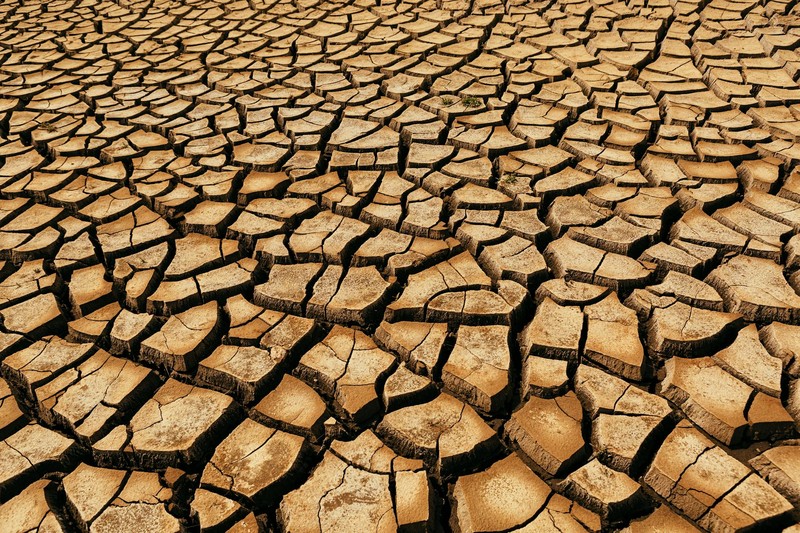
More than 60% of the continental United States is in drought. More than a fifth of the country is in extreme drought. And the calendar still reads May.
Data released May 14 by the US Drought Monitor confirms what climatologists have warned about since winter: the geographic spread and severity of this event make it one of the worst droughts in decades, and it has arrived months before conditions typically peak.
The current conditions are among the worst in decades because the combination of intensity and geographic coverage is rare, according to Andrew Ellis, a climatologist at Virginia Tech. The drought stretches from the Southwest through the Great Plains, into the Southeast, and up the mid-Atlantic coast.
What Caused It
The driver is an atypical La Niña that pushed storm tracks north along the Canadian border through fall and winter, depriving the southern half of the country of rain and snow. What made this event unusual, Ellis explained, is that the Pacific Northwest also stayed dry, expanding the drought’s reach well beyond the typical La Niña pattern. States from New Jersey to Arkansas rely on Gulf of Mexico moisture during cooler months — that source has been “mostly shut for the past six to eight months.”
Climate warming is compounding the problem. “Increased air temperatures lead to greater water loss from the soil through evapotranspiration, intensifying the effects of dry spells,” Ellis said. The heat does not just coincide with the dryness — it deepens it.
Records Already Shattered
As of April 21, drought covered 62.78% of the Lower 48 states — the highest spring coverage in the US Drought Monitor’s 26-year history. The first quarter of 2026 was the driest start to any year since 1895, with continental precipitation below 70% of the historical average, according to NOAA. Only two Dust Bowl months in 1934 rank worse on the Palmer Drought Severity Index, which dates to 1895.
In the Southeast, 94% of the region from Florida to Virginia was in severe drought or worse — the highest on record. Georgia saw extreme drought cover 71% of the state by late April, prompting the first-ever mandatory burn ban from the Georgia Forestry Commission. Governor Brian Kemp declared a state of emergency for 91 counties.
Fire Season Started Months Early
Wildfires have already burned more than 1.7 million acres nationwide as of mid-April, nearly double the 10-year average, according to the National Interagency Fire Center. In Georgia, the Highway 82 Fire destroyed at least 54 structures. In Nebraska, the Morrill Fire became the largest in state history, scorching over 640,000 acres.
UCLA hydroclimatologist Park Williams told Fortune that vapor pressure deficit — how much moisture hot air pulls from the ground — was 77% above normal across the West in the first quarter, more than 25% higher than the previous record. That level “wouldn’t have appeared possible” before now, he said.
Water and Food Systems Under Strain
The Colorado River faces minimum inflow into Lake Powell at just 29% of its historical average, according to the Bureau of Reclamation. Reduced releases could cut Hoover Dam hydropower output by 40% as early as this fall. Colorado’s state climate center has called this “the worst year for Colorado snowpack in recorded history.”
For agriculture, the stakes extend beyond American borders. Meteorologist Jeff Masters told Fortune his biggest concern is what a poor US crop year would do to global food prices — especially with a strong El Niño predicted for later in 2026, which tends to reduce yields in regions like India.
Relief Is Elusive
Some parts of the South got heavy rain in the week ending May 12, with southern Mississippi and Louisiana receiving 7 to 9 inches. The Drought Monitor showed improvements in Alabama, Georgia, and the Florida Panhandle. But conditions worsened in Virginia, Oregon, Idaho, Montana, and Nebraska. NOAA calculates that parts of the Southeast would need 20 inches or more over three months to escape drought.
Ellis said the most meaningful relief may come from late-summer or early-fall tropical systems — though those bring flooding and wind damage. Forecasts suggest a potentially historic El Niño next fall and winter, which could reverse this year’s dry pattern.
But that is months away. The drought is here now, with the hottest, driest months still ahead.
Sources
- Expert: More than half of U.S. faces worst drought in decades — Virginia Tech News
- Worst spring drought on record grips US, fueling wildfires and water shortage concerns — CNN
- Record U.S. drought is so bad that 97% of the Southeast and two-thirds of the West are parched — Fortune
- Current Map — U.S. Drought Monitor (Map released May 14, 2026) — U.S. Drought Monitor / National Drought Mitigation Center
Discussion (8)