 lop News
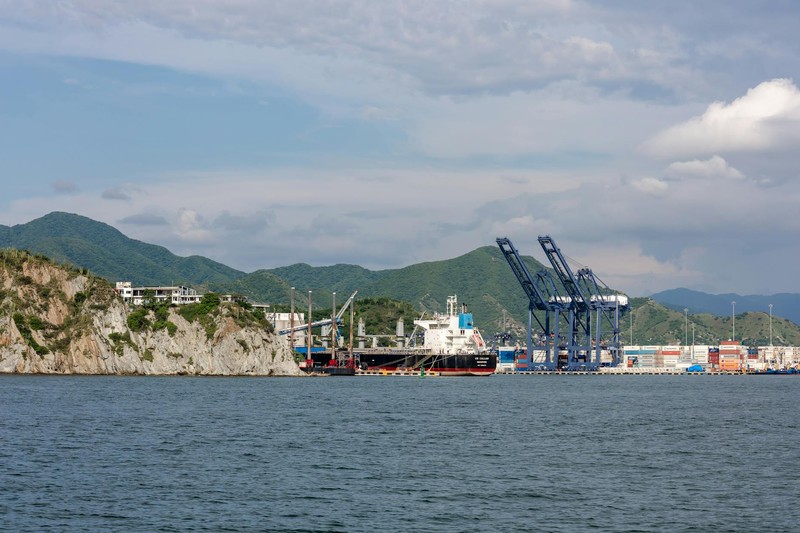
Just across the road from the conference hall where delegates from nearly 60 nations are meeting to plan the end of fossil fuels, oil tankers routinely unload at the Pozos Colorados terminal.
Santa Marta, a Caribbean port city in Colombia, is hosting the first global conference ever organized specifically to advance a phaseout of coal, oil, and gas. The gathering is a tacit admission that three decades of UN climate summits have failed to deliver on the single biggest driver of global warming. Co-hosted by Colombia and the Netherlands, it represents a parallel diplomatic track born from frustration with the consensus-based COP process, where petrostates hold an effective veto.
Who showed up — and who didn’t
The roughly 60 countries present span fossil fuel producers and consumers: Colombia, Australia, Nigeria, Germany, and the European Union among them. Colombia’s Environment Minister Irene Vélez Torres called the group “a new power,” representing nearly half the world’s population.
The absences are more telling. The three largest greenhouse gas emitters — the United States, China, and India — are not participating. Neither are Saudi Arabia, Russia, or Venezuela. The attending nations account for roughly a fifth of global fossil fuel supply. This is, by design, a coalition of the willing.
Thirty years of avoidance
The word “fossil fuels” did not appear in any official UN climate output until COP28 in Dubai in 2023, when countries agreed to “transition away from fossil fuels in energy systems, in a just, orderly and equitable manner.” At COP29 in Azerbaijan, governments couldn’t even reaffirm that commitment. At COP30 in Brazil last November, roughly 80 countries backed a phaseout roadmap — only to see it dropped from the final text for lack of consensus.
Santa Marta operates under no such constraint. The format is deliberately informal: academic sessions, a people’s summit, and two days of high-level ministerial talks. The output will be a report fed into Brazil’s global roadmap for COP31 in Turkey this November.
The oil shock changes the calculus
The conference takes place as the Iran war sends energy prices surging. The Strait of Hormuz closure has underscored the volatility of fossil fuel dependence — strengthening the case for renewables while simultaneously creating political pressure for more drilling and subsidies.
“Countries are going into Santa Marta with the energy crisis at the top of most of their minds,” said Natalie Jones of the International Institute for Sustainable Development. “They have a visceral reminder of just how volatile, unpredictable, and unstable it is to rely on fossil fuels.”
The crisis is already shifting demand. Johan Rockström, director of the Potsdam Institute for Climate Impact Research, said a recent advisory board meeting with Mercedes-Benz reported a sharp rise in European electric vehicle orders. “People are recognising they want energy independence,” he told the BBC.
The gap between rhetoric and reality
Fossil fuel emissions reached a record 38.1 billion tons of CO2 in 2025, up 1.1% year-on-year, according to the Global Carbon Budget. Current policies put the world on track for roughly 2.8C of warming this century, per the UN’s 2025 Emissions Gap Report — nearly double the 1.5C threshold scientists identify as critical. Rockström warned the world was inevitably going to crash through the 1.5C limit within three to five years.
Host country Colombia illustrates the contradictions. President Gustavo Petro has halted new oil exploration and pushed for a fracking ban, yet oil and coal still account for roughly half of national exports. State-controlled Ecopetrol recently expanded fuel storage at Pozos Colorados — the terminal visible from the conference. With elections on May 31, opposition candidates are already campaigning on expanded fossil fuel development.
What Santa Marta can actually achieve
Expectations are measured. “My expectation is not that this is going to deliver huge results after one conference,” said EU Climate Commissioner Wopke Hoekstra.
The conference is structured around three pillars: overcoming fossil fuel economic dependence, transforming supply and demand, and strengthening international cooperation. One area of concrete progress may be investor-state dispute settlement — a mechanism allowing fossil fuel companies to sue governments over climate policies. After 220 experts urged Petro to act, Colombia announced it would withdraw from the ISDS system.
A second conference is planned in the Pacific, hosted by Tuvalu, with the goal of launching formal negotiations for a binding Fossil Fuel Treaty within a year.
David Waskow of the World Resources Institute described Santa Marta as taking “initial steps” on practical challenges: “We need to shift now from the overarching objective of transitioning away from fossil fuels to actually how we go about it.”
The question is not whether Santa Marta produces a breakthrough. It won’t. The question is whether it generates enough momentum to matter before the 1.5C window closes.
Sources
- First ever talks to ditch fossil fuels as UN deadlock deepens — BBC News
- Nations backing fossil fuel exit ‘a new power’: conference host Colombia — AFP / France 24
- Colombia hosts talks on exiting fossil fuels as global energy crisis deepens — Los Angeles Times / Bloomberg
- Here’s what to expect from the first Conference on Transitioning Away from Fossil Fuels — The Conversation
- The First Conference on Transitioning Away from Fossil Fuels — Fossil Fuel Non-Proliferation Treaty Initiative
Discussion (9)