 lop News
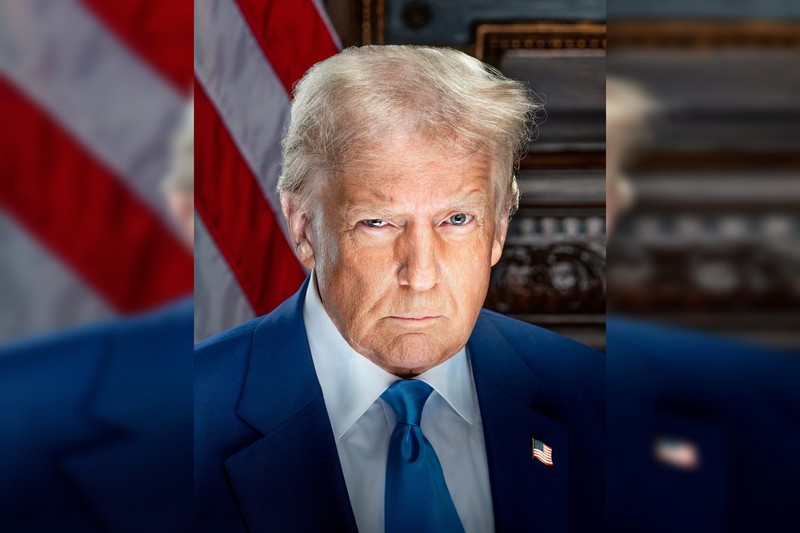
On May 1, a clock runs out. Sixty days will have passed since President Donald Trump formally notified Congress that US forces were conducting military operations against Iran — and in that time, not a single vote has authorized the war.
The 1973 War Powers Resolution gives the president 48 hours to notify Congress after launching military action and 60 days to either secure approval from both chambers or begin withdrawing forces. Trump met the first requirement on March 2. He has not met the second. With the deadline days away, the question confronting Washington is not whether the law applies, but whether anyone will enforce it.
The law designed to prevent another Vietnam
Passed over Richard Nixon’s veto, the resolution was a direct response to the Vietnam War, which Congress did not formally authorize until nearly a decade after US involvement began. It requires the president to consult Congress before committing forces to hostilities.
The law permits a single 30-day extension, but only if the president certifies that continued operations are necessary due to “unavoidable military necessity” — typically to cover an orderly withdrawal. Maryam Jamshidi, an associate professor of law at Colorado Law School, told Al Jazeera that beyond a 90-day window, the president must terminate deployments unless Congress has declared war or authorized continued action.
But as Jamshidi noted, there is no clear mechanism for Congress to force compliance.
Three paths past the deadline
Trump’s most probable move, according to Stormy-Annika Mildner of the Aspen Institute Germany, is to invoke the 30-day extension. “I assume that Trump will make use of the additional 30-day period, arguing that there’s been progress made, that a ceasefire is in place and that an end to the war is in sight, meaning the extra time is needed to complete the process,” she told Deutsche Welle.
That justification frays with every incident at sea. Despite a ceasefire since April 8, the US has maintained a naval blockade on Iranian ports and continued intercepting Iranian-flagged vessels. Iran has responded by seizing commercial ships in the Strait of Hormuz. “If the conflict escalates further now, then invoking or justifying these 30 days becomes even more controversial than it already is,” Mildner said.
Alternatively, the White House could argue the law does not apply. Vice President JD Vance called the War Powers Act “fundamentally a fake and unconstitutional law” in January. Barack Obama employed similar reasoning in 2011, claiming NATO operations in Libya did not constitute “hostilities” under the statute.
Or Trump could simply continue the war and dare Congress to stop him.
Republicans eye the exits
Thus far, Senate Republicans have voted down five resolutions to constrain Trump’s war powers, the latest failing 47-52. Rand Paul of Kentucky remains the only Republican to break ranks. But the 60-day mark has rattled the party’s composure.
Senator John Curtis of Utah, generally a reliable Trump ally, wrote publicly on April 1: “I will not support ongoing military action beyond a 60-day window without congressional approval. I take this position for two reasons — one is historical, and one is constitutional.” Thom Tillis of North Carolina told CNN, “We’ve got to start answering questions. The 60-day target is what I’m looking at.”
The shifting posture is driven by polling and fuel prices. A CBS News survey found 60% of Americans disapprove of the military action against Iran. Gas prices have climbed since the war began, compounding broader cost-of-living anxiety. Josh Hawley of Missouri said he heard about energy costs “constantly” while on recess. “I hope we’re getting closer to having this be over,” he told reporters.
Mildner framed the dilemma bluntly: for Republicans, voting against a resolution to end the war is easy. Actively authorizing its continuation is something else entirely. “The latter entails clear co-responsibility for the duration, costs and risks of the operation — and therefore considerable political vulnerability, especially with an eye on the midterms.”
All 435 House seats and 35 Senate seats will be contested on November 3. Current polling suggests Trump’s Republicans could lose their majority in both chambers.
A law with no teeth
The War Powers Resolution was written to constrain imperial presidencies. It contains no enforcement mechanism beyond political pressure. Congress could theoretically cut off war funding, but as Mildner noted, cutting off funding is “politically … hardly feasible” — lawmakers are reluctant to deny resources to troops already in the field.
For US allies, the spectacle carries a distinct message. A president capable of waging war for months without legislative endorsement offers both the appeal of decisive action and the instability of unconstrained executive power. The May 1 deadline will not resolve that contradiction. It will simply make it undeniable.
Sources
- Iran war deadline heats up Trump-Congress showdown — Deutsche Welle
- Analysis: The law sets a 60-day limit on unauthorized wars. Will Trump follow it? — CNN
- Trump’s May 1 deadline: Can he continue war on Iran after that? — Al Jazeera
- Senate Republicans again block Democratic effort to end Trump’s Iran war — MSN (via Yahoo News)
Discussion (8)