 lop News
Fifty infants. Four men. Two women. Fifty-six bodies, left at a cemetery in Cumuto, Trinidad, with no funerals, no mourners, and — until police arrived this weekend — no investigation.
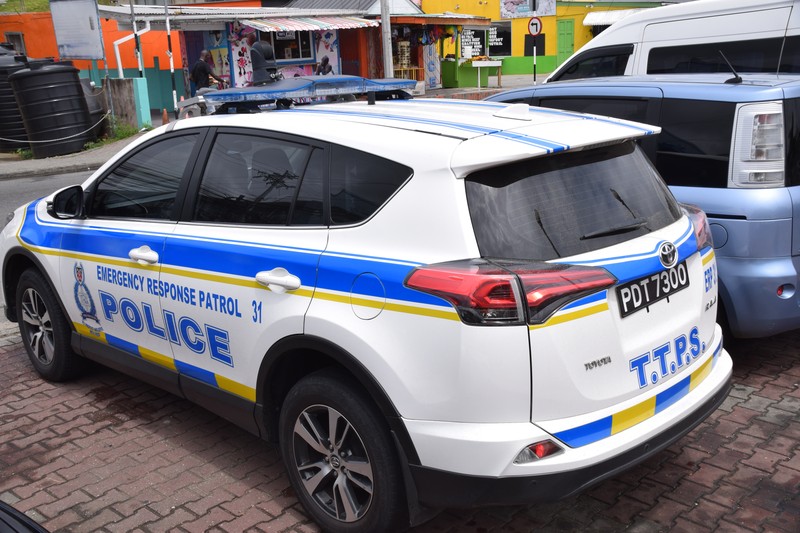
On Saturday, the Trinidad and Tobago Police Service (TTPS) announced the discovery at Cumuto Cemetery, roughly 40 kilometers east of the capital, Port of Spain. The breakdown is stark: 50 of the dead are infants. The remaining six are adults — four males, two females — most bearing the toe tags that morgues use to track remains. At least two adults bore signs of post-mortem examination.
“Preliminary indications suggest that this may be a case involving the unlawful disposal of unclaimed corpses,” the TTPS said in a statement.
That clinical phrase — “unlawful disposal of unclaimed corpses” — does a lot of work. It frames the discovery not as a murder case but as an administrative failure: bodies that passed through some kind of system and were then discarded. Fifty babies do not go unclaimed without something going profoundly wrong at multiple points of failure.
Tags, but no answers
The adult remains offer the clearest clues. Five of the six had morgue-style identification tags, according to police. One male and one female showed evidence of autopsy. These details strongly suggest the adults passed through institutional channels — hospitals, morgues, state facilities — at some point. Someone, somewhere, logged them in, examined them, and tagged them.
Yet they ended up at a cemetery, uninterred. The gap between the moment a body enters state custody and the moment it is lawfully buried or cremated is where investigators are now focusing.
Commissioner of Police Allister Guevarro called the discovery “deeply troubling” and said that “any individual or institution found to have violated that duty will be held fully accountable.” Specialized units, including the Homicide Bureau, have been deployed to the site, and the investigation is being supervised by Senior Superintendent Sherma Maynard-Wilson and ASP Balewa.
Police have not said whether any of the remains have been identified, or how long they may have been accumulating at the cemetery.
The infants present the most urgent question. Morgue tags were found on the adults; police made no mention of tags on the infants. Were these stillbirths? Neonatal deaths? Children who died in state care or at hospitals that failed to arrange proper burial? The TTPS has not addressed these questions publicly, and forensic analysis is ongoing.
A nation under emergency
The discovery comes at a delicate moment. Trinidad and Tobago, a twin-island nation of 1.5 million people located roughly 10 kilometers off the coast of Venezuela, has been under a state of emergency since December 2024. The measure was initially declared to combat surging gang violence and has been extended repeatedly since. As recently as March, the House of Representatives voted to add another three months, with Prime Minister Kamla Persad-Bissessar declaring a “zero-tolerance approach to crime and criminal gangs.”
The emergency measures responded to a grim trajectory. According to data cited by Al Jazeera, the country’s homicide rate climbed from roughly 20 per 100,000 people in 2020 to 45.7 per 100,000 in 2024 — a record, with 623 murders that year alone. The rate declined to about 27 per 100,000 in 2025. Deutsche Welle, citing the US State Department, reported that Trinidad and Tobago ranked as the sixth most dangerous country in the world in 2023.
But the Cumuto case points to a different order of failure entirely. Not a surge in violent crime, but a quiet institutional collapse — the kind where 50 infant bodies can accumulate without triggering a single alarm until someone stumbles upon them.
Who goes unclaimed
Unclaimed remains are a persistent, if largely invisible, problem worldwide. In many countries, the bodies that fall through the cracks belong to the same categories: the poor, the undocumented, the mentally ill, the very young. What makes Trinidad’s case unusual is the sheer number — and the fact that 50 of the 56 dead were infants, a figure that suggests not individual tragedies but a systemic pattern.
Trinidad and Tobago law treats the improper disposal of human remains as a criminal offense. Whether this case amounts to criminal negligence by a particular institution, a broader breakdown in mortuary oversight, or something else entirely is what the investigation must now determine.
What is already clear is that 56 people — 50 of them infants — died and entered some form of institutional process, and that process failed them at the end. They deserved dignity in death. What they received was a discard pile at a cemetery.
Discussion (10)