 lop News
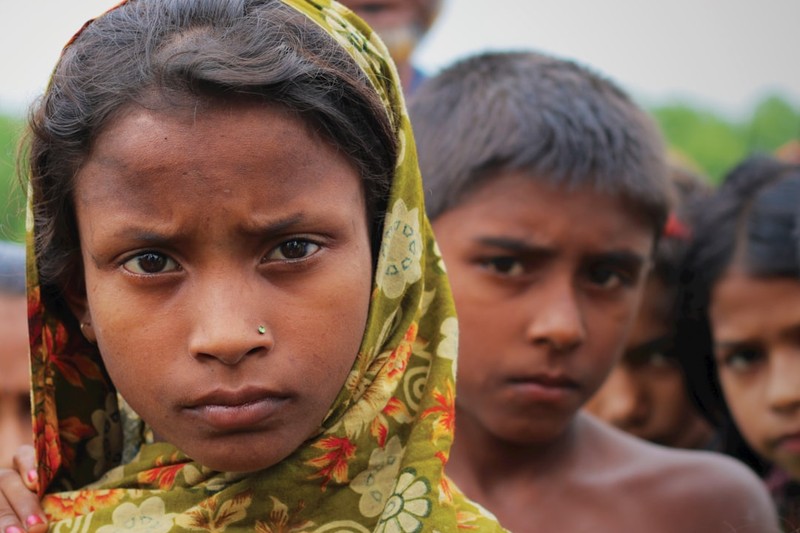
Five hundred and twenty-eight people have died of measles in Bangladesh since mid-March. The overwhelming majority were children under five. More than 60,000 have fallen ill. The outbreak has spread to 58 of the country’s 64 districts. And until recently, almost no one outside Bangladesh was paying attention.
“We’ve been crying out loud about this from the beginning, but it has been a silent situation,” says Hasina Rahman, the International Rescue Committee’s deputy regional director for Asia. “There hasn’t been much attention around it.”
The death toll as of May 24 makes this the worst measles outbreak in Bangladesh in decades. Measles is among the most contagious diseases known to medicine — and among the most preventable. Two doses of a safe, inexpensive vaccine provide roughly 95 percent protection. The tools to stop this existed before a single child fell ill.
A Vaccine Success Story, Undone
Until recently, Bangladesh was held up as a model for vaccination in low-resource settings. Community-led immunization programs drove first-dose measles coverage from 89 percent in 2000 to well above 100 percent by 2016, according to WHO data — a figure reflecting catch-up campaigns that reached children beyond routine targets. In 2019, then-Prime Minister Sheikh Hasina Wazed received the Vaccine Hero Award from Gavi, the Vaccine Alliance.
Then came 2024. The long-time ruling government was ousted and an interim administration took power. During its roughly 18 months in office, the new leaders decided to revamp the national vaccination system. The transition did not go smoothly. Bureaucratic delays disrupted supply chains. A nationwide stockout of measles-rubella vaccine lasted through 2024 and into 2025, according to the World Health Organization.
UNICEF’s representative to Bangladesh, Rana Flowers, says she warned the interim government repeatedly. “I sat with the interim adviser and the staff on at least 10 occasions saying, ‘We are worried. Look at my face. I am worried. You’re going to face a mountain,’” she recounted at a May 20 press conference.
The warnings went unheeded. Dr. Reaz Mobarok, a senior professor at Bangladesh Shishu Hospital and Institute, the country’s largest children’s hospital, puts it plainly: “The interim government did not bother about vaccination at all, so many children were not vaccinated for measles.”
A Preventable Catastrophe
In early April, Bangladesh formally alerted WHO to a sharp spike in measles cases. By mid-April, the country had recorded nearly 20,000 suspected cases and 166 deaths, according to WHO. The numbers have only climbed since. Local news outlets now announce daily death counts. On May 4 alone, 17 children died.
The virus found ideal conditions. One in four Bangladeshi children under five is stunted from chronic undernutrition, and one in ten suffers from acute malnutrition, according to data cited by NPR. Malnourished children are especially vulnerable to measles complications, and the virus itself suppresses immune function, opening the door to secondary infections like pneumonia and encephalitis. The case fatality rate stands at roughly 1 percent in Bangladesh, compared with 0.1 to 0.3 percent in the United States.
The outbreak has hit hardest among the most vulnerable. In the remote Chittagong Hill Tracts near the Myanmar border, Indigenous communities face long, costly journeys to reach care. “People, mostly farmers, are among the poorest and cannot afford even boat or motorcycle fares to reach the hospital,” local council head Kratpung Mro told AFP.
Hospitals at the Breaking Point
Bangladesh’s healthcare system is buckling. At the Infectious Diseases Hospital in Dhaka, superintendent Dr. F.A. Asma Khan says her 100-bed facility receives more than 100 new patients most days. Two measles patients regularly share a single ICU bed, both sometimes requiring respiratory support, according to a UN report cited by NPR. At Bangladesh Shishu Hospital, administrative offices are being converted into patient-care rooms.
“We said to the doctors: ‘You will sit in other places if you need to sit and discuss something,’” says Mobarok.
Nine-month-old Rizvi Ahmed Raihan and his mother made the three-hour journey from Manikganj district to Dhaka. The hospital was so crowded they could only get a spot on the floor in front of the elevator, where the baby received supplemental oxygen and fluids. There is no specific treatment for measles, only supportive care. After five days, his condition improved and he was discharged.
Mohammad Kamal Hossain, a rickshaw driver earning about $4 a day in Bhola, has spent 20 days caring for his nine-month-old daughter Saifa, who developed measles-related pneumonia. He says he has already spent $160 to reach the capital — well over a month’s income — and each day must pay for food and other hospital living expenses, pushing him deeper into debt. “My elder kid is studying in ninth grade, and now I don’t know how I will pay her tuition fees this month because I am already in debt because of transportation costs and living in hospitals,” he says.
The strain has been compounded by foreign aid cuts that hit global health programs over the past year. Rahman says she watched community health initiatives get terminated and staffing shortages worsen. “Parents are sitting outside the [child hospital] wards just helpless, not knowing what to do,” she says.
The Response, and the Long Road Back
The current government, elected in February, launched an emergency measles-rubella vaccination campaign on April 5, supported by UNICEF, WHO, and Gavi. Officials say they have already vaccinated approximately 18 million children, meeting their initial target. A nationwide campaign followed on April 20, aiming for at least 95 percent coverage among children aged six months to five years.
“The response was immediate. It was hard hitting from the Ministry of Health. For that, I am very grateful,” says UNICEF’s Flowers.
Bangladesh has also asked WHO to conduct an independent inquiry into how the situation deteriorated so badly, according to Ziauddin Haider, the prime minister’s special adviser on health affairs. Health Minister Sardar Sakawat Hossain has blamed the interim government directly, calling its failures “sheer negligence.”
Dr. William Moss, a measles expert at the Johns Hopkins Bloomberg School of Public Health, estimates it may take a month or more before case numbers begin to decline meaningfully. Vitamin A supplementation — now being distributed to affected children — can significantly reduce measles mortality in populations where deficiency is common, he notes.
A Disease of Inattention
Measles killed nearly 100,000 people worldwide in 2024, according to WHO. It does not need to kill anyone. The vaccine works. The supply chains exist. The delivery systems, in Bangladesh’s case, had been proven to work at scale.
What failed was attention — at every level. The interim government ignored repeated warnings from UNICEF, WHO, and Gavi. International media looked past the mounting death count. Health systems, weakened by aid cuts, arrived at the crisis with fewer resources than they needed.
The outbreak has conjured memories of COVID-19, which killed nearly 30,000 people in Bangladesh. But the comparison goes only so far. During the pandemic, the country was part of a coordinated global response. This time, Mobarok says, Bangladesh is largely on its own: “We are not getting much help.”
A disease that should be a medical afterthought has killed 528 people — mostly children — in two months. The outbreak will be contained. The question of why it was allowed to happen, and why so few noticed, deserves a longer answer.
Sources
- More than 500 children have died in an outbreak that the world is virtually ignoring — NPR
- Disease Outbreak News: Measles in Bangladesh — World Health Organization
- Bangladesh calls for WHO inquiry as measles death toll tops 500 — The Star / DPA
- Protecting Every Child: Nationwide Measles-Rubella Vaccination Campaign in Bangladesh — UNICEF
- Bangladesh measles outbreak kills over 220 children since March — France24 / AFP
Discussion (14)