 lop News
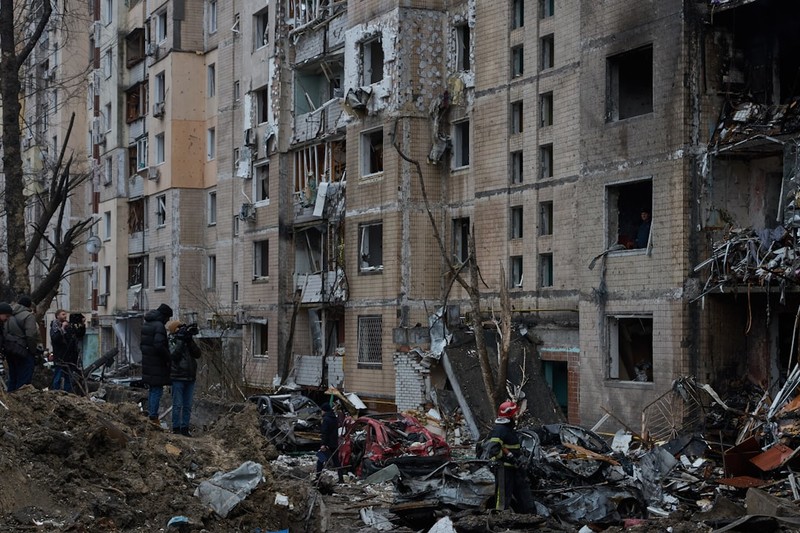
528 dead came home to Ukraine on Saturday. Russia sent nearly 300 drones to greet them.
The juxtaposition was brutal even by the standards of a war now in its fourth year. On Friday, Ukraine and Russia completed the first phase of a 1,000-for-1,000 prisoner swap, with 205 soldiers released on each side. On Saturday, Kyiv received the remains of 528 service members killed in action. And in the hours between, Russian forces launched one of their largest drone barrages in weeks.
One person was killed and at least 30 injured across 15 strike locations, according to Ukraine’s Air Force. Civilian infrastructure bore the brunt.
The Overnight Barrage
Russia launched 294 drones at Ukraine overnight, the Air Force reported. Air defenses shot down 269. But 20 drones struck their targets — residential buildings, power grids, and transport networks across at least four regions.
In Kherson, five high-rise apartment buildings and 19 houses were damaged, killing one person and injuring 23, according to regional Governor Oleksandr Prokudin.
Odesa region suffered widespread blackouts after strikes on electrical infrastructure. Thirty-nine settlements lost power, affecting more than 22,000 consumers. In Kharkiv, a road, two metro stations, an electric tram network, a trolleybus, and a public transport stop were damaged. In Sumy, seven people were injured when an office building, an ambulance, minibuses, and cars were struck.
A Ukrainian drone strike also killed one person in the Russian border region of Belgorod, local authorities said, hitting a vehicle in the town of Krasnaya Yaruga.
The Dead and the Living
The 528 repatriated bodies arrived under a framework that has quietly become one of the few functioning areas of cooperation between Moscow and Kyiv. According to Ukraine’s Coordination Headquarters for the Treatment of Prisoners of War, the Russian side indicated the remains “may be Ukrainian servicemen.” Ukrainian investigators and forensic experts will work to confirm their identities.
That caveat is not routine. During previous repatriations, Russia at times returned the bodies of its own soldiers to Kyiv, the Kyiv Independent reported. Ukrainian officials have alleged the practice may have been designed to avoid compensation payments to Russian families — or simply reflected negligence in handling the dead. Russia has not commented on whether Ukraine transferred any Russian remains in return.
The Kyiv-based analytical platform VoxUkraine estimates that Russia likely hands over more bodies than it receives, since Russian forces held more Ukrainian remains and have been on the offensive for most of the war, controlling territory where soldiers fell.
The pace of repatriations has accelerated since peace talks resumed in early 2025 — a sign that back-channel negotiations on humanitarian issues remain active, even as broader diplomatic efforts have largely stalled.
A Ceasefire That Wasn’t
Both the exchange and the drone assault unfolded against the backdrop of a three-day ceasefire that US President Donald Trump announced last week, covering May 9–11. Both Moscow and Kyiv accused the other of violating it.
When the ceasefire expired, Russia launched three consecutive days of massive missile and drone strikes. Among the targets was a residential building in Kyiv where 24 people were killed, including three children, according to The Guardian.
On Friday, Zelensky laid red roses at the rubble. “Ukraine will not allow any of the aggressor’s strikes that take the lives of our people to go unpunished,” he said, following a meeting with military and intelligence officials to discuss retaliatory operations.
Ukraine’s response was immediate. Overnight strikes hit an oil refinery in Ryazan, central Russia, triggering a major fire. Ukraine has doubled the number of Russian oil refineries targeted since the start of 2026, according to Russian officials’ public statements, putting further pressure on Moscow’s federal budget and the world’s third-largest oil output.
Zelensky also released footage of Ukrainian strikes on a Beriev Be-200 amphibious aircraft in Krasnodar Krai, a Kamov Ka-27 helicopter, a cargo ship carrying ammunition, and multiple air defense systems — some hit nearly 1,000 kilometers from the front line.
“These are entirely justified responses to what the Russians are doing,” Zelensky said.
Two Tracks, No Junction
The coexistence of body returns and drone barrages is not a contradiction in Moscow’s strategy. Repatriations and prisoner swaps cost Russia little strategically while offering just enough humanitarian cooperation to keep diplomatic channels technically open — without conceding anything on the battlefield.
For Kyiv, the calculus is different. Each returned body means a family can hold a funeral. Each freed prisoner is a soldier who survived — some held since the first days of the full-scale invasion in 2022, as Zelensky noted. Ukraine frames these moments as proof that negotiations can produce results, even if those results have yet to bring a cessation of hostilities any closer.
Trump has insisted a peace deal is close. Putin has suggested the war might be nearing an end. The darkened villages of Odesa, the gutted metro stations of Kharkiv, and the 528 bodies now awaiting identification tell a different story.
The POW swap was real. The bodies are real. So are the drones.
Sources
- Russia launches nearly 300 drones at Ukraine as 528 bodies of Ukrainian soldiers are returned — Euronews
- Ukraine war briefing: Zelenskyy vows retribution over deadly Russian bombardments — The Guardian
- Kyiv repatriates 528 bodies that Russia claims are fallen Ukrainian soldiers — Kyiv Independent
- Russia and Ukraine Begin First Phase of Large POW Exchange — The Moscow Times
- ‘Justified response’ – Zelensky releases footage of Ukrainian strikes on Russian aircraft, other targets deep behind enemy lines — Kyiv Independent
Discussion (10)