 lop News
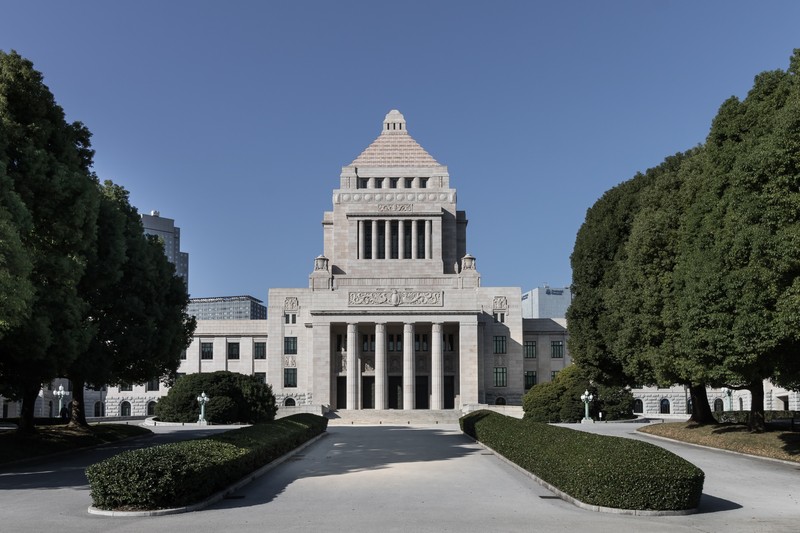
Fifty thousand people filled a Tokyo park on Sunday, defending a constitution they had no hand in writing. Four thousand kilometers away in Hanoi, the woman who wants to rewrite it said the time for debate was almost over.
Japan’s Constitutional Memorial Day — marking 79 years since the US-drafted supreme law took effect on 3 May 1947 — has long been a date of quiet reflection. This year it became a collision between popular will and executive ambition, staged on the holiday meant to honour the document at its centre.
Prime Minister Sanae Takaichi, speaking during a visit to Vietnam, called for “advanced discussions” on constitutional revision, arguing the document “should periodically be updated to reflect the demands of the times.” Written under the US occupation led by General Douglas MacArthur, the constitution has never been amended.
Takaichi and fellow conservatives in the ruling Liberal Democratic Party (LDP) have targeted Article 9 — the pacifist clause that forbids Japan from threatening or using military force to settle international disputes. Since taking office last autumn, Takaichi has made reform a centrepiece of her government, arguing the current framework ties Japan’s hands as security threats mount from North Korea and China.
A movement finding its size
Sunday’s demonstration was the largest in a protest wave that has grown with striking speed. Roughly 3,600 people gathered outside the national Diet in late February. Days later, still that month, the crowd swelled to 36,000. On Sunday, 50,000 filled a Tokyo park — the largest pro-constitution rally to date, according to The Guardian.
Smaller demonstrations played out in dozens of towns and cities across Japan, drawing the elderly who lived through the war and younger citizens anxious about what remilitarisation would mean for the country’s postwar identity.
“I want to cherish the constitution like I do my own child, and pass it on to the next generation,” Haruka Watanabe, an 87-year-old protester in Osaka, told Kyodo news agency.
The language from the crowds was blunt. “Under Takaichi, Japan is following America like a dog follows its owner,” said Hiroko Maekawa, a Tokyo ward councillor. “The LDP wants to turn the self-defence forces into a traditional military, because they know the constitution, as it is, prevents them from doing that.”
Megumi Koike, another local councillor, called the constitution “a national treasure and a treasure to the world,” and said the government should spend on healthcare, education, and jobs — not weapons.
The math is daunting
Any amendment requires a two-thirds majority in both houses of the national Diet and a simple majority in a national referendum — a threshold designed to make rewriting the supreme law exceptionally difficult.
The public is fractured. A weekend poll by the conservative Yomiuri Shimbun found 57% of respondents supported revision. A simultaneous survey by the liberal Asahi Shimbun put the figure at 47%. The discrepancy points to a layered debate: many Japanese back limited changes, such as formally recognising the Self-Defence Forces, while resisting any fundamental retreat from postwar pacifism.
An ally’s document, an ally’s constraints
The constitutional fight is unfolding against a worsening security picture. In March, Takaichi cited Article 9 when she turned down a request by US President Donald Trump to deploy Japan’s Maritime Self-Defence Forces to the Strait of Hormuz — a decision she reportedly made with reluctance.
Trump has criticised Japan for declining to send forces to the Middle East. Yet the American embassy in Tokyo used Constitutional Memorial Day to praise the document on X, writing that it had upheld “popular sovereignty, respect for fundamental human rights, and pacifism,” and noting it had “continued to serve as the foundation of Japanese society for 79 years since its enactment, without ever having been amended.”
The paradox is plain: Washington imposed a constitution that now limits what Washington can ask of Tokyo. As China’s military presence grows and North Korea’s weapons programmes advance, the question of whether Article 9 secures Japan or weakens it has become one of the defining debates in the Asia-Pacific.
Takaichi is preparing to travel onward to Australia for talks with Prime Minister Anthony Albanese on energy security, critical minerals, and defence — a trip that underscores how inseparable the constitutional question is from Japan’s broader strategic calculations.
“We mustn’t have discussion just for discussion’s sake,” Takaichi said in Hanoi, according to Kyodo. “To retain the trust placed in them by the people, politicians must discuss the issue and make a decision.”
The crowds in Tokyo and cities across Japan have delivered their verdict. Whether Takaichi can muster the parliamentary arithmetic — or the popular mandate — to overrule them is a question that will shape Japan’s role in the region for a generation.
Discussion (10)