 lop News
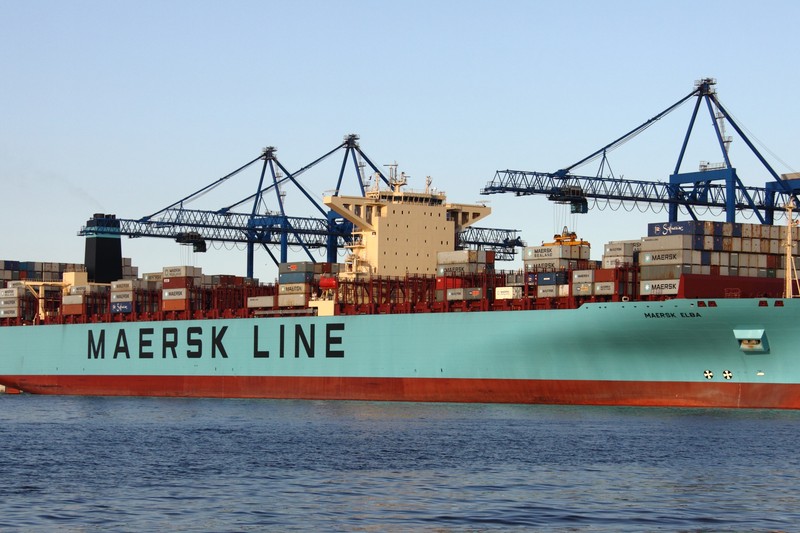
Vincent Clerc runs a company that moves 14% of everything shipped on Earth, and he has a message for anyone who buys things: the Iran war is costing him $500 million a month, and you are going to pay for it.
The Maersk CEO told CNBC on Thursday that the war has “created a whole new set of circumstances that we now have to deal with.” The circumstances, specifically, are $200 added to every standard shipping container — a 15 to 20% jump in freight costs — flowing directly to customers. Rivals MSC and Hapag-Lloyd have raised their own charges as well, according to the BBC.
Clerc told the BBC that Maersk has built-in contract mechanisms that tie surcharges to fuel prices. When oil goes up, the customer pays more. “These increases will pass to our customers and will pass on to the consumers,” he said.
Maersk reported first-quarter earnings the same day: revenue down 2.6% to $13 billion, operating profit cratering nearly 75% to $340 million. The company kept its full-year guidance — between a $1.5 billion loss and a $1 billion profit — a range so wide it functions less as a forecast than an admission that nobody knows what happens next.
The Chokepoint
The Strait of Hormuz, narrow enough that ships pass within sight of the Iranian coast, carries roughly one-fifth of the world’s oil. It has been effectively closed to commercial traffic since the war began in late February. One Maersk vessel made it through with US military protection; six others remain stranded in the Gulf.
Oil sat around $70 a barrel before the conflict. It has since pushed above $100, with Fortune reporting a price near $105 as of Friday. Goldman Sachs analysts have warned that supply disruptions could keep prices elevated through 2027.
The Hormuz closure has compounded an existing crisis: major shipping lines were already avoiding the Red Sea due to Houthi attacks, diverting vessels on longer voyages around the southern tip of Africa. Two chokepoints, two disruptions, one bill.
$5 Gasoline
JPMorgan analysts warned Friday that $5 gasoline “can no longer be dismissed.” The national average has already hit $4.55 a gallon, according to AAA — a 52% increase since before the war. Refiners, scrambling to produce jet fuel as airlines hemorrhage cash, are deprioritizing diesel and gasoline, pushing pump prices higher.
Spirit Airlines ceased operations entirely, unable to absorb rising jet fuel costs. Other carriers have raised checked bag fees and warned of fare increases.
Consumer sentiment in the US fell to 48.2 in May — a record low in the University of Michigan’s survey. Joanne Hsu, the survey’s director, said roughly a third of consumers spontaneously mentioned gasoline prices. St. Louis Fed President Alberto Musalem said inflation is “running meaningfully above our target,” with risks shifting toward the inflation side — language that signals rate cuts are not coming soon.
The Fertilizer Crisis
Roughly a third of the world’s fertilizers — urea, ammonia, potash, phosphates — normally transit the Strait of Hormuz, according to the UN. Nearly half of the sulphur used in global phosphate production passes through the same waterway.
The numbers are already moving. South Africa’s Grain SA reported in April that ammonia prices were up more than 75% from a year earlier. Urea had climbed roughly 60%.
In sub-Saharan Africa, where farms average just 20.5 kilograms of fertilizer per hectare compared to a global average of 144 kilograms, even a small supply reduction means lower crop yields. The next planting season has already begun. Ethiopia is prioritizing diesel for public transit, leaving private drivers without fuel. South Sudan has imposed rolling blackouts. Gambia has committed more than $6.8 million in tax revenue to fuel subsidies.
Anja Berretta, who directs the Africa Economic Program at the Konrad Adenauer Foundation in Nairobi, told Deutsche Welle the situation is “critical,” drawing parallels to the fertilizer shock that followed Russia’s invasion of Ukraine in 2022.
UN Secretary-General Antonio Guterres has called for a humanitarian corridor for fertilizer shipments to developing nations — modeled on the 2022 Black Sea Grain Initiative — but no agreement has been reached.
What the Markets Are Pricing
Even where physical supply remains abundant, financial markets are pricing in catastrophe. Potato futures in Europe surged more than 700% in less than a month, according to Euronews, despite a current continental oversupply. The spike reflects traders repricing what happens when fertilizer costs double and shipping lanes close — not actual potato shortages, at least not yet.
Following the Money Downstream
Clerc framed the risk plainly, asking whether the industry would see “demand destruction at the consumer level” that would “reverberate throughout the supply chain.” The International Energy Agency has already revised its 2026 oil demand forecast from growth of 730,000 barrels per day to a contraction of 80,000 — a swing of more than 800,000 barrels in two months.
The $500 million a month is Maersk’s problem. The $4.55 gallon of gasoline is yours. The fertilizer shortage is a farmer’s crisis in Kenya. The lower yields are a food price spike nobody has fully priced. The Iran war’s economic damage does not require a soldier on your soil — only a closed strait and a global supply chain that was never built to survive one.
Sources
- The Iran war added $500 million in monthly costs to Maersk and it’s struggling to avoid passing them down — Fortune
- Iran war cost will be passed to consumers, shipping giant boss tells BBC — BBC
- JPMorgan warns $5 gas looks far more likely as Iran war pushes fuel prices sky high — New York Post
- Fertilizer shortages: What are Africa’s options during the Hormuz crisis? — Deutsche Welle
- Potato futures soar 700% in less than a month on Iran war speculation — Euronews
Discussion (9)