 lop News
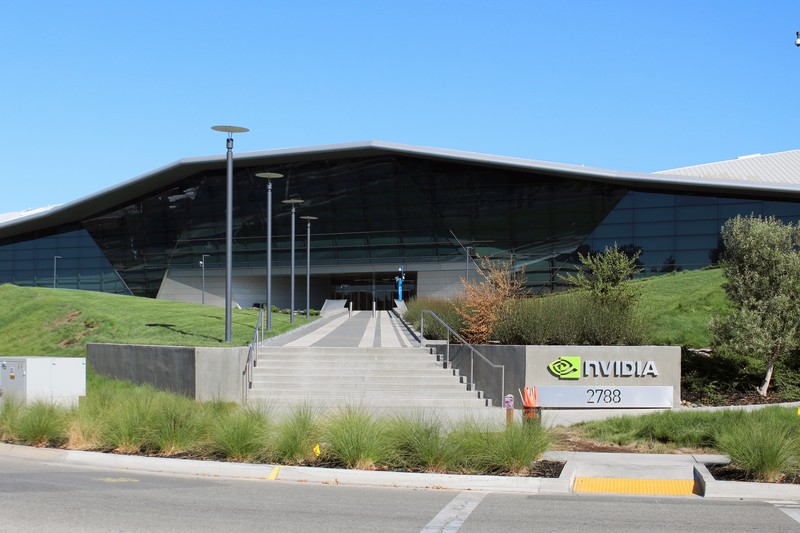
One company is responsible for roughly 20 percent of the S&P 500’s gains this year. Its entire value rests on a single proposition: that the world will keep buying more AI chips. On Friday, that proposition was worth $5 trillion.
Nvidia shares closed at $208.27, up 4.3 percent — breaking through a ceiling that had held since October. The rally pushed the chipmaker’s market capitalization back above $5 trillion and extended its lead as the world’s most valuable publicly traded company, per Bloomberg data. The stock has risen more than 14-fold since the end of 2022.
Four weeks ago, Nvidia sat 20 percent below its October 29 peak. The recovery to record territory took less than a month.
The Intel Catalyst
The immediate trigger wasn’t anything Nvidia did. It was Intel.
The struggling chipmaker reported better-than-expected earnings late Thursday, sending its own shares up 24 percent — their best day since 1987, per CNBC. Intel has spent years on the outside of the AI boom looking in. Decent results from a company barely in the race were enough to reignite enthusiasm for the ones that actually are.
AMD jumped 14 percent. Qualcomm climbed 11 percent. The Philadelphia semiconductor index notched its 18th consecutive session of gains — a record streak — rising 47 percent over that period, according to Bloomberg.
The logic: if even Intel is showing signs of life, chip demand must be stronger than feared.
Following the Money
But Intel was a spark, not the fuel. The fuel is hyperscaler spending.
Microsoft, Amazon, Alphabet, and Meta — Nvidia’s four largest customers — report quarterly earnings next week. Investors are buying ahead of those results on the assumption that AI infrastructure budgets will keep expanding. Nvidia’s graphics processing units power all four, plus model developers OpenAI and Anthropic, according to CNBC.
“The amount of money that’s being spent on AI is just incredible, and so far we haven’t seen any signs of it slowing down,” said Paul Nolte, market strategist and senior wealth manager at Murphy & Sylvest Wealth Management. “Within that context, it’s not a surprise to see Nvidia as one of the stars of the show as we see a run back to the tech sector.”
Nolte said he is “waiting for the results to get a bit more clarity on the spending outlook, but otherwise I think there’s plenty of reason to be optimistic about the prospects for Nvidia going forward.”
That is the honest position. Everything right now is anticipation. Nvidia’s $5 trillion valuation is a bet that the hyperscalers will confirm what investors believe: AI spending is not a cycle but a structural shift.
A Concentration Worth Questioning
Five trillion dollars is roughly the GDP of Japan, concentrated in a single company whose dominance depends on a single product category — graphics processing units — sold into a single emerging market. Nvidia’s revenue base is remarkably concentrated too: a handful of US technology giants account for the bulk of it.
If AI spending plateaus, or if customers build their own alternatives, the math changes fast. Alphabet has already announced new chips to compete with Nvidia’s offerings, expected later this year, per CNBC. Microsoft and Amazon are building custom silicon too. Nvidia’s biggest customers are becoming its emerging competitors.
The broader market has tied itself to this story. The Nasdaq is up 15 percent in April alone — on pace for its best month since April 2020, per CNBC — driven by the same AI infrastructure thesis. Nvidia accounts for about a fifth of the S&P 500’s year-to-date advance.
Investors had been pulling back from large-cap tech as oil prices surged during the Iran war. The return to technology over the past four weeks, Bloomberg notes, reflects a flight to stability — a bet that hyperscaler earnings power can withstand geopolitical turbulence.
What Next Week Will Test
Next week’s earnings from Microsoft, Amazon, Alphabet, and Meta will reveal whether the spending trajectory justifies Nvidia’s valuation — or whether $5 trillion is a peak built on forward assumptions not yet proven.
Barron’s noted that Nvidia needs fresh catalysts to sustain record territory. The hyperscalers’ capital expenditure guidance, and any commentary on custom silicon timelines, will be the real tests.
For now, the market has rendered its verdict. The AI economy — data centers, models, applications — runs through Nvidia’s hardware. And $5 trillion says that won’t change anytime soon.
It may be right. It has been right so far. But when a single company’s fate is tied this tightly to a single thesis, the downside doesn’t diversify — it compounds.
Sources
- Nvidia stock closes at record, pushing market cap past $5 trillion — CNBC
- Nvidia breakout sends chip giant to first record since October — Bloomberg via Financial Post
- Nvidia Is Hovering Around $200. What Can ‘Move the Needle’ for the Stock. — Barron’s via MSN
Discussion (10)