 lop News
$400 billion. Two utilities. One insatiable hunger driving them together: artificial intelligence.
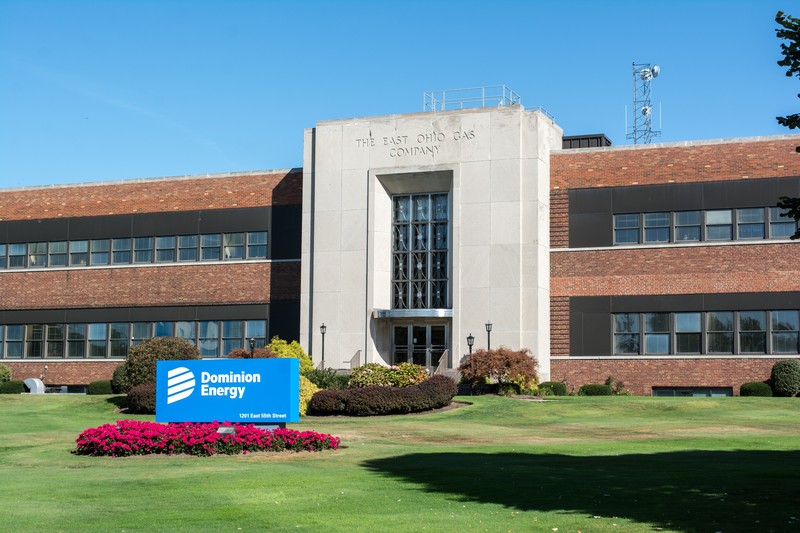
NextEra Energy, already America’s largest utility by market value, is in advanced talks to acquire Dominion Energy in a mostly stock deal that would create a $419 billion enterprise — the largest utility combination in US history, according to a person familiar with the discussions. An announcement could come as early as Monday, though negotiations could still fall apart.
This deal isn’t happening because two executives had a nice dinner. It’s happening because AI data centers are devouring electricity at a pace the grid was never built to handle, and the companies that own the wires are racing to consolidate before someone else does.
The Prize: Northern Virginia
Dominion’s crown jewel is its territory in Virginia, home to the data center corridor in the northern part of the state — the densest concentration of computing infrastructure on the planet. Acquiring Dominion would plug NextEra directly into PJM Interconnection, the largest electric grid in North America, stretching from Washington to Chicago.
NextEra, based in Florida, brings its own formidable assets: the country’s biggest renewable energy development business and a decade of roughly 10% annual earnings growth — more than double the regulated utility sector’s average, according to Bloomberg Opinion.
Combined, the two companies would have an enterprise value of approximately $419 billion, including debt, per Bloomberg data. NextEra’s market capitalization sits around $195 billion; Dominion’s at roughly $54 billion.
The AI Power Crisis
The timing is not coincidental. Global power consumption is rising at the fastest rate in over a decade, with annual demand projected to increase by more than one trillion kilowatt-hours per year through 2030, according to Morgan Stanley Research. AI-driven data centers account for nearly one-fifth of that growth, with their power consumption expected to increase by roughly 126 gigawatts annually through 2028 — approaching Canada’s total power demand.
Morgan Stanley forecasts US data center demand alone could reach 74 GW by 2028, with a projected shortfall of about 49 GW in available power access. The largest new data centers now require 1 to 4 GW per site — scales that traditional grid connections struggle to accommodate, tangled in permitting bottlenecks and political friction.
This is the backdrop against which NextEra is pursuing Dominion. The utility sector smells opportunity and urgency in equal measure.
The Regulatory Gauntlet
NextEra has been here before — and it hasn’t ended well. In 2020, the company made an unsuccessful bid for Duke Energy that would have been the largest US utility deal at the time. Before that, Hawaii regulators rejected NextEra’s $4.3 billion purchase of Hawaiian Electric Industries in 2016, concluding the deal was not “reasonable” or “in the public interest.” The company has also failed in acquisition attempts in Florida and South Carolina.
NextEra Chief Executive James Robo once reportedly joked that small acquisitions aren’t worth the “brain damage” of regulatory approval. A Dominion deal would test that proposition at unprecedented scale. The transaction would require sign-off from multiple state public utility commissions, the Federal Energy Regulatory Commission, potentially the Nuclear Regulatory Commission — Dominion operates nuclear plants — and possibly antitrust review by the Department of Justice or Federal Trade Commission.
“It’s a consolidating industry,” Paul Patterson, an analyst at Glenrock Associates, told Bloomberg. “If Dominion is willing to sell, it does not surprise me that NextEra might want to buy it given its history of prior acquisition attempts.”
Who Wins. Who Pays.
The winners, if the deal closes, are straightforward: NextEra shareholders gain scale and access to the East Coast’s most power-hungry market. Tech companies get a utility with deeper pockets and broader reach to wire up their data centers. Both companies’ executives get to run a colossus.
The question is who absorbs the cost. US utilities are planning a record $1.4 trillion in grid spending over the next five years to keep pace with data center demand — a 20% increase from last year’s plans, according to PowerLines, a consumer education nonprofit. Residential electricity bills have already risen roughly 40% since 2021. Nearly 80 million Americans report struggling to pay their utility bills, with some forgoing food and healthcare to keep the lights on.
In 2025 alone, utilities requested $31 billion in rate increases — the most since the mid-1980s, per PowerLines data. Electricity costs are rising faster than inflation: 4.6% year-over-year in March versus general inflation of 3.3%, according to the Bureau of Labor Statistics.
The White House is watching. President Trump posted on Truth Social this year that data centers must “pay their own way,” and seven major tech firms — Google, Microsoft, Meta, Oracle, xAI, OpenAI, and Amazon — signed a voluntary ratepayer protection pledge in March.
The First Wave
This deal, if it materializes, won’t be the last. The AI boom has already triggered a surge in power-sector consolidation: BlackRock’s Global Infrastructure Partners bought Minnesota utility Allete, Constellation Energy acquired Calpine, and Stonepeak Partners and Bernhard Capital Partners purchased Louisiana’s Cleco Power.
The calculus is simple. Data centers need power. Power requires infrastructure. Infrastructure rewards scale. The utilities that combine fastest will be the ones wiring the AI era — and the ones setting the terms for everyone else, including the millions of customers who just want to turn on the lights without checking their bank balance first.
Sources
- NextEra Energy Is Said to Be in Talks to Acquire Dominion — Bloomberg / Financial Post
- Energy Markets Race to Solve the AI Power Bottleneck — Morgan Stanley
- $1.4 trillion utility spending spree to keep up with AI data centers could hike electric bills: study — New York Post
- Why The Proposed Mega-Merger Of Duke Energy And NextEra Is Unlikely To Succeed — Forbes
- America’s Biggest Power Firm Pivots Hard to Its Next Era — Bloomberg Opinion
Discussion (11)