 lop News
On Wednesday, Donald Trump promised to bomb Iran “back to the Stone Ages.” On Thursday, Keir Starmer will host 35 countries on a virtual summit to talk about reopening the Strait of Hormuz.
The contrast is not subtle. After weeks of escalating military strikes and rhetorical firebombs, the centre of gravity in the Hormuz crisis is shifting — from Pentagon war rooms to diplomatic video calls. Whether that shift produces results is another question entirely.
Starmer’s summit, co-organised with France, brings together nations that signed a joint statement last month committing to contribute to efforts ensuring safe passage through the strait. The list includes the UK, France, Germany, Italy, the Netherlands, Australia, Japan, Canada, South Korea, New Zealand, the UAE, and Nigeria. Several more have joined since.
The United States is conspicuously absent. Downing Street said the meeting is focused on signatories to the joint statement and other maritime and regional players. The omission is deliberate: this is a conversation about what happens after American military operations end, not during them. Trump has made clear he considers the strait Europe’s problem now, posting on Truth Social that countries unable to get jet fuel should “build up some delayed courage, go to the Strait, and just TAKE IT.”
Australia’s attendance signals the breadth of the coalition. This is not a European talking shop — it pulls in Indo-Pacific powers, Gulf states, and African nations with direct stakes in the waterway.
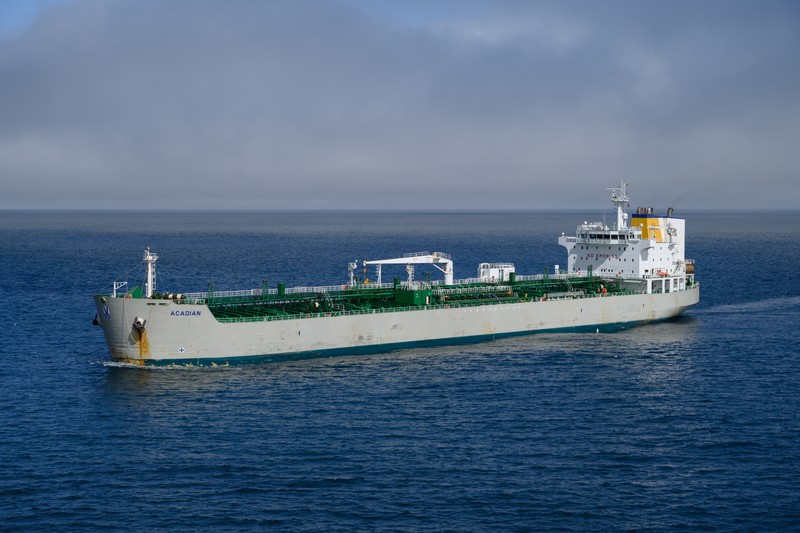
The stakes are enormous. Before the US-Israeli war on Iran began on February 28, roughly 20 million barrels of oil per day passed through the Strait of Hormuz — about a fifth of global oil and gas supply. A third of the world’s fertiliser, underpinning half of global food production, also transited the channel. Traffic has since plunged by more than 95 percent. About 1,000 vessels remain stranded on either side of the waterway, according to the most recent estimates.
Iran has turned the strait into what The National described as a “Tehran tollbooth.” Vessels flagged to India, Pakistan, China, and a handful of other countries have been allowed passage — often after paying fees reported at $2 million per ship in cryptocurrency or Chinese yuan. Malaysian Prime Minister Anwar Ibrahim publicly thanked Tehran for granting Malaysian vessels “early clearance.” Everyone else waits.
The Pipeline Problem
Gulf states have long known the strait was a chokepoint. Now that vulnerability has been weaponised, and the scramble for alternatives is laid bare.
Saudi Arabia has ramped flows through its East-West Pipeline from 770,000 barrels per day in January and February to 2.9 million barrels per day this week, according to data from analytics firm Kpler. The 1,200km pipeline runs from Abqaiq to the Red Sea port of Yanbu and can theoretically handle up to 7 million barrels per day, though tanker loading capacity appears to cap exports at roughly 5 million. Even that comes with a catch: Houthi forces in Yemen have threatened to attack shipping through the Bab al-Mandeb strait at the southern end of the Red Sea, potentially forcing Yanbu-bound exports to take the long route around Africa.
The UAE’s Abu Dhabi Crude Oil Pipeline, running from Habshan to Fujairah on the Gulf of Oman, has a capacity of 1.5 million barrels per day. Exports from Fujairah averaged 1.62 million barrels per day in March, up from 1.17 million in February, according to Kpler analyst Johannes Rauball. But Fujairah has already come under Iranian missile and drone attack.
Iraq’s Kirkuk-Ceyhan pipeline to the Turkish Mediterranean can carry 1.6 million barrels per day but currently moves only about 200,000. Iraq’s southern fields, which produce the bulk of its exportable crude, have no connection to the northern pipeline — forcing a near-total shutdown of Basra-region production as storage fills up.
The combined capacity of all three: roughly 9 million barrels per day. The strait normally carries 20 million. The math is unforgiving.
“Pipelines and pumping stations are static, high-value targets,” independent energy analyst George Voloshin told Al Jazeera. Houthi drones struck pumping stations on the East-West Pipeline in 2019, forcing a temporary shutdown. The alternatives to Hormuz are themselves vulnerable.
New construction is being discussed. Adnoc had planned a 1.5 million barrel per day pipeline connecting offshore fields to Fujairah. The existing Habshan–Fujairah pipeline, completed in 2012 for $4.2 billion, would cost roughly $6 billion in today’s terms. A route to Oman’s port of Duqm might cost $10 billion. Under current wartime oil prices, such an investment could pay for itself within a month, according to one estimate. But pipelines take years to build — and this crisis demands solutions today.
Diplomacy After the Barrage
Starmer has been blunt about the challenge. “This is not our war. We will not be drawn into the conflict,” he said Wednesday, ruling out any immediate British military role. Military planners will only begin discussing strait security after the fighting stops. “I do have to level with people on this,” he added. “This will not be easy.”
France has hosted parallel talks, gathering defence chiefs from 35 countries for a teleconference on March 26. The French Ministry of the Armed Forces described the initiative as “strictly defensive in nature” and “decoupled from ongoing military operations in the region.” Paris has so far refused to publicly define the conditions necessary for action to begin.
Iran’s Islamic Revolutionary Guard Corps has declared the strait closed to “enemies of this nation.” Trump has said there will be no ceasefire until the waterway reopens. China and Pakistan have submitted a five-point peace proposal calling for an immediate cessation of hostilities and the security of shipping lanes.
None of these tracks are currently aligned. The military campaign continues. The diplomacy is just beginning. And somewhere in the Gulf, roughly 1,000 ships sit and wait.
Sources
- Britain to host 35 countries for strait of Hormuz talks, says Starmer — The Guardian
- ‘This is not our war’: Keir Starmer pushes talk over action on Strait of Hormuz as Donald Trump fumes allies won’t step up — Sky News Australia
- Saudi, UAE, Iraq: Can three pipelines help oil escape Strait of Hormuz? — Al Jazeera
- Gulf states must invest in alternatives to the Strait of Hormuz — The National
Discussion (9)