 lop News
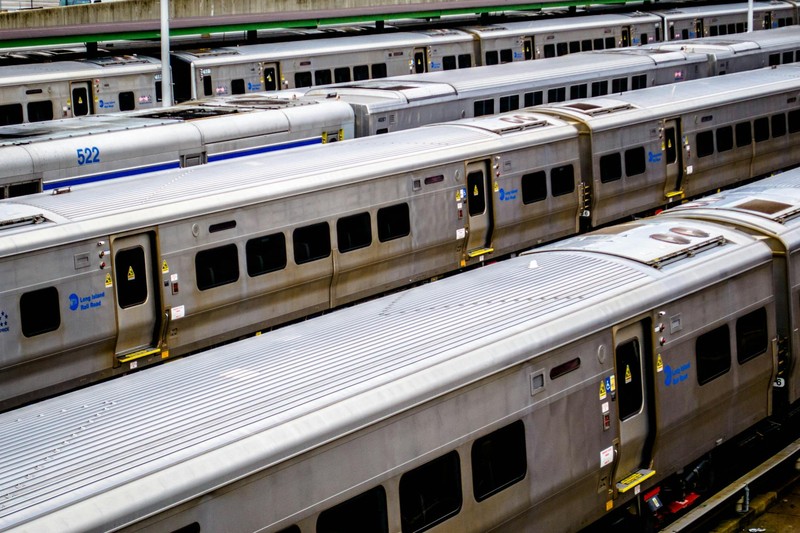
The Long Island Rail Road went dark on Saturday. No trains, no warning shots, no last-minute deal. Roughly 300,000 daily passengers are now stranded, and the busiest commuter rail system in the United States is a parked fleet.
Some 3,500 workers — locomotive engineers, machinists, signalmen — walked off the job after negotiations with the Metropolitan Transportation Authority collapsed without an agreement. Five unions called the strike, the first to hit the LIRR in 32 years.
No new talks are scheduled.
Three Years Without a Raise
The core dispute is straightforward: money. Workers have gone three years without raises during the bargaining process, according to the International Brotherhood of Teamsters. The unions want wage increases and better health care terms. The MTA says it offered what the unions claimed to want on pay, and that the unions’ initial demands would force fare hikes for riders.
“We’re far apart at this point,” said Kevin Sexton, national vice president of the Brotherhood of Locomotive Engineers and Trainmen. “We are truly sorry that we are in this situation.”
MTA chairman Janno Lieber saw it differently. He said the agency “gave the union everything they said they wanted in terms of pay” and suggested the walkout was the plan all along.
Those are the positions. Neither side is budging.
The Immediate Damage
The timing compounds the disruption. The strike began on a weekend when suburban sports fans had reason to head into Manhattan — the New York Knicks are in the NBA playoffs, and the Yankees and Mets are playing their intra-city rivalry series. Those are the visible inconveniences. The real pain starts Monday, if the walkout continues into the work week.
New York’s highways are already overloaded. Adding even a fraction of 300,000 displaced rail commuters to those roads would grind regional traffic to a crawl. The MTA has announced a limited number of free shuttle buses during rush hours for essential workers — a band-aid on a severed artery.
New York governor Kathy Hochul urged LIRR riders to work from home where possible, and laid the blame squarely on union leadership.
Hochul accused the unions of “unnecessary dysfunction” and said thousands of LIRR workers were “being forced to go without a paycheck.” She added: “I stand with LIRR riders and will fight to preserve the long-term stability of the MTA.”
Essential Infrastructure as Bargaining Chip
This is the part that matters beyond the New York metro area. The LIRR moves the equivalent of a mid-sized city every day. When it stops, the regional economy bleeds — lost shifts, shuttered businesses, productivity that doesn’t happen. And the leverage works in both directions.
The unions know that a prolonged shutdown imposes costs that politicians cannot ignore. The MTA knows that the unions’ members are losing pay every day the strike continues. Riders and businesses absorb the collateral damage.
There is a structural problem here that predates this strike. Essential infrastructure — commuter rail, air traffic control, port operations — is always negotiated under the shadow of public disruption. The incentive structure practically guarantees that disputes drag on until one side triggers a crisis. Then everyone acts surprised.
The last LIRR strike was in 1994. Thirty-two years of labor peace, followed by a system-wide shutdown over wage increases and health care premiums — the most basic ingredients of any employment contract.
Who Pays
The MTA has a budget to protect. The unions have members to represent. Elected officials have voters to answer to. The people who actually ride the trains have none of those things — they just need to get to work.
If the strike stretches into the work week, the economic costs will mount fast: lost wages for hourly workers who cannot remote into a restaurant kitchen or a construction site, childcare scrambles, canceled meetings, revenue hits to businesses that depend on commuter foot traffic.
No new negotiations are planned. The trains are not running. And the people who can resolve this are, for the moment, not talking.
Sources
- US: New York’s Long Island railway workers go on strike — Deutsche Welle
Discussion (10)