 lop News
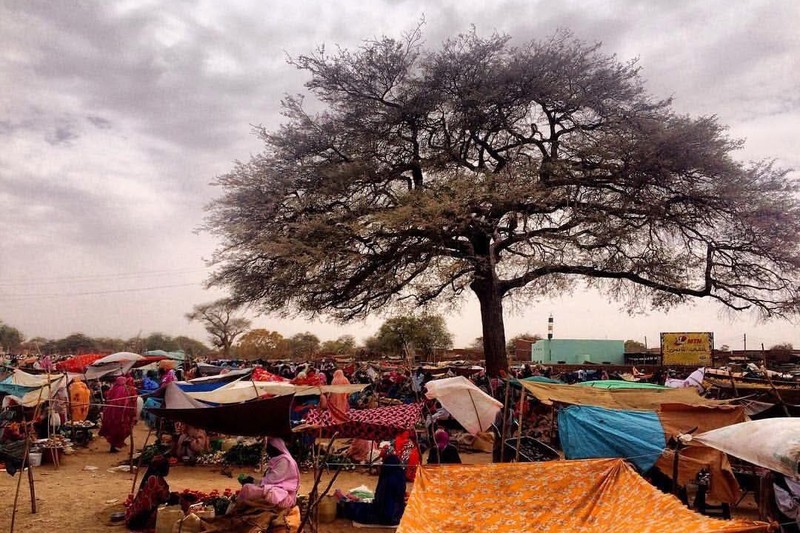
On Wednesday, a drone struck the market in Saraf Omra, a remote town in North Darfur near the Chadian border. “The drone hit a parked oil truck, which caught fire along with part of the market,” said Hamid Suleiman, a trader there. The market serves one of the most isolated stretches of the region. Twenty-two people were killed, including an infant, and seventeen more injured, according to a health worker at the local clinic who spoke to Agence France-Presse.
Roughly 500 miles east, a second drone hit a truck carrying civilians on a highway in North Kordofan, an area controlled by the army. Six bodies arrived at the hospital in the town of El Rahad — three of them burned beyond recognition — alongside ten wounded. A hospital source told AFP that the paramilitary Rapid Support Forces (RSF) was responsible.
Twenty-eight civilians killed in a single day, in a war the world has largely stopped watching.
A War Approaching Its Fourth Year
Sudan’s civil war began on 15 April 2023, when a power struggle between the army, led by Abdel Fattah al-Burhan, and the RSF, commanded by Mohamed Hamdan Dagalo, erupted into open conflict in Khartoum. The war is closing in on its fourth year with no ceasefire in sight.
The humanitarian figures are staggering. More than 11.6 million people have been displaced from a population of roughly 51 million, according to aid organizations — the largest displacement crisis on the planet and what those organizations describe as the world’s worst humanitarian crisis. Huge swathes of the country are at risk of famine. Death toll estimates range from tens of thousands to more than 400,000.
In October 2025, more than 10,000 people are believed to have been massacred by the RSF in the city of El Fasher over two days, according to reports from aid organizations — a single atrocity exceeding the civilian death tolls of several conflicts that received sustained global attention. It has not altered the trajectory of the war.
Drones Over Markets and Hospitals
Neither side claimed the Saraf Omra market strike, and it was not immediately clear which faction sent the drone. But the broader pattern has been documented by the United Nations. Drone attacks on civilians have intensified this year, particularly in the Kordofan region.
More than 500 people were killed by drones between 1 January and 15 March alone, Marta Hurtado, spokesperson for the UN high commissioner for human rights, said this week. Six days before the Saraf Omra attack, a drone struck a hospital in East Darfur on 20 March, killing 64 and wounding 89, according to the World Health Organization. The Emergency Lawyers, a Sudanese group documenting war atrocities, attributed that strike to the army.
The highway near El Rahad runs through the state capital El Obeid and onward to Darfur. Both factions have repeatedly attacked the route with drones, according to The Guardian. For civilians traveling one of the region’s few major roads, the journey has become a lethal gamble. Neither the army nor the RSF appears to face meaningful constraints on targeting them.
The Silence and the Stakes
The contrast between the scale of Sudan’s catastrophe and the attention it commands is difficult to reconcile. This is a conflict producing displacement numbers that dwarf any other active war, famine conditions without contemporary parallel, and weekly atrocities documented by the UN. It receives a fraction of the diplomatic urgency and media coverage afforded to other crises.
The war’s absence from international diplomacy is not for lack of information. The UN has documented the atrocities. Aid organizations have issued their warnings. The WHO has counted the hospital dead. The data accumulates. The response does not.
The Saraf Omra and El Rahad strikes were reported by AFP and carried by a small number of international outlets. They will likely fade from the news cycle within days.
Proliferation Without Accountability
The drones killing civilians in Sudan are not advanced military platforms. They are cheap, commercially available or lightly modified systems — the kind of technology that has spread through civil wars globally because it is inexpensive, deniable, and brutally effective against unprotected targets. In conflicts where no outside power enforces the laws of war, these weapons become instruments of terror wielded with near-total impunity.
What distinguishes Sudan is the completeness of the accountability vacuum. Both factions operate without meaningful external pressure. No major power is invested enough to impose consequences. The UN documents the toll. Nothing changes.
Five hundred dead by drone in ten weeks. A hospital struck. A market incinerated. A truck carrying families burned on a highway. The cameras stay pointed elsewhere.
Discussion (10)