 lop News
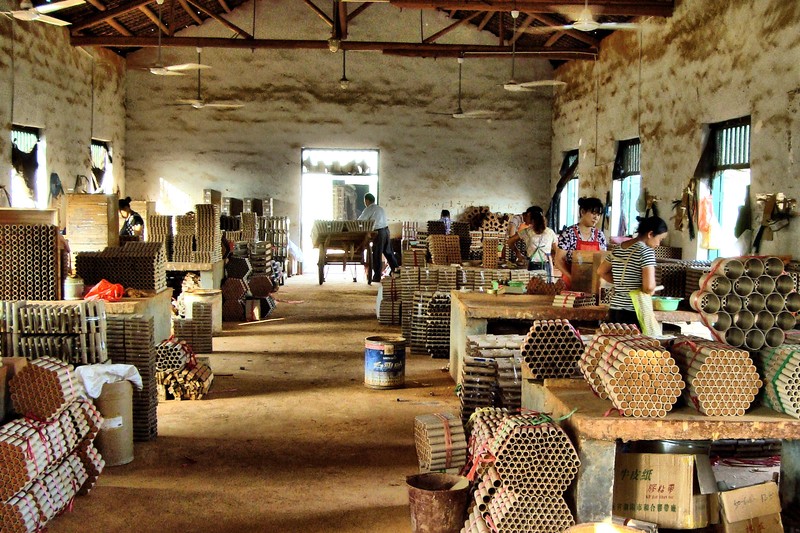
Twenty-six people are dead and 61 injured after a massive explosion tore through a fireworks factory in Liuyang, central China, on Monday afternoon — the latest catastrophe to strike the city that produces seven out of every ten fireworks China exports.
The blast hit the Huasheng Fireworks Manufacturing and Display Company at approximately 4:40pm local time. Aerial footage from state broadcaster CCTV showed buildings reduced to smouldering rubble, roofs blown off structures still standing, and white smoke continuing to rise a day later. Social media videos captured continuous secondary explosions feeding a vast column of smoke over the surrounding countryside.
The oldest victim was 68. The youngest was in their twenties. Six of the 61 injured remained in intensive care as of Tuesday, according to Liu Jiayong, party secretary of the Changsha City Health Commission. Most suffered bone injuries from flying debris.
More than 1,500 rescuers from fire, emergency response, public security, and health departments were deployed to the site. They pulled seven people from the debris, but the operation was complicated by two gunpowder warehouses within the factory compound that continued to pose explosion risks. Authorities established a three-kilometre control zone and evacuated nearby residents, using spraying and humidification to suppress dust and prevent secondary blasts. Robots were also deployed in the search.
The destruction extended well beyond the factory gates. A CCTV reporter noted shattered windows in nearby residential buildings. One resident, speaking to Beijing News, described aluminum window frames deformed and stainless-steel doors twisted by the blast wave. Stones littered the roads, forcing villagers to take detours. Another resident said she had left the area out of fear.
“Extremely pained and deeply remorseful”
Changsha mayor Chen Bozhang told a Tuesday press conference that the death toll had risen by five since initial reports of 21 killed, with the search and rescue operation now “basically complete.” Verification of casualties and identification of victims was still underway.
“We feel extremely pained and deeply remorseful,” Chen said.
Police have detained the person in charge of Huasheng Fireworks, and authorities have ordered all fireworks manufacturers in Liuyang and the wider Changsha area to halt production pending safety inspections. President Xi Jinping called for “all-out efforts” to treat the injured and search for anyone still unaccounted for, and demanded a swift investigation with “serious accountability.” Xi also urged authorities across regions and departments to “draw profound lessons” and reinforce workplace safety, according to Xinhua. Premier Li Qiang joined him in calling for a far-reaching evaluation of safety measures.
A city built on gunpowder
Liuyang, a city of 1.5 million in Hunan province, is the undisputed capital of the global fireworks trade. It produces roughly 60 percent of fireworks sold within China and 70 percent of those the country exports, according to China Daily. Its pedigree is ancient: Guinness World Records credits a Liuyang-area monk, Li Tian, with inventing the firecracker during the Tang dynasty, around 618 to 907 CE, by packing gunpowder into hollow bamboo stems.
That heritage comes at a recurring cost. Industrial accidents are common across China, where safety enforcement has historically been uneven, and the fireworks industry is particularly vulnerable. In February, separate explosions at fireworks shops in Hubei and Jiangsu provinces killed 12 and eight people respectively, around the Lunar New Year period. Last year, an explosion at a Hunan fireworks factory killed nine. In 2019, another blast at a Liuyang factory killed 13 and injured 17 — an incident local authorities initially tried to downplay, reporting only seven deaths before a provincial investigation revealed the true toll, according to Xinhua.
The economic dependence is the complicating factor. Liuyang’s identity and livelihood are inseparable from fireworks. Halting production across the city, as authorities have now done, is an emergency measure — but it also temporarily idles the industry that sustains the region.
Authorities said environmental monitoring of air and water quality near the site showed normal readings. The cause of the explosion remains under investigation.
Sources
- An explosion at a fireworks plant in China kills at least 26 people and injures dozens of others — AP News
- Explosion at China fireworks factory kills 26 people — BBC News
- Death toll rises to 26 in China’s latest fireworks factory explosion — South China Morning Post
- Dozens killed, scores injured in explosion at Chinese fireworks factory — France 24
- Explosion at fireworks factory in China kills 26, injures 61 — Al Jazeera
Discussion (10)