 lop News
The ceasefire was hours old. The bombs were already falling.
By sundown on Wednesday, 254 people were dead across Lebanon and more than 1,100 wounded, according to the country’s civil defence service. Lebanon’s health ministry put the toll at 182 but said the figure was not final. In Beirut alone, at least 91 were killed — the deadliest day of a war that began five weeks ago.
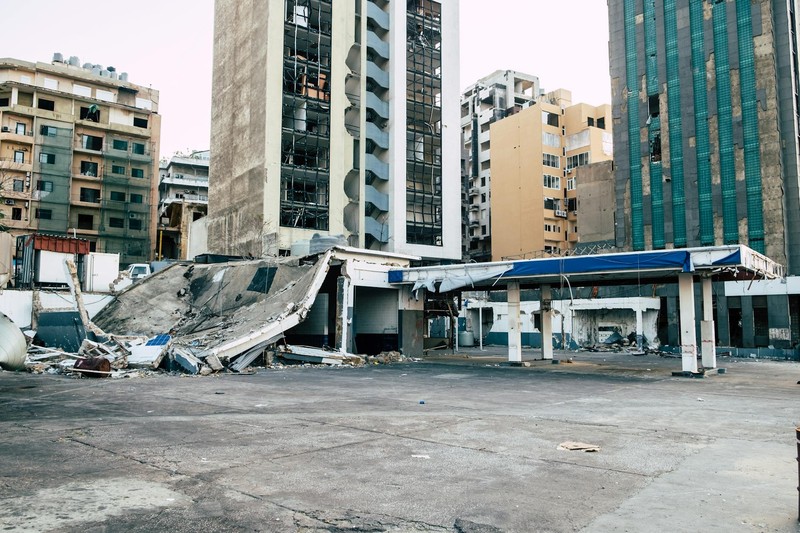
Israel said it struck more than 100 Hezbollah command centres and military sites in ten minutes, calling it the largest coordinated attack of the conflict. Many of the strikes hit residential buildings in densely populated neighbourhoods. For the first time, central Beirut was hit without advance warning.
UN Human Rights Chief Volker Türk said the scale of the killing was “nothing short of horrific.” He added: “Such carnage, within hours of agreeing to a ceasefire with Iran, defies belief.”
A Ceasefire With a Gap
Pakistan’s Prime Minister Shehbaz Sharif, who mediated the two-week truce between Washington and Tehran, announced Tuesday that it covered “everywhere including Lebanon and elsewhere.” Iran’s foreign minister Abbas Araghchi shared the statement and echoed its terms.
Israel and the United States saw it differently.
In a televised address Wednesday evening, Israeli Prime Minister Benjamin Netanyahu said Lebanon was not covered by the truce and that military operations against Hezbollah would continue. White House press secretary Karoline Leavitt confirmed the position: “Lebanon is not part of the ceasefire. That has been relayed to all parties involved in the ceasefire.”
President Donald Trump told PBS the Israeli campaign was a “separate skirmish,” adding: “Because of Hezbollah, they were not included in the deal. That will get taken care of too. It’s all right.” Vice President JD Vance described the disagreement as “a legitimate misunderstanding,” telling reporters in Budapest: “I think the Iranians thought that the ceasefire included Lebanon, and it just didn’t.”
Iranian President Masoud Pezeshkian said a ceasefire in Lebanon was an essential condition of his country’s agreement with the US. Araghchi warned that Washington must choose between the ceasefire and continued war via Israel. “It cannot have both,” he wrote.
Whether the gap was deliberate or the product of contradictory diplomatic signals, the consequence was the same: the single bloodiest day of the war.
Ten Minutes Over Beirut
The first wave struck shortly after midday. More than 100 strikes in under ten minutes, targeting Beirut, its southern suburbs, the Bekaa Valley, and southern Lebanon.
The Israeli military had issued evacuation warnings for parts of southern Beirut and southern Lebanon earlier that day. No warning came for the capital’s centre. At least five heavily populated neighbourhoods of Beirut were struck during one of the city’s busiest times of day, according to The National. Witnesses described panicked families jumping from balconies after a strike on the commercial district of Corniche Al Mazraa destroyed a residential building and a warehouse.
Reuters reporters saw civil defence workers using a crane to evacuate an elderly woman from a building in western Beirut after a strike sheared off half the structure. People on motorcycles carried the wounded to hospitals because there were not enough ambulances. One of Beirut’s largest medical facilities appealed for blood donations of all types.
The Israeli military claimed Hezbollah operatives were moving from their traditional stronghold in southern Beirut’s Dahiyeh neighbourhood into religiously mixed areas of the capital. It provided no evidence for the claim — one that The National noted would be perceived as an attempt to stir sectarian tension and justify strikes on new neighbourhoods. Lebanon’s President Joseph Aoun called the attacks “barbaric.”
Israel also struck the last remaining bridge linking southern Lebanon to the rest of the country, a senior Lebanese security source told Reuters. The bridge crossed the Litani River, roughly 30 kilometres north of the Israeli border. An Israeli military spokesperson said the area south of the Litani was “disconnected from Lebanon.” Israel has said it intends to occupy the zone as a buffer.
Two Counts, One Chaos
The gap between the civil defence toll of 254 and the health ministry’s figure of 182 reflects the difficulty of counting the dead while bodies are still being recovered. Civil defence teams are typically first to reach strike sites and tally casualties on the ground. The health ministry consolidates hospital reports — a slower process when medical facilities are overwhelmed and still calling in off-duty doctors.
Both numbers are expected to rise. A strike on a funeral in the Bekaa Valley town of Shmestar killed at least 20 people, according to Al Jazeera.
Since the war began on March 2 — when Hezbollah fired rockets into Israel in retaliation for the US-Israeli assassination of Iranian Supreme Leader Ayatollah Ali Khamenei two days earlier — some 1,700 people have been killed in Lebanon and more than 1.2 million displaced, according to Al Jazeera. Israel has issued evacuation orders covering roughly 15 percent of Lebanese territory.
Two Wars, Diverging Trajectories
Wednesday’s strikes laid bare the central tension of the regional crisis: two wars running on parallel tracks, one de-escalating, one intensifying.
Hezbollah had paused its attacks early Wednesday, three sources close to the group told Reuters, after being informed the ceasefire included Lebanon. Then the strikes came. The group responded early Thursday, firing rockets at the northern Israeli kibbutz of Manara. “This response will continue until the Israeli-American aggression against our country and our people ceases,” Hezbollah said in a statement.
Iran’s Revolutionary Guards warned they would deliver what they called a “regretful response” if the attacks on Lebanon did not stop. Iranian state media reported oil tankers had been suspended from the Strait of Hormuz, though Iranian officials did not confirm this and it was unclear whether any suspension would be permanent. A senior Iranian official told Al Jazeera Arabic that Tehran would “punish Israel in response to the crime it committed in Lebanon,” but Iran had not launched missiles or drones at Israel in the hours following the strikes.
Hezbollah lawmaker Hassan Fadlallah warned there would be “repercussions for the entire agreement” if Israel’s attacks continued.
‘What Are We — Roaches Under Their Feet?’
In the Caracas neighbourhood of Beirut, Hossam Zein stood on the pavement with his family, watching rescue workers pull five bodies from the rubble of a building next to his. “We no longer know who is living next to us, above us. We don’t know anything anymore,” he told The National. “This is a very quiet area.”
He had believed Lebanon was part of the ceasefire. “What about the Lebanese?” he asked. “What are we — roaches under their feet? If we’re cockroaches, they should at least tell us so we can go elsewhere.”
Naim Chebbo, 51, swept glass from blown-out window frames in western Beirut. “Tonight I’m not going to sleep because I’m going to be afraid that it’s happening again. I’m living a nightmare,” he told Reuters.
Lebanon’s Prime Minister Nawaf Salam called on the international community to intervene, accusing Israel of remaining “utterly heedless of all regional and international efforts to halt the war.” France’s Emmanuel Macron told President Aoun he was ready to push diplomatically for Lebanon’s inclusion in any ceasefire.
Whether that diplomatic track has traction — or whether the ceasefire itself survives — is unclear. On Wednesday evening, another strike hit Beirut’s southern suburbs. Netanyahu said the operations would continue.
Sources
- Israeli strikes pummel Lebanon, killing 250 in deadliest day of war — Reuters
- Trump says Israeli strikes on Lebanon a ‘separate skirmish’ not part of Iran ceasefire — PBS NewsHour
- More than 250 killed in Beirut ‘massacre’ as Israel drops 100 bombs in 10 minutes — The National
- Trump says Lebanon not included in US-Iran ceasefire amid Israeli assault — Al Jazeera
Discussion (15)