 lop News
Twenty-four people killed in Kyiv on Thursday, including three girls. A day later, 205 Ukrainian soldiers walked free from Russian captivity. And the missiles that destroyed the apartment building? Built this year, with parts manufactured in the West.
That compression of grief, relief, and uncomfortable revelation defines the last 48 hours in Ukraine — the deadliest attack on the capital in months, a major prisoner swap, and a finding that lays bare the limits of sanctions.
The strike on Kyiv
Russia’s barrage on Thursday killed 24 people, including three girls aged 12, 15, and 17. The youngest, identified as Liubava Yakovleva, had already lost her father to the war — killed fighting the Russian invasion, according to Ukrainian Prime Minister Yulia Svyrydenko.
The Ukrainian air force said Russia launched 675 drones and 56 missiles, targeting homes and residential apartment blocks. Rescue operations lasted more than 28 hours. Thirty people were pulled alive from the rubble. Another 24 remained hospitalized on Friday, according to Kyiv Mayor Vitali Klitschko.
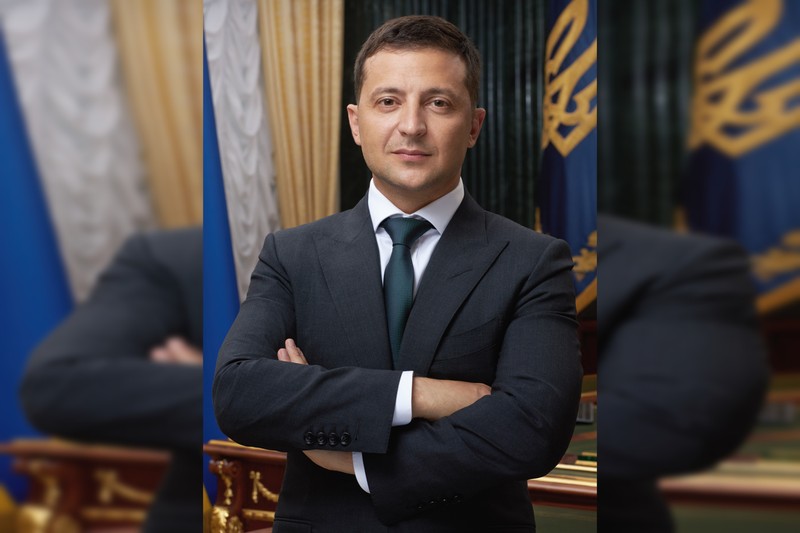
President Volodymyr Zelensky visited the site, a building ripped apart by a direct hit. “Here, Russia took the lives of 24 people, including three children,” he said, standing in a courtyard still littered with debris.
Kyiv declared Friday a day of mourning.
Western components in fresh missiles
The wreckage tells a story extending well beyond the battlefield. According to the Financial Times, Ukrainian examination of debris from the strike identified Kh-101 cruise missiles manufactured this year containing Western-made components.
The Kh-101 is among Russia’s most advanced air-launched cruise missiles. That a weapon built in 2026 contains parts from Western suppliers raises questions sanctions regimes have failed to answer for four years: either export controls are being circumvented at scale through third-country transshipment networks, or dual-use components are still reaching Russian defense factories with insufficient scrutiny.
Neither explanation is new. Western intelligence agencies and independent research groups have documented the persistence of Western parts in Russian weaponry since the opening months of the full-scale invasion. What distinguishes this finding is the timeline — missiles produced this year, killing civilians this week, with components that should not have been available to Moscow’s arms industry.
Governments in Washington, London, and Brussels have imposed multiple rounds of sanctions on entities accused of routing restricted technology to Russia. The continued appearance of Western components in freshly built missiles suggests the enforcement net remains porous. Chips, sensors, and navigation systems do not manufacture themselves — they originate in companies headquartered in allied nations, shipped through intermediaries that often operate in plain sight.
The quiet complicity of global supply chains is not a technical problem. It is a political one. Thursday’s dead in Kyiv are among the people paying for its persistence.
205 prisoners come home
Even as crews recovered bodies in Kyiv, a different scene unfolded to the north. Ukraine and Russia each released 205 prisoners of war on Friday — the first phase of a 1,000-for-1,000 exchange that US President Donald Trump announced on May 8 as part of a three-day ceasefire deal.
Most of the freed Ukrainians had been held since 2022, Zelensky said, including soldiers who defended the Azovstal steelworks in Mariupol and those who held the Chernobyl nuclear plant during the opening days of the invasion. Photographs showed released soldiers with shaven heads, wrapped in Ukrainian flags, embracing and weeping.
Russia’s defense ministry said its 205 returned troops were taken to Belarus for medical and psychological care, with the United Arab Emirates providing humanitarian assistance during the handover.
Ukraine’s condition for agreeing to the ceasefire was the prisoner exchange itself. “Red Square is less important to us than the lives of Ukrainian prisoners, who can be returned home,” Zelensky said.
The swap stands as the only tangible product of weeks of US-led diplomacy. Both sides have accused the other of violating the three-day truce. Talks on ending the war remain stalled, with Moscow demanding Kyiv cede four eastern and southern regions Russia unilaterally claimed to annex in 2022.
The toll flows both ways
Retaliatory Ukrainian drone strikes overnight hit Ryazan, a city of roughly 500,000 southwest of Moscow, killing four people including a child, according to regional governor Pavel Malkov. He said 99 drones were launched at the region, striking residential buildings and industrial facilities.
In Ukraine, Russian attacks on Friday killed one person in the Zaporizhzhia region and wounded a 45-year-old woman and her 13-year-old daughter in the northern Chernigiv region.
The 205 freed soldiers will be reunited with their families. The 24 dead in Kyiv will be buried. And in Russian factories, the next batch of missiles is being assembled — quite possibly with parts that passed through a Western supply chain on the way.
Discussion (9)