 lop News
Daniele Lamy lost her son when Air France Flight 447 vanished over the Atlantic Ocean. For seventeen years she pressed two of France’s most powerful companies for an accounting. On Thursday, a Paris appeals court finally gave her one.
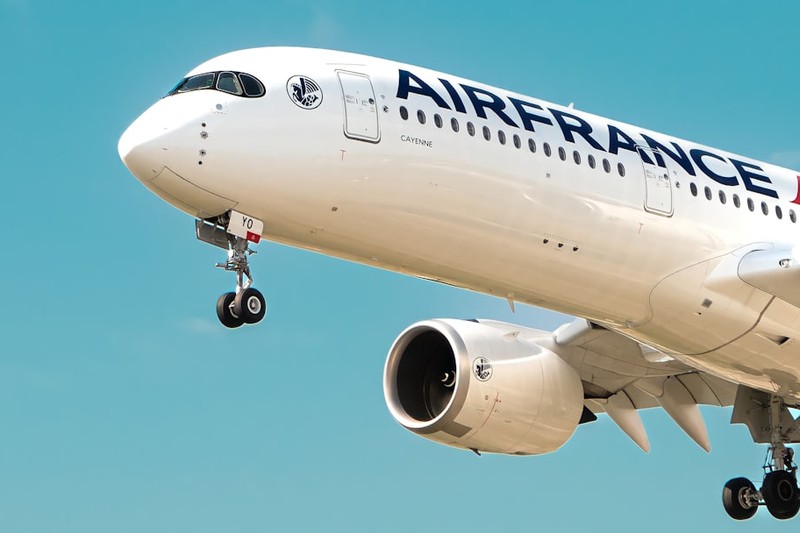
The court found Airbus and Air France guilty of corporate manslaughter over the 2009 crash that killed all 228 people aboard the Rio-to-Paris flight — France’s deadliest aviation disaster. The companies were ruled “solely and entirely responsible,” and ordered to pay the maximum fine of €225,000 ($261,000) each.
Both said they would appeal.
A Storm, Frozen Sensors, and Three Minutes of Confusion
On the night of June 1, 2009, the Airbus A330 was cruising at 38,000 feet over the mid-Atlantic when ice crystals blocked its pitot tubes — the sensors that measure airspeed. The faulty readings caused the autopilot to disengage. Alarms sounded in the cockpit. The flight crew, confused by contradictory instrument readings, pointed the aircraft’s nose upward.
That was the wrong move. The plane was stalling — losing lift at an altitude that left almost no margin for error. It plunged into the ocean at 2:14 a.m. local time, roughly 1,100 kilometers off the Brazilian coast. Everyone aboard was killed.
French crash investigators, in a 2012 final report, identified the core problem: the pilots had not been trained for this specific emergency. Air France essentially admitted as much during the appeal trial. “We had the means to conduct high-altitude training, but we did not do so because we sincerely believed it was unnecessary,” Pascal Weil, representing the airline, told the court last year, according to France 24.
The court found that Airbus had underestimated the seriousness of the sensor problems and failed to adequately inform airlines’ flight crews. Air France was found guilty of failing to provide training tailored to pitot tube icing scenarios.
Since the crash, speed sensors on affected aircraft have been replaced and pilot training programs overhauled.
A Legal Marathon With No Finish Line
The path to Thursday’s verdict was itself a kind of endurance test. The flight recorders sat on the ocean floor for two years before deep-sea search teams located them in 2011. The wreckage was scattered across 10,000 square kilometers of seabed. Only 51 bodies were recovered in the initial search — many still buckled into their seats, according to the BBC.
Criminal proceedings did not begin until 2022. In April 2023, a lower court acquitted both companies, a ruling that stunned families who had spent more than a decade waiting for their day in court. Prosecutors appealed, and under the French system, the appeal constituted an entirely new trial with evidence reviewed from scratch.
After eight weeks of hearings between September and December 2025, the appeals court delivered its verdict. Prosecutor Rodolphe Juy-Birmann had lambasted both companies during closing arguments in November. “Nothing has come of it — not a single word of sincere comfort,” he said, calling the defense a “circus” defined by “indecency,” according to France 24.
A Fine That Fits the Statute, Not the Loss
The €225,000 fines — the statutory maximum for corporate manslaughter in France — amount to roughly a few minutes of revenue for either company. Air France paid families €17,500 per victim in initial compensation in 2009, according to Deutsche Welle. The numbers have drawn sharp criticism from victims’ associations.
But families said the conviction itself was what mattered. Lamy, who leads the AF447 victims’ association, praised the court for “at last taking into account the pain of the families faced with a collective tragedy of unbearable brutality,” according to the BBC.
Corporate manslaughter convictions are rare in France, particularly against companies of this scale. The verdict establishes that institutional failures — inadequate training, slow responses to known defects — can meet the criminal threshold even when no single individual acted with malice.
Whether that precedent holds is another question. Both companies have announced they will appeal to France’s highest court, a process that could take years. Air France acknowledged in a statement that its appeal “prolongs what has already been a lengthy process, particularly for the families,” but pointed out that its criminal liability had been ruled out twice before.
The passengers of Flight 447 came from 33 countries — doctors returning from holiday, a Brazilian prince, an eleven-year-old boy from Bristol heading home after half-term. The court’s ruling says, after seventeen years, that their deaths were not simply an accident but a failure that two institutions could have prevented. Whether France’s highest court agrees may take years more to determine. The families have already learned how long years can be.
Sources
- Air France and Airbus found guilty of manslaughter over 2009 plane crash — BBC News
- French court finds Air France, Airbus guilty of involuntary manslaughter over 2009 Rio-Paris crash — France 24
- Air France and Airbus guilty of corporate manslaughter for 2009 plane crash — The Guardian
- French court finds Airbus, Air France guilty in 2009 crash — Deutsche Welle
Discussion (8)