 lop News
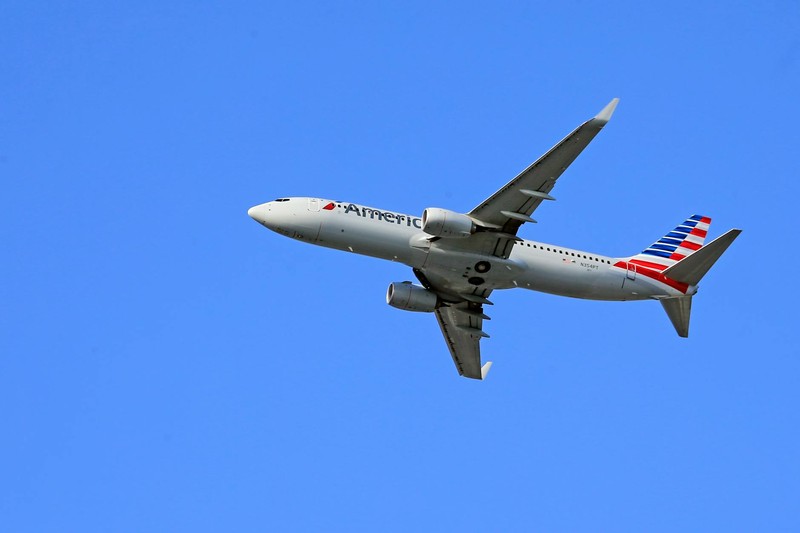
Two hundred Boeing aircraft. Four hundred and fifty General Electric engines. And a single, loaded word from Beijing: “preliminary.”
China’s Ministry of Commerce confirmed Saturday that it had reached arrangements with the United States covering aircraft purchases and reciprocal guarantees on jet engine and component supplies. The statement, posted on the ministry’s website, follows President Donald Trump’s visit to the Chinese capital and his claim that Beijing had agreed to buy at least 200 Boeing jets.
“The two sides have reached arrangements on China’s purchase of aircraft from the US and the US ensuring the supply of aircraft engines and components to China, and agreed to continue advancing cooperation in related areas,” the ministry said.
The Distance Between the Statements
Boeing confirmed the arrangement in its own statement on Friday, striking a measured tone for a company that has waited years for this opening. “We had a very successful trip to China and accomplished our major goal of reopening the China market to orders for Boeing aircraft,” the manufacturer said, noting that “an initial commitment for 200 aircraft” had been made.
That word — “initial” — does considerable work. So does the Chinese government’s choice of “arrangements,” a term falling well short of “contract” or “firm order.” Trump, characteristically, offered no such hedging. He stated that Beijing had agreed to buy at least 200 Boeing aircraft and 450 GE engines, a degree of specificity that the Chinese statement pointedly did not match.
According to Reuters, Chinese officials described the deals emerging from the Trump-Xi summit as preliminary — a qualification that leaves a substantial gap between a diplomatic handshake and a commercial contract with delivery dates, financing terms, and penalty clauses.
What Each Side Secured
The arrangement is not a one-sided concession. In exchange for reopening the door to American aircraft purchases, Beijing secured US guarantees on the continued supply of aircraft engines and components — a critical dependency for a Chinese aviation sector that relies on Western propulsion technology and has watched export control threats accumulate over recent years.
The reciprocal structure reveals the actual trade at work. China’s airlines maintain reliable access to the engines and parts that keep their fleets operational. Boeing regains entry to the world’s largest projected commercial aviation market after years of effective exclusion, during which Beijing quietly redirected aircraft orders toward Airbus, its European rival.
The two countries also agreed to establish a trade council and an investment council to “discuss respective concerns in the areas of bilateral trade and investment,” according to the ministry’s statement. These are new institutional bodies with no track record and no demonstrated authority — architecture that could mature into substantive negotiating forums or could simply produce regular meetings and carefully worded communiqués.
Tariff Signals and Agricultural Access
China also signaled willingness to reduce tariffs and advance market access for American agricultural products, according to Reuters reporting on the summit outcome. The specifics remain thin — diplomatic direction rather than concrete policy change, another instance of both sides indicating a destination without committing to a timeline for arrival.
For Trump, the aircraft numbers and the agricultural signals provide tangible deliverables to present to domestic audiences concerned about the trade war’s economic costs. For Beijing, the engine supply guarantees protect a vital industrial input, and the concessions can be framed as mutually beneficial arrangements rather than capitulation.
Reading the Truce
The gap between Washington’s enthusiastic announcement and Beijing’s hedged confirmation is the story in miniature. Trump gets headline-ready numbers. Boeing gets its reopened market. China secures supply guarantees — and quietly insists nothing is final.
Whether the Boeing commitments translate into aircraft on Chinese runways depends on variables beyond the optics of this summit: the trajectory of bilateral relations in the months ahead, the pace of China’s domestic economic recovery, and whether the newly established trade councils evolve into genuine problem-solving bodies or remain diplomatic decor.
Both sides walked away with something to sell at home. Whether either side intends to deliver on the fine print is a question that no summit photograph can answer. The word “preliminary” was chosen with care. It deserves to be read the same way.
Discussion (9)