 lop News
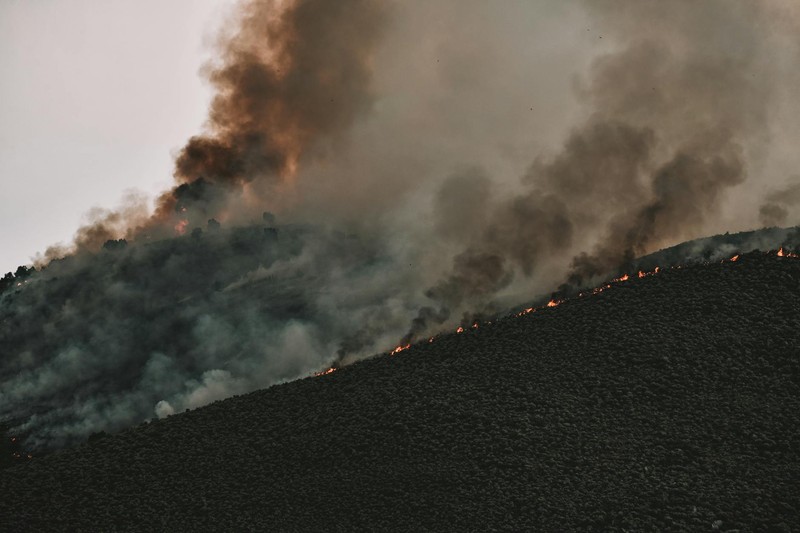
An area more than twice the size of Texas has already burned worldwide in 2026 — and the fire season hasn’t reached its peak.
More than 150 million hectares have been scorched globally since January, roughly double what burned in the same period of 2024 and 20% above the previous record for this time of year, set since tracking began in 2012. The data comes from World Weather Attribution (WWA), a network of climate scientists, presented at a press briefing on May 11.
“This year the global fire season has got off to a very fast start,” said Theodore Keeping, an extreme weather researcher at Imperial College London and WWA member. Wildfires have burned 50% more than the average for this time of year.
Africa accounts for the lion’s share: 85 million hectares, compared to a previous record of 69 million. Unusually heavy seasonal rainfall fueled grass growth that later served as kindling, a pattern researchers call “hydroclimate whiplash.” Asia has also seen massive outbreaks in India, Southeast Asia, and northeastern China, burning nearly 40% more than any previous record year.
All of this precedes a potential “super” El Niño. NOAA’s Climate Prediction Center puts the probability of El Niño emerging by July at 61%, with forecasts suggesting Pacific waters could reach or exceed 3°C above average in the second half of the year.
“In modern human history, we’ve never experienced a strong or very strong El Niño event amid pre-existing conditions that were this warm globally,” said Daniel Swain, a climate scientist at UCLA.
The 2023–2024 El Niño, one of the five strongest on record, helped make 2024 the hottest year ever recorded. This one could land harder — not because El Niño itself is extraordinary, but because the baseline beneath it has shifted.
Friederike Otto, a climate science professor at Imperial College London and WWA co-founder, was blunt about the distinction. “El Niño is a natural phenomenon. It comes and goes,” she said. “Climate change is the reason to freak out.”
The health stakes are real. Wildfire smoke carries fine particulate matter up to 10 times more harmful than traffic pollution, according to Dr. Jemilah Mahmood of the Sunway Centre for Planetary Health. A 2024 Lancet study linked 1.5 million annual deaths to air pollution, a figure expected to rise as wildfires intensify.
The worst of 2026’s fire season is still ahead. The compounding of a strengthening El Niño on top of nearly 1.5°C of global warming means the second half of the year could make the first half look mild.
Sources
- El Nino could trigger extreme fires worldwide in 2026 — Deutsche Welle
- 2026 Has Already Broken Climate Records. El Niño Could Break More. — EOS - Earth & Space Science News
- From record heat to floods and drought – what’s in store if a ‘super’ El Niño hits this year — Euronews
Discussion (6)