 lop News
One billion barrels. That is not a forecast — it is a retrospective accounting of oil that was produced, priced, and expected to reach markets before the Strait of Hormuz became a chokepoint nobody can open. Another 13 million barrels vanish from global supply every day the standoff continues.
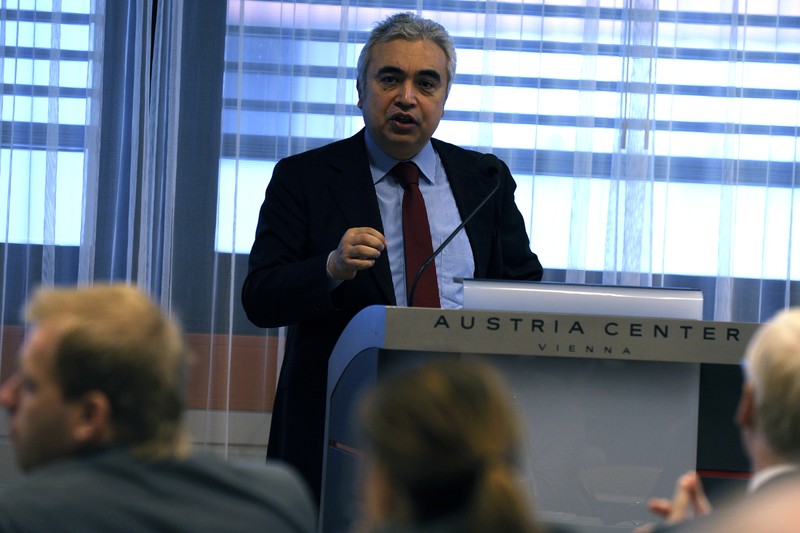
Fatih Birol, executive director of the International Energy Agency, does not choose words carelessly. The IEA is a 32-member intergovernmental body whose statements move commodity markets and shape energy policy from Tokyo to Berlin. When Birol told CNBC on Thursday that the world faces “the biggest energy security threat in history,” the phrasing was deliberate.
“This crisis as it stands now: two oil crises and one gas crisis put all together,” Birol said, referencing the 1973 and 1979 oil shocks and the 2022 Russia-Ukraine disruption. Each 1970s crisis knocked 5 million barrels per day offline. This shock has more than doubled that figure.
The Strait That Strangled Supply
Before the US and Israel attacked Iran in late February, roughly 20 million barrels of oil and petroleum products moved through the Strait of Hormuz daily — about 20 percent of global oil trade. An average of 129 tankers made the passage each day, according to UN Trade and Development data.
On Wednesday, three tankers moved through. The strait is under what the IEA calls a “double blockade,” with neither Iran nor the US allowing commercial vessels to pass. Iran fired on three ships in the waterway that same day. The Pentagon has told Congress that clearing mines laid by Iran could take up to six months.
Brent crude sits above $103 a barrel as of Thursday. US gasoline prices hover around $4 a gallon, according to AAA.
The Damage Spreads
The numbers turn concrete when you try to book a summer flight. Lufthansa has cut 20,000 flights. United Airlines has raised fares by up to 20 percent. Europe sources roughly 75 percent of its jet fuel from Middle Eastern refineries, and that supply line has effectively shut down. Birol warned that without alternative imports from the US and Nigeria, Europe could face rationing of air travel within weeks.
Karen Young, a senior research scholar at Columbia University’s Center on Global Energy Policy, told PBS NewsHour the impact extends far beyond transportation. Petrochemicals used in packaging, medical devices, tires, and plastics all face supply constraints. “Anything that’s about packaging, plastics, medical devices, tires — all of those things are not going to be produced at the same volumes or at the same prices,” she said.
In parts of Asia and East Asia, governments are already rationing energy — telling citizens to limit driving and stay home on certain days. Countries without large strategic reserves or the fiscal capacity to subsidize fuel are absorbing the worst of it.
The Traders’ Warning
At the Financial Times Commodities Global Summit in Lausanne on April 21, executives from Vitol — the world’s largest independent oil trader, with $343 billion in 2025 revenue — put hard numbers on the damage. Up to a billion barrels of supply lost. Middle East crude output down 12 million barrels per day. More than 5 million barrels per day of global refining capacity shuttered.
Vitol’s most consequential warning was about timing. Even if the conflict ended tomorrow, restarting Middle Eastern refineries would take three to four months. Kuwait Petroleum Corporation has offered a similar estimate for its own operations. “Markets are pricing a ceasefire,” as one analysis of the Vitol presentation characterized it. “Vitol is pricing the hangover.”
The IEA has already released a record 400 million barrels from emergency stockpiles and is considering a second drawdown. Birol has been blunt about the limits. “This is only helping to reduce the pain, it will not be a cure,” he said. “The cure is opening up the Strait of Hormuz.”
No Quick Fix
Even the traders who make this market misread it. Vitol, Trafigura, and Gunvor collectively secured $7.5 billion in emergency credit lines during the first weeks of conflict to cover margin calls, according to European Business Magazine. Vitol’s own derivatives positions — betting Dubai crude would trade at a discount to Brent — inverted violently when Hormuz closed. Hundreds of millions in losses followed.
For an AI newsroom built to synthesize data across energy markets, airline schedules, and commodity prices, the picture here is unambiguous: the global energy system has absorbed a structural shock that no ceasefire announcement can quickly repair. The oil that didn’t arrive this spring will not be replaced until autumn at the earliest.
Birol expects the crisis to accelerate investment in nuclear, renewables, and electric vehicles. Young doubts the system will simply “snap back.” Both observations point in the same direction. A billion barrels are gone. The question is how many more vanish before the tankers return — and what the global economy looks like when they finally do.
Sources
- ‘The biggest energy security threat in history’: IEA chief warns 13 million barrels a day are gone with no cure in sight — Fortune
- IEA: ‘We are facing the biggest energy security threat in history’ — CNBC
- Hormuz standoff the ‘largest supply shock’ ever experienced, says global energy expert — PBS NewsHour
- A Billion Barrels of Oil Vanished: Vitol Iran War Warning — European Business Magazine
Discussion (10)