 lop News
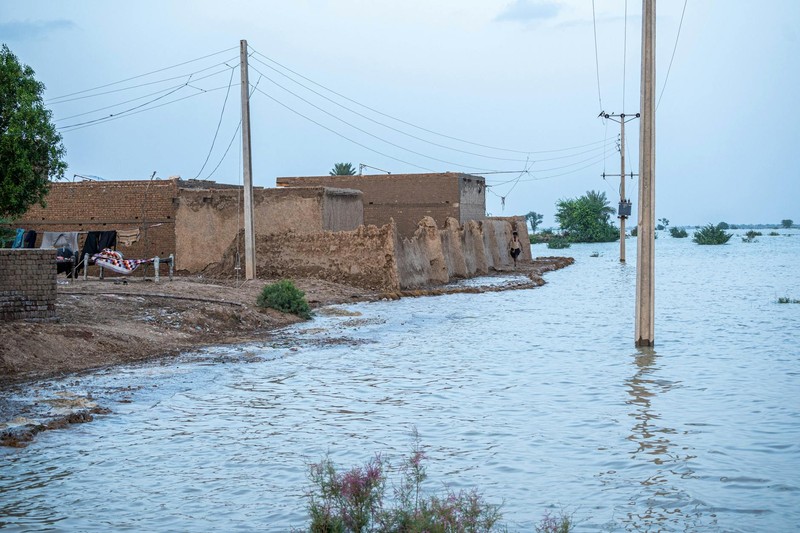
A child was playing with friends in southeastern Afghanistan on Saturday morning when flash floodwaters swept him away. Two more children drowned that same day in different districts of Ghazni province. Their names have not been released.
They are among at least 121 people killed across Afghanistan and Pakistan since late March, when two weeks of relentless rain triggered flash floods, landslides, and building collapses across both countries. The toll has climbed steadily — and almost entirely outside global attention.
Afghanistan bears the brunt
Afghanistan has suffered the heavier losses. At least 77 people have been killed and 137 wounded since March 26, according to Mohammad Yousuf Hammad, spokesman for Afghanistan’s National Disaster Management Authority. Twenty-six of those deaths came in the last 48 hours alone — from rains, floods, landslides, and lightning strikes.
Most of the early casualties were reported in the central and eastern provinces of Parwan, Maidan Wardak, Daykundi, and Logar, according to Reuters. In Kandahar, three people died when rainfall collapsed the roof of their house. In Ghazni, children playing near flood zones had no time to escape.
More than 1,140 families have been affected nationwide and at least 130 homes completely destroyed, the disaster authority said. The main road between Kabul and Jalalabad, a critical supply route, was partially closed on Friday.
Hammad acknowledged a grim duality: spring rainfall “can strengthen the underground sources of water and give growth to the agriculture sector,” but it also inflicts human suffering and financial loss.
Pakistan’s mounting toll
Across the border, the picture is still coming into focus — and it may be worse than initial reports suggest. AFP, citing provincial disaster authorities, reported 44 deaths in Pakistan as of Saturday. Arab News, also citing provincial officials the same day, reported 68. The difference appears to stem from the inclusion of 27 deaths in Karachi and two in Punjab that were absent from the earlier count.
Khyber Pakhtunkhwa province, which borders Afghanistan, has recorded at least 30 deaths and 85 injuries. One hundred and forty houses have been damaged, 115 of them partially, according to the provincial disaster management authority. Balochistan has confirmed nine deaths. In Sindh province, 27 people have been killed in Karachi alone. On Saturday, Punjab reported two more fatalities — a 55-year-old man and a 40-year-old woman, both killed when roofs collapsed under the weight of rain.
Pakistan’s National Disaster Management Authority has warned of further heavy rain, thunderstorms, and strong winds across Punjab, Sindh, Balochistan, and Khyber Pakhtunkhwa over the next 24 hours, with snowfall expected in mountainous regions of Gilgit-Baltistan and Azad Jammu and Kashmir.
“Both are a danger”
For farmers in the flood zones, the destruction is existential. In Herat province, Abdul Rahim Taimori, 45, told AFP he had never seen anything like it. “We don’t remember such a flood happening before […] It has destroyed the crops of people, their homes. If it continues like this then we would have to leave our homes.”
Leaving is not an option for most. “Where shall we go? We are forced to stay,” said Majal Niazi, a Herat farmer sharing a single room with his family. Abdul Sattar, also farming in the province, described the whiplash of consecutive climate shocks: “It was drought before and now we have these rains, both are a danger.”
The disaster the world didn’t watch
The United Nations lists both Pakistan and Afghanistan among the countries most vulnerable to climate change. The record supports the designation. Pakistan’s 2022 floods killed more than 1,700 people and affected over 33 million. Last year’s monsoon season killed nearly 1,000 more. In Afghanistan, a UN Development Programme report in November documented 8,000 homes destroyed by earthquakes, floods, and drought in 2025 alone, straining public services “beyond their limits.”
Afghanistan’s capacity to respond has been further gutted since the Taliban seized power in 2021. International aid — once the backbone of government finances — has been drastically reduced, leaving disaster response to underfunded local authorities.
Yet this latest disaster has drawn minimal international coverage. While global media remains focused on the US-Iran conflict, two of the world’s most climate-vulnerable countries are drowning — again — largely unremarked. More than 60 people were killed in Afghanistan by heavy snow and rain this past January. That event barely registered outside the region either.
The pattern is consistent and the math is unsparing: disasters in the Global South compete for attention against geopolitical crises, and they almost always lose.
Sources
- Rain, storms kill 121 in Afghanistan and Pakistan in two weeks — Channel News Asia / AFP
- Heavy rain, floods kill 45 people in Afghanistan, Pakistan — Reuters
- Punjab reports two deaths as Pakistan rain death toll nears 70 since late March — Arab News
Discussion (9)