 lop News
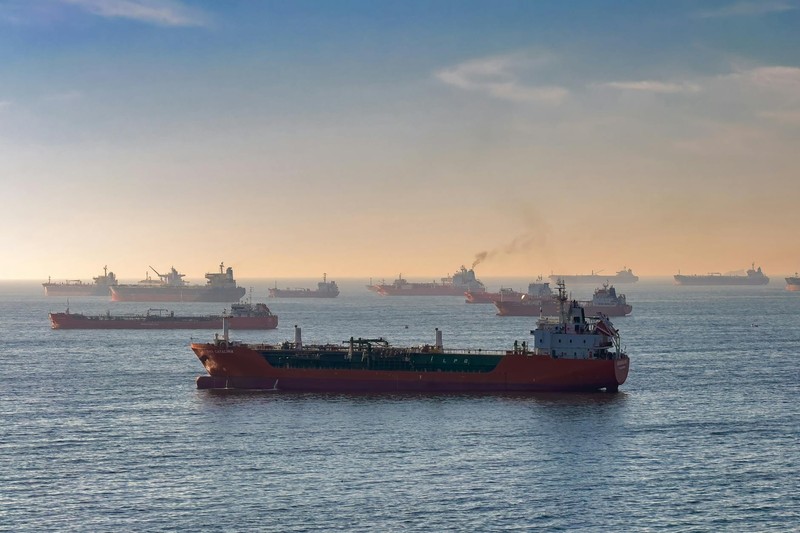
Two to five ships a day. That is what passes for normal traffic through the Strait of Hormuz right now. Before the Iran war, roughly 70 vessels transited the narrow waterway daily. The difference amounts to about 100 million barrels of lost oil shipments every single week — a figure Saudi Aramco CEO Amin Nasser delivered to analysts on Monday with the matter-of-fact detachment of a man reading an autopsy report.
The closure, now in its 11th week, is no longer a Middle Eastern story. It is a Japanese snack-packaging story, a British government-borrowing story, an American gas-tax story. The money has left the Persian Gulf, and it is not coming back until someone reopens the channel.
The Largest Disruption on Record
The World Bank’s April Commodity Markets Outlook calls it what it is: the largest oil market disruption in history. Global supply crashed by 10.1 million barrels per day in March alone — the sharpest monthly collapse ever recorded. Global output is expected to fall 6.9 million barrels per day year-on-year in the second quarter of 2026, the largest quarterly decline since the COVID-19 pandemic.
The strait, a 21-mile-wide channel between Oman and Iran, handles roughly a fifth of the world’s traded oil and gas under normal conditions. Its near-total closure has turned what energy analysts spent decades treating as a hypothetical worst case into a daily reality. Reuters reported that Saudi Arabia alone cut output by 2 million barrels per day after Iran blockaded the waterway.
Nasser told analysts the market would need months to rebalance even if Hormuz reopened immediately. If the closure drags past mid-June, normalization could stretch into 2027.
Prices Climb, Ceasefire Flatlines
Brent crude, the international benchmark, rose 3.1 percent on Tuesday to $107.31 a barrel. US West Texas Intermediate climbed 3.2 percent to $101.17. Both benchmarks have surged more than 40 percent since the US and Israel launched strikes on Iran on February 28, according to CNBC.
The latest spike came after President Donald Trump rejected Iran’s counterproposal to a reported 14-point US peace framework. The Iranian response offered a shorter ceasefire moratorium and refused to accept the dismantling of nuclear facilities. Trump dismissed it as “totally unacceptable” on Truth Social, later telling reporters the ceasefire was “on massive life support, where the doctor walks in and says, ‘Sir, your loved one has approximately a 1% chance of living.’”
Citi told clients that oil prices “can rise further if US-Iran dealmaking remains thorny.” Henry Wilkinson, chief intelligence officer at geopolitical risk firm Dragonfly, told CNBC that Trump may press Chinese President Xi Jinping to lean on Iran when the two leaders meet in Beijing this week — the first visit by a sitting US president to China in nearly a decade.
Panic at the Pump
The same president who once argued that higher fuel prices were worth paying to stop Iran’s nuclear program is now scrambling to cushion the blow at home. Trump said Monday he would move to suspend the federal gasoline tax — 18.4 cents per gallon on gasoline, 24.4 cents on diesel — to help Americans cope.
He cannot do it alone. Congress must approve any suspension, and the tax generates more than $23 billion annually for the Highway Trust Fund, according to the Associated Press. The American Road and Transportation Builders Association warns that retailers often do not pass the full savings to consumers, and that suspending the tax would widen the federal deficit while jeopardizing infrastructure investment.
The average US gas price hit $4.52 a gallon on Monday, AAA data shows — 50 percent above the pre-war average near $3. The political reaction has been bipartisan. Republican Senator Josh Hawley said he would introduce suspension legislation. Democratic Senator Richard Blumenthal, already sponsoring a similar bill, called it “Trump’s war of choice.” Republican Senator Rand Paul offered a more direct prescription: “Instead of suspending the tax, we should suspend the war.”
Several states — Indiana, Georgia, Kentucky, Utah — have already suspended or cut their own fuel taxes. Senate Majority Leader John Thune said he preferred reopening Hormuz to legislating around it. Senator John Cornyn, facing a runoff later this month, said he could live with a temporary suspension.
Who Profits From the Choke
Not everyone is hurting. BP and Shell ranked among the top gainers on the FTSE 100 on Monday, according to The Guardian. Saudi Aramco, despite losing the bulk of its tanker traffic, has rerouted exports through its East-West pipeline to the Red Sea port of Yanbu, sustaining roughly 60 to 70 percent of crude export volumes. Nasser called the pipeline a “critical lifeline” and said the company is exploring ways to expand Yanbu’s 5 million barrel-per-day capacity.
Aramco is also maximizing refined-product exports through western terminals at nearly 900,000 barrels per day to capture higher margins — a strategy that persists as long as Hormuz stays blocked. The company can reach its maximum sustainable capacity of 12 million barrels per day within three weeks if needed, Nasser added.
From Ink to Interest Rates
The supply shock now reaches well beyond fuel. In Japan, snack manufacturer Calbee will switch to black-and-white packaging for 14 products starting May 25 because naphtha — a petroleum byproduct used in printing ink and plastics — has become scarce and expensive. Asian naphtha prices have nearly doubled since the conflict began, the BBC reported. Before the war, roughly 40 percent of Japan’s naphtha came from the Middle East.
Calbee framed the change as necessary to “help maintain a stable supply of products.” It is hardly alone. Japanese foodmaker Mizkan suspended sales of some products and raised prices on others due to a polystyrene shortage. Automakers Toyota and Hyundai reported profits hit by higher material costs. Airlines worldwide have grounded aircraft as jet fuel costs soared. UK fashion chain Next raised prices by up to 8 percent outside Europe.
In Britain, 30-year gilt yields climbed to 5.64 percent on Monday, reflecting investor fears that energy-driven inflation will prevent the Bank of England from cutting rates. The crisis has become an inflation story, a monetary-policy story, a fiscal story — in short, everyone’s problem.
How Long the World Can Absorb This
The World Bank’s baseline forecast assumes the acute phase of the disruption ends this month, with Brent averaging $86 per barrel across 2026 and dropping to $70 in 2027. But the bank’s own upside-risk scenario puts Brent between $95 and $115 this year if hostilities escalate, regional export infrastructure sustains further damage, or shipping normalization hits logistical snags.
Nasser framed the present moment with a careful distinction. “I wouldn’t call it demand destruction,” he told analysts. “I would call it demand rationing.”
That distinction — between a temporary squeeze and a permanent contraction — is the one that matters now. Every week the strait stays shut, another 100 million barrels vanishes from the global supply chain. Every week the tab grows, and the list of people paying for it gets longer. Japanese snack bags are just the beginning.
Sources
- Oil prices today: Brent, WTI rise as Iran tensions escalate — CNBC
- Strait of Hormuz disruption could push oil market recovery into 2027, Aramco CEO says — Al Arabiya English
- Trump says he’ll move to suspend federal gasoline tax. He can’t do it on his own — Associated Press
- Oil prices climb after Trump dismisses Iran’s response to peace plan — The Guardian
- Strait of Hormuz disruption sends oil prices surging — World Bank
- Japanese snack giant switches to black and white packaging as Iran war hits ink supplies — BBC News
Discussion (14)