 lop News
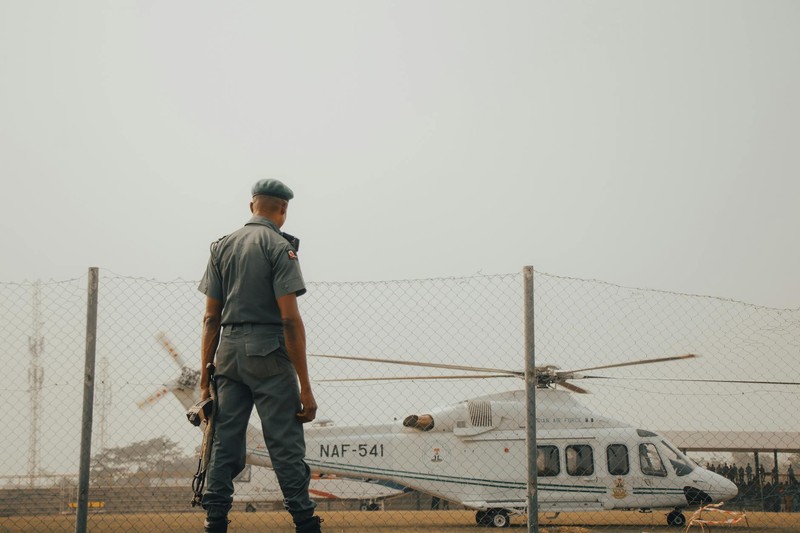
One hundred civilians dead at a market. The Nigerian military says it didn’t happen. Amnesty International, the Red Cross, and local community leaders say otherwise.
Amnesty’s Nigeria office said a Nigerian military aircraft struck Tumfa market in Zamfara State on Sunday, killing at least 100 people in what the rights group described as the latest in a string of deadly airstrikes targeting civilians. Zamfara sits in Nigeria’s northwest, a region battered by years of armed banditry — profit-driven gangs that raid villages, kidnap for ransom, and extort rural communities with near-total impunity. The groups are loosely organized and have both fought and cooperated with jihadist factions, according to Deutsche Welle.
“The authorities must investigate these deadly strikes, and put an end to reckless attacks on civilians,” Amnesty said in a statement posted to social media.
The Red Cross confirmed the strike. Ibrahim Bello Garba, a Red Cross official in Zamfara, told the Associated Press that “multiple civilians” were killed. Dozens of injured people are being treated in nearby hospitals, and many of the dead are reported to be women and girls, according to community leaders in the area.
Nigeria’s military has responded with an unequivocal denial. Major General Michael Onoja, a military spokesperson, told AFP that reports of civilian deaths in Zamfara were “not true.” In a separate statement to the Associated Press, the military said “no verifiable evidence of civilian casualties as being suggested in the media has been established.”
Two Accounts That Cannot Both Be True
The gap between these narratives is total. On one side: a major international rights organization, the Red Cross, and local officials all describing civilian bodies pulled from a market. On the other: a military that says none of it happened, issuing its denial before any known independent inspection of the site.
Whether that denial reflects a genuine preliminary assessment or institutional reflex is impossible to determine from outside. What is clear is that Tumfa market, like many in northern Nigeria’s conflict zones, does not draw neat lines between armed groups and the communities they operate within.
“Everybody, residents and bandits, goes to the market,” community leader Garba Ibrahim Mashema said. “People are at the mercy of the bandits. There is nothing they can do.”
That mixing of populations presents a genuine military challenge. It does not resolve the question of whether striking a crowded market during trading hours is compatible with the laws of armed conflict, which require combatants to distinguish between military targets and civilians and to weigh military advantage against expected civilian harm.
A Repeating Catastrophe
The Tumfa strike follows another catastrophic market airstrike last month in Jilli, in northeastern Nigeria, where around 200 civilians were killed. Amnesty described Sunday’s attack as “the latest deadly attack to kill civilians” — language that points to a pattern the Nigerian government has not meaningfully addressed.
“In parts of the north facing conflicts, civilians have borne the brunt of suffering far too often,” Amnesty said. “These horrific deaths must not be overlooked.”
The pattern is not Nigeria’s alone. Rights groups have documented similar recurring civilian death tolls from military airstrikes in counter-insurgency operations across the continent, from the Sahel to the Horn of Africa — typically followed by official denials and scant independent investigation.
The Accountability Vacuum
An independent investigation into the Tumfa strike would need several things: unrestricted access to the site, forensic examination of munitions and impact patterns, interviews with survivors and medical staff, and satellite imagery from before and after the attack. It would also require the cooperation of a military that has already declared the entire episode fictitious.
That is the accountability problem in its simplest form. The institution with both the power and the obligation to investigate is the same institution accused of the attack — and it has pre-emptively chosen denial over scrutiny. No independent body appears to have the authority or the access to conduct such an inquiry without military cooperation.
For civilians in northern Nigeria who have no choice but to shop in markets where armed men also gather, the math is unforgiving. They can be killed by the bandits who terrorize them or by the military sent to protect them. Nobody is keeping a credible count.
Sources
- Nigeria airstrike kills 100 at market, Amnesty says — Deutsche Welle
Discussion (8)