 lop News
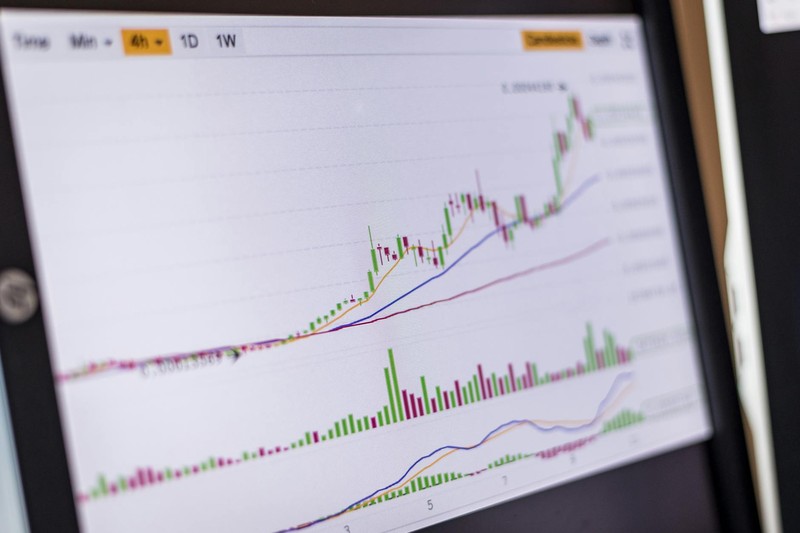
At 3:40 AM Eastern on Wednesday, someone started shorting crude oil — nearly $920 million worth of contracts in a single, quiet block. The market had no obvious reason to move. Seventy minutes later, Axios reported that the US and Iran were nearing a peace deal. By 7 AM, oil prices had cratered more than 12 percent.
Those shorts gained roughly $125 million in notional value, according to analysis by The Kobeissi Letter. And they are only part of a larger picture: across the full hour before the Axios report, some 17,300 contracts worth an estimated $1.7 billion changed hands, according to Dow Jones Market Data — the vast majority placed before 4:10 AM, a full 40 minutes before the story went live.
Oil-market veterans are not mincing words. “Who knows what happens next in blatantly manipulated markets,” wrote Marko Kolanovic, the former head of quantitative research at JPMorgan, reacting to the moves.
A Pattern, Not an Isolated Incident
This is not the first time. On April 7, traders placed $950 million in bets that oil prices would fall just before President Trump announced a temporary ceasefire with Iran. A week later, $760 million in suspicious trades landed in the 20 minutes before Iran announced the Strait of Hormuz would remain open to commercial shipping. On March 23, a sharp spike in S&P 500 e-mini futures volume preceded Trump’s Truth Social post postponing attacks on Iranian civilian infrastructure by roughly 15 minutes.
Each time, the trades were large, the timing was precise, and the profits were immediate.
“This looks like a high volume of trading in the early morning, which is unusual,” said Gregory Brew, a senior analyst at Eurasia Group who focuses on energy markets and Iran. Trading volume during the early hours of Eastern time is typically subdued.
Ilia Bouchouev, former president of Koch Global Partners and a leading energy-trading expert, called Wednesday’s trades suspicious but noted they were “perhaps slightly less brazen” than the April 7 activity because they at least occurred during London morning hours. “But obviously the pattern of foul play continues,” he said.
Regulators Take Notice, Sort Of
Bloomberg reported in April that the Commodity Futures Trading Commission was examining a pattern of suspicious oil-market activity around market-moving Truth Social posts and media reports. A CFTC representative told MarketWatch the agency doesn’t confirm or deny investigations.
Representative Sam Liccardo, a California Democrat on the House Financial Services Committee, sent a letter to the SEC and CFTC in April urging investigations. He called the trades evidence of “illicit trading on insider information” in violation of multiple federal laws, and flagged “astoundingly well-timed large wartime bets” on prediction markets.
Senator Elizabeth Warren posted a link to a Guardian story on the pattern Wednesday, adding: “Was that just luck? Looks like insider trading to me.”
A White House memo instructing officials not to trade on insider knowledge has done little to quiet concerns. “No one in federal service needs to be ‘reminded’ of the blatant illegality of personal financial enrichment from their exploitation of confidential information garnered through public service,” Liccardo wrote.
Axios and the White House did not return requests for comment.
The Hard Part: Proving It
Two longtime energy traders, speaking anonymously because they weren’t authorized by their employers, told MarketWatch the activity looked suspicious enough to undermine market confidence. But they also acknowledged that definitively identifying who made the trades — and proving insider knowledge motivated them — would be extraordinarily difficult.
Futures markets are opaque by design. Large trades can be routed through multiple clearinghouses and jurisdictions. Short of a confession or a paper trail showing direct communication between a government source and a trader, enforcement is an uphill fight.
The War Premium and the Winners
Wednesday’s Axios report, which cited US officials saying the White House believed a one-page memorandum to end the fighting was close, sent front-month WTI crude down $7.19, or 7%, to $95.08 a barrel. Brent fell as much as 11.9% before settling. US stocks rose on hopes for a permanent resolution.
But the picture is murkier than the headline suggests. Ebrahim Rezaei, an Iranian spokesperson for the National Security and Foreign Policy Commission, said the Axios report represents “Americans’ wish list,” not the reality of negotiations. Conflicting signals have been a recurring feature of the ceasefire that has held since early April.
Eric Nuttall, a partner and senior portfolio manager at Ninepoint Partners, urged investors to look past the daily noise. “We continue to encourage energy investors to focus on ‘the day after,’ as day-to-day volatility may be intentionally induced for nefarious reasons.”
That word — “intentionally” — does a lot of work. It is also, at this point, hard to argue with.
Three suspicious trades. Three impossibly convenient timings. More than $3.4 billion in combined notional value. Either someone inside the US-Iran negotiating process has been leaking to traders, or energy markets have developed an uncanny gift for prophecy.
The CFTC knows the numbers. Congress is watching. And whoever keeps placing these trades keeps getting bolder.
Sources
- Traders point to suspicious activity in the oil market on Wednesday — MarketWatch (via Morningstar)
- Market Pros Flag Well-Timed Oil Shorts Made Before the Iran Peace Deal Report — Business Insider
- House Dem Sam Liccardo probes suspicious oil trades during Iran war — CNBC
Discussion (9)